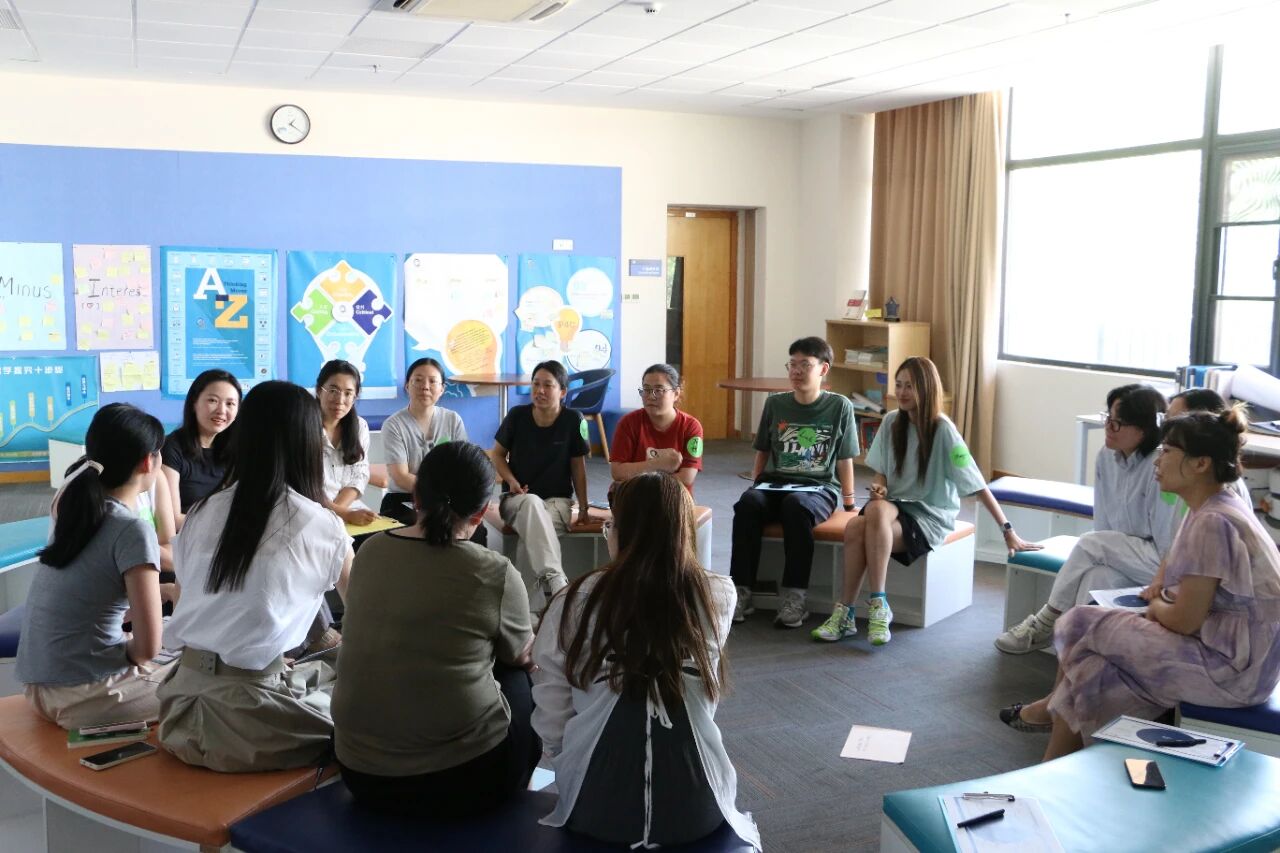
On the eve of the new semester, our school organized a unique thematic workshop on Philosophy for Children (P4C). Through dialogic inquiry, the training guided teachers to reconsider the profound significance of P4C for their subject teaching from the perspectives of educational philosophy and classroom ecology.

 The workshop used a bionic robotic dog as a stimulus to initiate layered dialogues and reflections on the relationship between artificial intelligence and humanity. From technological convenience to ethical dilemmas, and from practical applications to the potential “awakening” of future super-AI, the relationship between humans and AI has already transcended the simplistic dynamic of “creator and the created.”

 In this process of reflection, the teachers personally experienced the process of “doing philosophy”—not by learning abstract philosophical theories, but through genuine dialogue and collaborative inquiry, confront complex issues head-on and organize the logic, and challenging assumptions. The sense of safety and trust fostered in the P4C classroom enabled every teacher to freely raise questions, express opinions, and seek consensus amid differences.

 Philosophy for Children is not merely a teaching method but a revolution in educational philosophy. It breaks down the boundaries of traditional subjects, emphasizing the cultivation of students’ critical, creative, caring, and collaborative thinking qualities through the core concept of a “community of inquiry.” As AI rapidly reshapes the landscape of education, P4C offers young teachers a mirror: prompting them to reflect that the essence of teaching is not the transmission of knowledge but the enlightenment of wisdom; not about providing standard answers but about safeguarding the courage to question.
 This training has opened new perspectives for young teachers’ teaching practices. It is hoped that in their future educational endeavors, they will integrate the dialogic spirit, questioning awareness, and empathetic abilities of Philosophy for Children into their subject teaching—from理念 to practice—ensuring that classrooms in the age of artificial intelligence truly return to the cultivation of the “human.”