

 How does a soul free to roam avoid losing its way? The answer lies in the bones that support its flight—Principles.On June 3rd, our school solemnly held the June Flag-Raising Ceremony under the theme of “Adhere to Principles.”
 Accompanied by the majestic strains of the national anthem, the bright Five-Starred Red Flag rose steadily. All teachers and students stood solemnly, paying their respects with focused gazes.

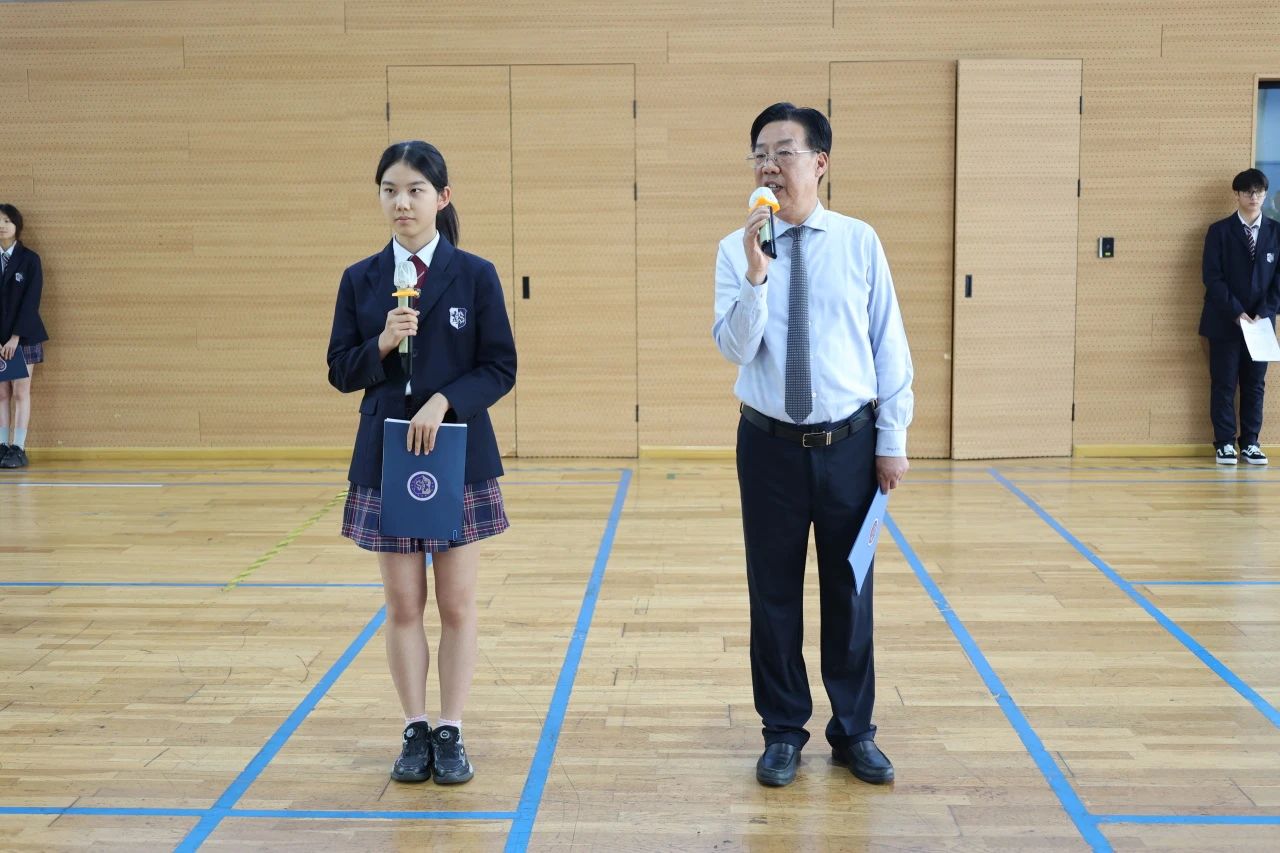
Dear teachers and fellow students,
Good morning!
Today, let’s explore a very important word—principles.
At first glance, this word might sound rigid or even stern. Some of you may instinctively take a step back upon hearing it, thinking, “Is this about listing more rules and restrictions?” But in truth, principles are not constraints; they are guides. They are not shackles but the foundation of freedom. Without rules, there would be no order. Without the black-and-white stripes of a crosswalk, how could we cross the road safely? Without the structure of time, how could we organize our studies and work efficiently? Principles bring order, and boundaries provide direction. Only by embracing principles can we stand firm in this world.
So, what exactly are “principles”?
Synonyms for “principles” include standards, rules, laws, guidelines, and beliefs—all conveying the idea that we should live and act with clarity and purpose.
Their antonyms, however, are words like carelessness, negligence, compromise, indecision, and indulgence… These remind us that a person without principles is easily swayed by emotions, influenced by others, or defeated by temptations.
Where do principles manifest in our lives?
First, principles are about respecting rules. The order, peace, and progress of our world rely on everything following its own set of rules. The universe operates by its laws, with stars moving in harmony and seasons changing predictably. Animals abide by survival rules, choosing habitats and adapting to times. Humans uphold social norms, pursuing civilization and reasoning. The United Nations has its Charter to regulate international relations and maintain global peace; nations have laws to protect rights and ensure order; schools have codes of conduct to foster a positive environment and guide student growth; families pass down traditions to nurture character and harmony.
In daily life, rules are everywhere: stopping at red lights, walking at green lights; speaking softly and showing courtesy; queuing in order and staying in line… Our school also has clear guidelines—schedules, classroom discipline, phone usage, hygiene standards, and behavioral expectations. It is because we all choose to follow these rules that our lives run smoothly and our campus remains harmonious. Respecting rules is the most basic reflection of a principled person.
Second, principles are about social conventions. These are not strict laws or commands but unwritten agreements formed over time. For example, holding your bowl while eating, listening attentively without interrupting, planting in spring and harvesting in autumn, honoring ancestors during Qingming Festival, reuniting with family during Mid-Autumn Festival, respecting teachers, caring for classmates, or offering help to those in need… These practices may not be emphasized daily, but we all know they are right and necessary. They represent societal consensus and the baseline of behavior.
Third, principles are about integrity. Integrity means commitment, trust, and responsibility. When you sign a contract, you honor it; when you promise something, you follow through; when you set a goal, you don’t give up easily; when you make a choice, you take responsibility for the outcome. Integrity builds trust and makes us reliable. A principled person doesn’t just talk—they act.
Fourth, principles are about internalized self-discipline. The purpose of rules is not just external enforcement but to gradually become part of our inner values. A truly principled person doesn’t need supervision to make the right choices. Even when no one is watching, they adhere to rules, uphold boundaries, and remain steadfast. For example, while smartphones are essential in modern life, excessive use can hinder learning. Following school rules to use phones responsibly becomes an act of self-discipline for every student. Principles are the compass in our hearts, upheld by willpower, determination, and sometimes even sacrifice.
Lastly, it’s important to balance principles with flexibility. Principles are not rigid doctrines. Some assume that having principles means no room for compromise, but in reality, principled people are both firm and kind. Principles and flexibility are like “two wings of a bird.” While core values (like honesty and fairness) remain unchanged, methods can adapt. For instance, resolving conflicts by finding common ground, prioritizing the bigger picture over personal preferences, yielding to an ambulance in an emergency, rescheduling a spring outing due to heavy rain, or withholding medical truth to protect a patient’s feelings. We must know what to stand firm on and when to show understanding. Principles are not tools to restrict others but to guide ourselves. Being neither harsh nor weak, holding firm while adapting, is the true way to uphold principles.
Fellow students, on your journey of growth, you will face many choices: Will you choose honesty or conceal the truth? Will you keep your promises or go back on your word? Will you stand for what’s right or follow the crowd? Each seemingly small choice quietly shapes who you are and who you will become.
May every one of us, as students of WUIS, carry principles in our hearts and know when to advance or retreat. May our actions align with our words, and may we be trustworthy and measured. At every step of growth, let us strive to be responsible individuals with unwavering integrity.
 Subsequently, school leaders presented awards to teachers who had excelled in various teaching competitions this semester. It is through their dedication to polishing every lesson into a shining diamond that these teachers earned widespread acclaim with their expertise in the arena of teaching excellence.
