

 The demonstration classes on the promising campus of Wuxi United International Primary School, led by experienced teachers, unfold with warmth, teeming with innovation and care in teaching.
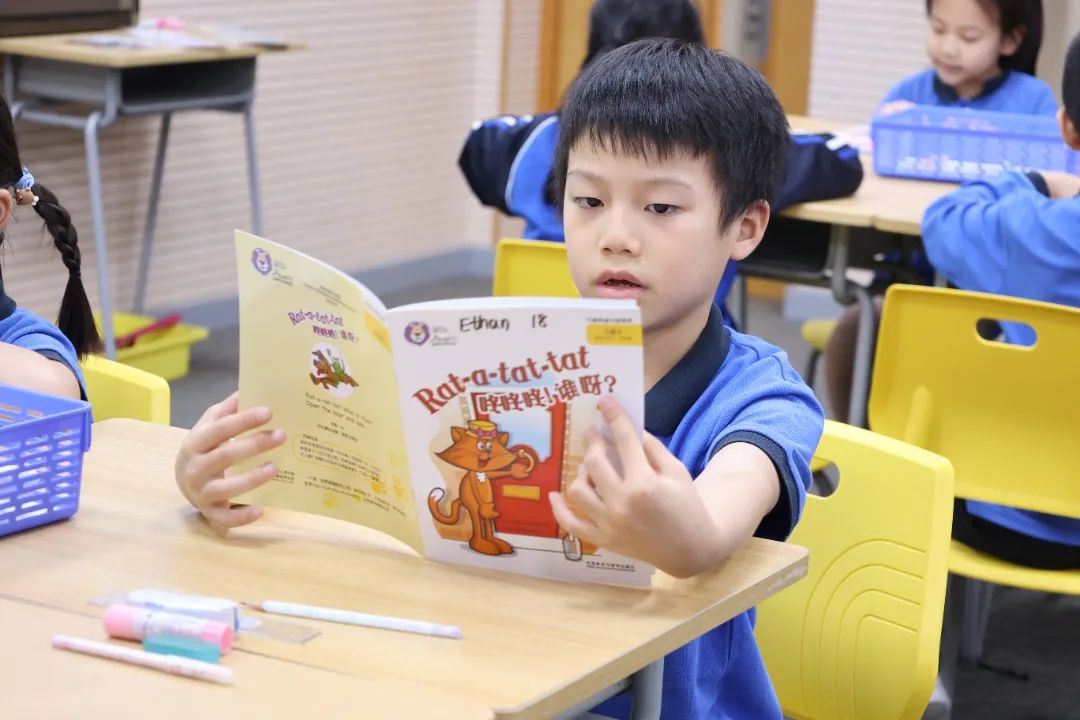

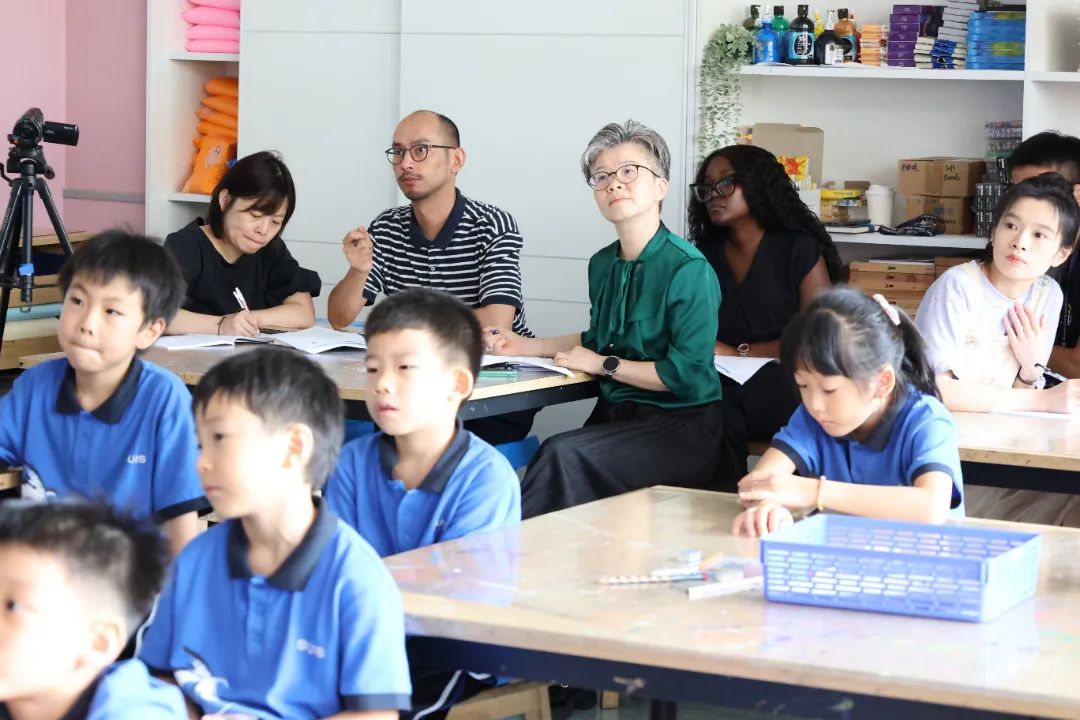

Original craftsmanship ,ignites sparks of creativity
 Ms. Nicole seamlessly integrates June 1st festivities into her class, emphasizing the close bond between math and daily life. This sparks her students’ curiosity, driving them to explore patterns autonomously and validate conclusions from dual perspectives. The process showcases their adept collaboration and investigative skills.
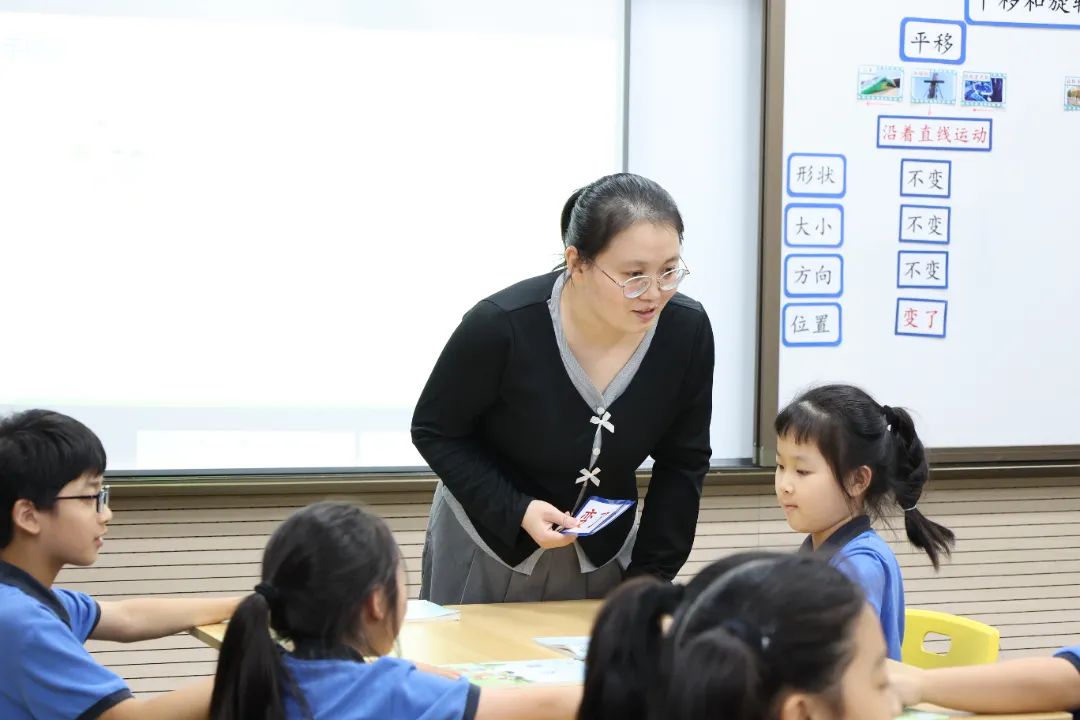 Ms. Danika’s class starts with an amusement park theme, a favorite among children, to ignite their enthusiasm for learning. By adopting methods such as observation, manipulation, and communication, supplemented by multimedia and physical models, students are ensured to grasp knowledge within vivid scenarios, thereby enhancing their interest in learning.
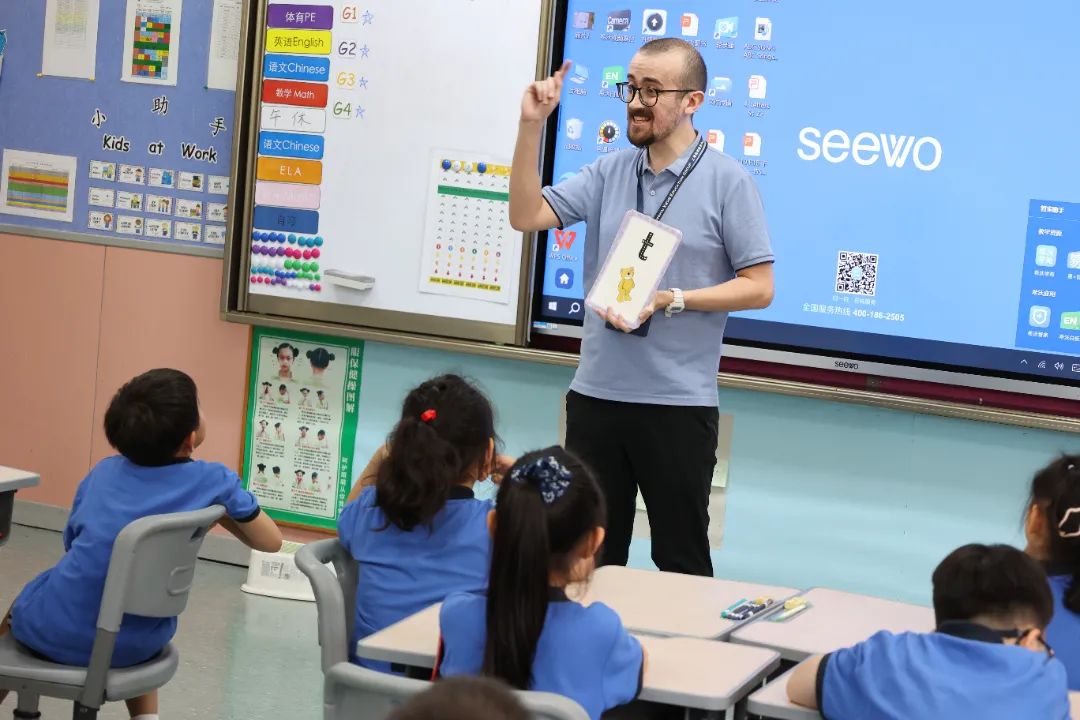 In this lesson, Mr. Thomas taught students how to recognize, pronounce, and write the phoneme/letter “k”. To warm up, he began with an entertaining song to stimulate the students’ energy. After reviewing previously learned pronunciations, he introduced the new sound: “k”. Students practiced pronouncing the sound and incorporated it into words (e.g., kit) while also learning to write the letter. Finally, the class concluded with an “odd one out” game, where students had to explain which object was different from the others and why.
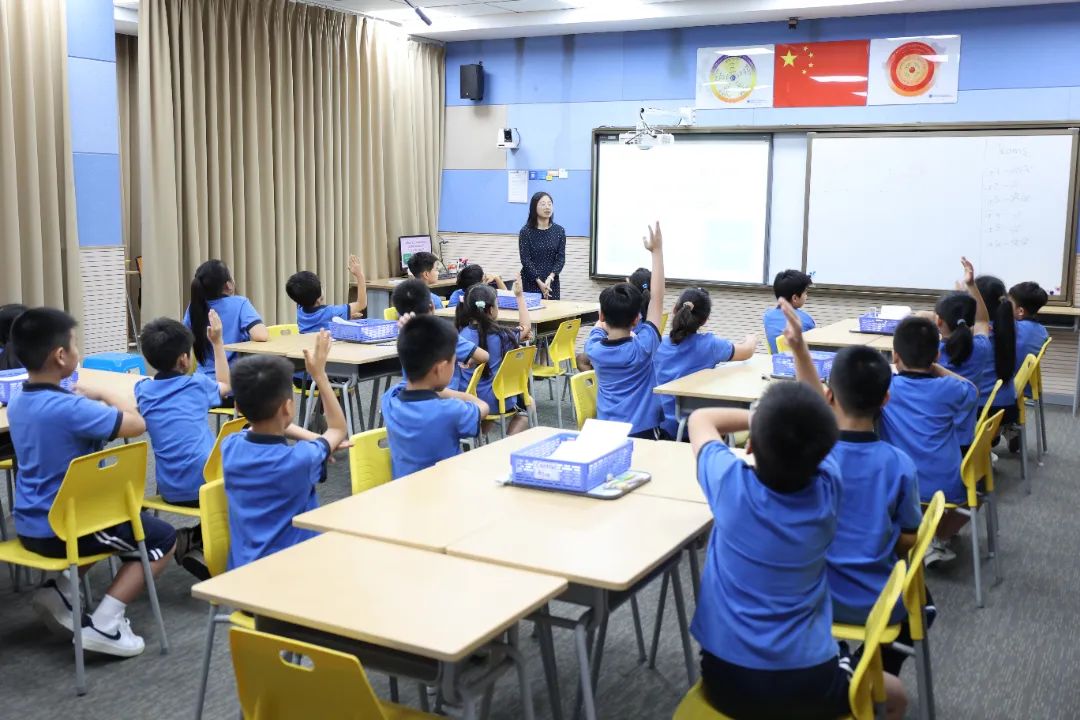 Our first Big Idea for Grade 4 is“Trade in China Influenced the World.” Ms. Una leads students in understanding past trade and how it has evolved over time. By focusing on the Silk Road, students can establish a connection between trade and China, as well as comprehend the profound impact China has had on global trade. In this particular lesson, students delve deeper into the experience by engaging in trade simulations with “merchants” from six different regions, enabling them to experience and comprehend firsthand how trade occurs.
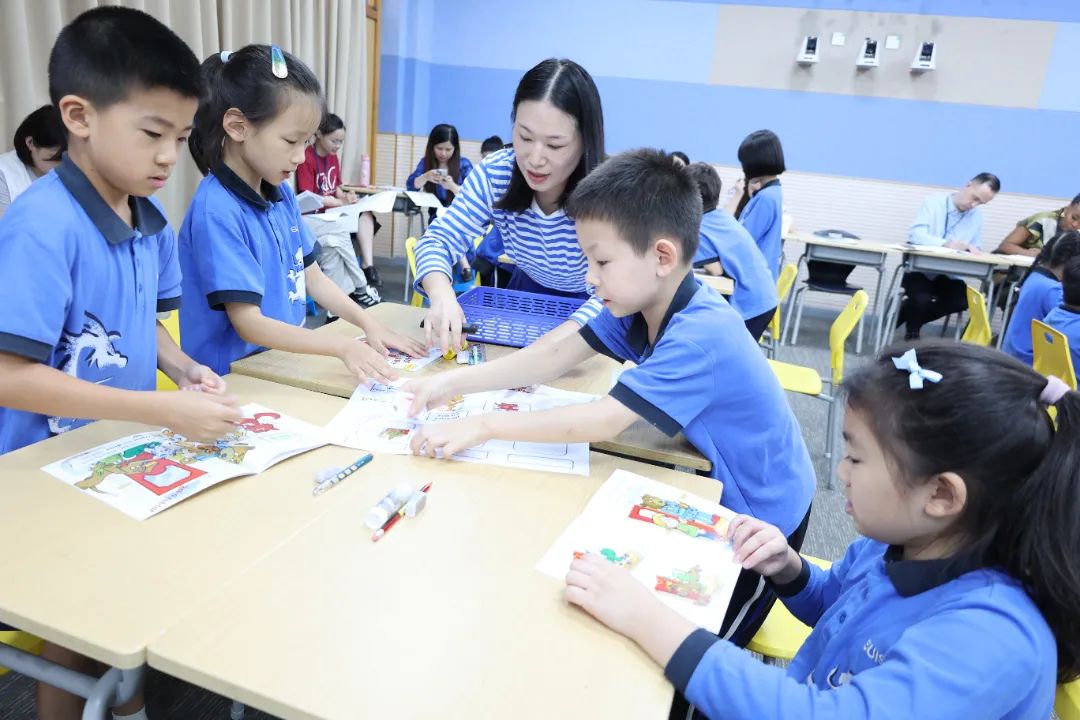 Ms. Hazel’s class employs “Rat-a-tat-tat” (Big Cat Level 3). It starts with a “Stop song” and a “Magic Bag” game to teach new words. Students then predict, infer, and explore emotions through the illustrations. Detailed text analysis enhances understanding of rhymes and sentence patterns, which students apply in their creations, such as “a cat and a bat,” performing them vividly. The class ends with a joint story retelling, reinforcing comprehension.
 The learning objective of Ms. Patricia’s class is to develop a character. Students will be learning to develop a character for their own narrative adventure text, creating a character helps students to express their creativity and imagination. It allows them to explore while improving their writing skills and gain confidence in storytelling.
 Ms. Mary’s picture book class on “Being Late” introduces fantastical tardiness reasons. Younger students love the ideas but struggle to express them coherently. The class aims to use the book’s creativity to inspire students’ storytelling, first verbally, then in writing, enhancing language skills and critical thinking.
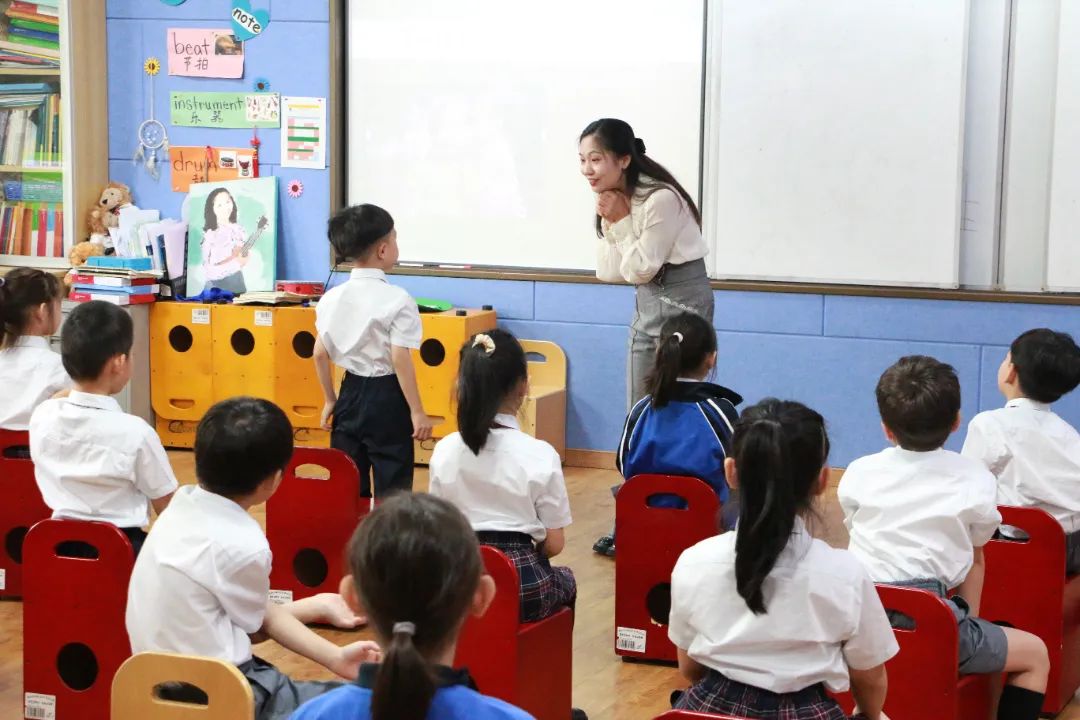 “The Dynamics of Sound” possesses a unique charm. It employs vivid teaching methods to enable students to intuitively experience the variations in the intensity of sound. The curriculum is ingeniously designed to guide students in actively participating and experiencing the lesson. Ms. Cherry’s music class fully showcases the captivating allure and educational value of music.
 Ms. Fiona engages her students in a lesson where they appreciate music and learn to create abstract paintings in the style of Wassily Kandinsky, utilizing lines, shapes, and colors. The objective of this lesson is to stimulate students’ audiovisual synesthesia, enhancing their artistic perception and expressive abilities.
 This English reading class, taught by Ms. Yuki for 5th-graders, explores Christian’s lion’s growth journey. Students identify his habitats, companions, and actions. They grasp his transformation from captive to wild lion, discuss the reasons for and challenges of his release, emphasizing the importance of animal conservation. Emotional depth and reading strategies foster deep text analysis, showcasing the allure of English reading.
 Can people or animals with similar experiences better understand each other? Can we truly empathize with others? What inspirations can we draw from the boy’s transformation in the video? The classroom discussion serves merely as an introduction, while the after-class reflection in Ms Julia’s Philosophy for Children (P4C) course represents the true, in-depth, and personalized continuation.
 Ms. Sunny selects “Two Stems of Lampwick” from “The Scholars” to delve into Yan Jiansheng’s famous two-finger gesture. Students share gestures of acquaintances, drawing parallels with literary figures. The lesson focuses on Wu Jingzi’s “triple repetition with a climax” technique, examining Yan’s miserly persona and satirical language. This enhances appreciation of ironic novels’ linguistic allure, character development, and literary prowess.
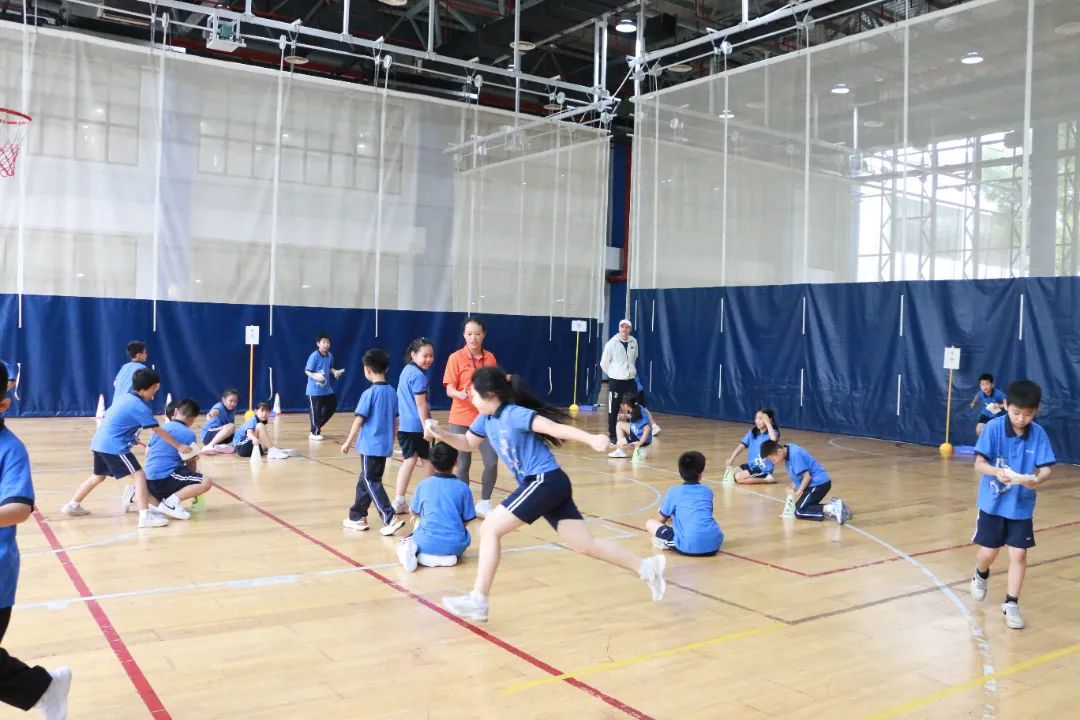 Answering the three fundamental questions of orienteering: “Where am I?”, “Where do I need to go?”, and “How do I get there?” Each run is a journey of experience, every wilderness a classroom, and one’s entire life a grand orientation. Orienteering is a trendy and healthy lifestyle. In Mr. Sasha and Ms. Tiffany’s physical education classes, not only have students’ abilities in sprinting been enhanced, but also their interest in learning orienteering has been ignited, fostering problem-solving skills and promoting teamwork and collaboration among them.