

哲思驿站
Philosophy shop is a place set up at WUIS where teachers, students, parents and visitors can discuss philosophical questions. Since 2019, each month Philosophy shop proposes one thinking question for every one to share ideas and to respond to others’ and our ultimate goal is to help each other become wiser and more reflective.
We’ve selected some enlightening ideas from last month and want to share with all of you here. In the meantime, we appreciate all the participants for inspiring our thinking!
*如果我有一种会让人开心的魔法,我会把它释放出去,因为我想让所有人都开开心心的度过每一天。只要其他人开心,我会更高兴的!
if I have the magic to make every one happy, I will release it because I want all people to be happy. As long as they are happy, I will be happier!
—— P1B 蒋晨茹 Grace Jiang
*这个家一直都是我跟爸爸妈妈一起管理,因为每个人都有每个人的长处。
My parents and I have always been taking care of our house together because all people have their unique merits.
—— P2D 何宇涵 William He
*在未来,什么东西都可能会变大吗?是的,因为万物皆可能。
In the future, will things become bigger? Yes, because impossible is impossible.
—— P3C 郑琪严 Ace Zheng
*变完美一定会让别人觉得是件好事吗?是靠努力变完美好,还是一下子?
Is becoming perfect a good thing? Is it better to be perfect slowly or at one blow?
—— P4C 梁译兮 Crystal Liang
*我觉得完美的人是不存在的!没有什么是最完美的,各自都有自己的长处和短处。
I don’t think perfect people ever exist! Nothing is perfect and they all have their own merits and demerits.
—— P5D 顾壹尘 Chucky Gu
*每个人对完美的定义不同,所以一个完美的人需要有很多不同的性格或特征,无法做回自己。
Every one defines perfect differently, so a perfect person needs to have different personalities and features and he can not be himself.
—— P6B 洪赟 Angel Hong
Immy’s Interesting Invention
Immy is concerned that too many people lie to each other, steal from others and generally harm other people when they shouldn’t. To combat this worry—a worry that many people share with him—and being also a scientist and inventor, Immy has come up with what he thinks is a solution to the problem. He has invented a tiny device that can be implanted into our hands, and once implanted will stop anyone with the implant being able to do certain things, no matter what the circumstances. Immy suggests programming the device to stop us from doing the following things because he thinks they are things no one should ever do:
1. Lying
2. Stealing
3. Causing harm to others
That would mean that once the device has been implanted into your head you would be simply unable to lie, steal or cause harm to others. If you tried, then your tongue, your hands-or whatever it is–would simply stop working.
Start Question 1a: Would you have the implant with Immy’s suggestions programmed in so that you would never, under any circumstances, lie, steal, or cause harm?
Start Question 1b: If not Immy’s, have you any of your own suggestions that you would programme into the device?
Questions to take you further
*Just like Immy, some people think that there are certain things you should never do, under any circumstances, such as killing. Are they right about this?
*Is it right that we have freedom be limited so that we behave better?
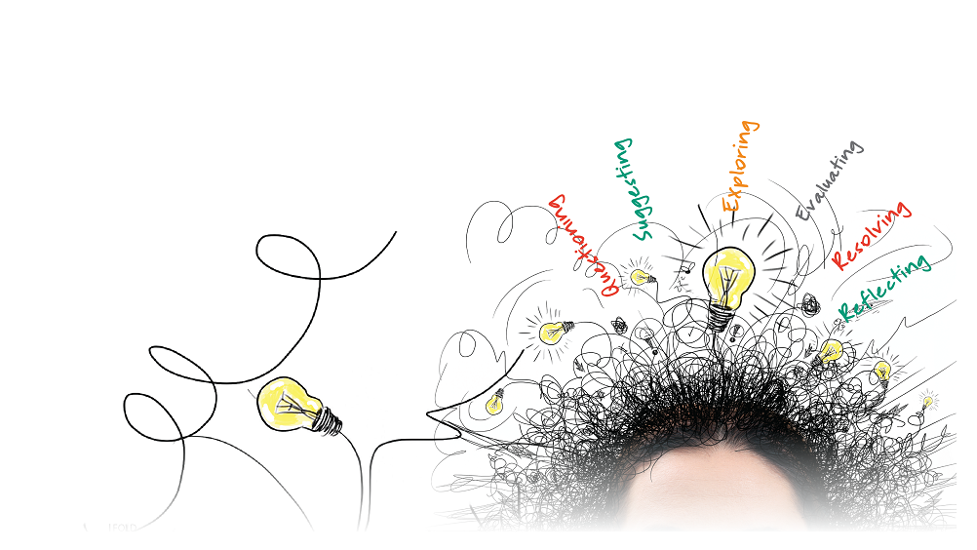
What is P4C?
Philosophy for children, abbreviated to P4C, was started by Professor Matthew Lipman in the 1970s and has now been put into practice in more than 60 countries and areas. It is a teaching strategy that can be applied to all subjects, aiming to develop students’ critical, creative, caring and collaborative thinking skills and it also helps improve students’ cognitive and emotional skills. Just as American Educator John Dewey once said, education that focuses on community, communication, inquiry and attitude refactoring is beneficial to citizens who live in a constantly changing world.
WUIS primary has officially become a P4C Gold Medal School since Nov. 2020 and it was authorized by P4C China and Dialogue Works in England. So far, there are only 4 schools that have gained the authentication.
WUIS getting the gold medal undoubtedly indicates that we’ve explored and achieved a lot in building P4C curriculum, supporting the development of P4C teachers and establishing inquiry communities, etc. Also it means that we could open P4C lessons of high quality at all grade levels independently and that P4C teaching strategies could be applied to other subjects and campus activities in a comprehensive and flexible way.