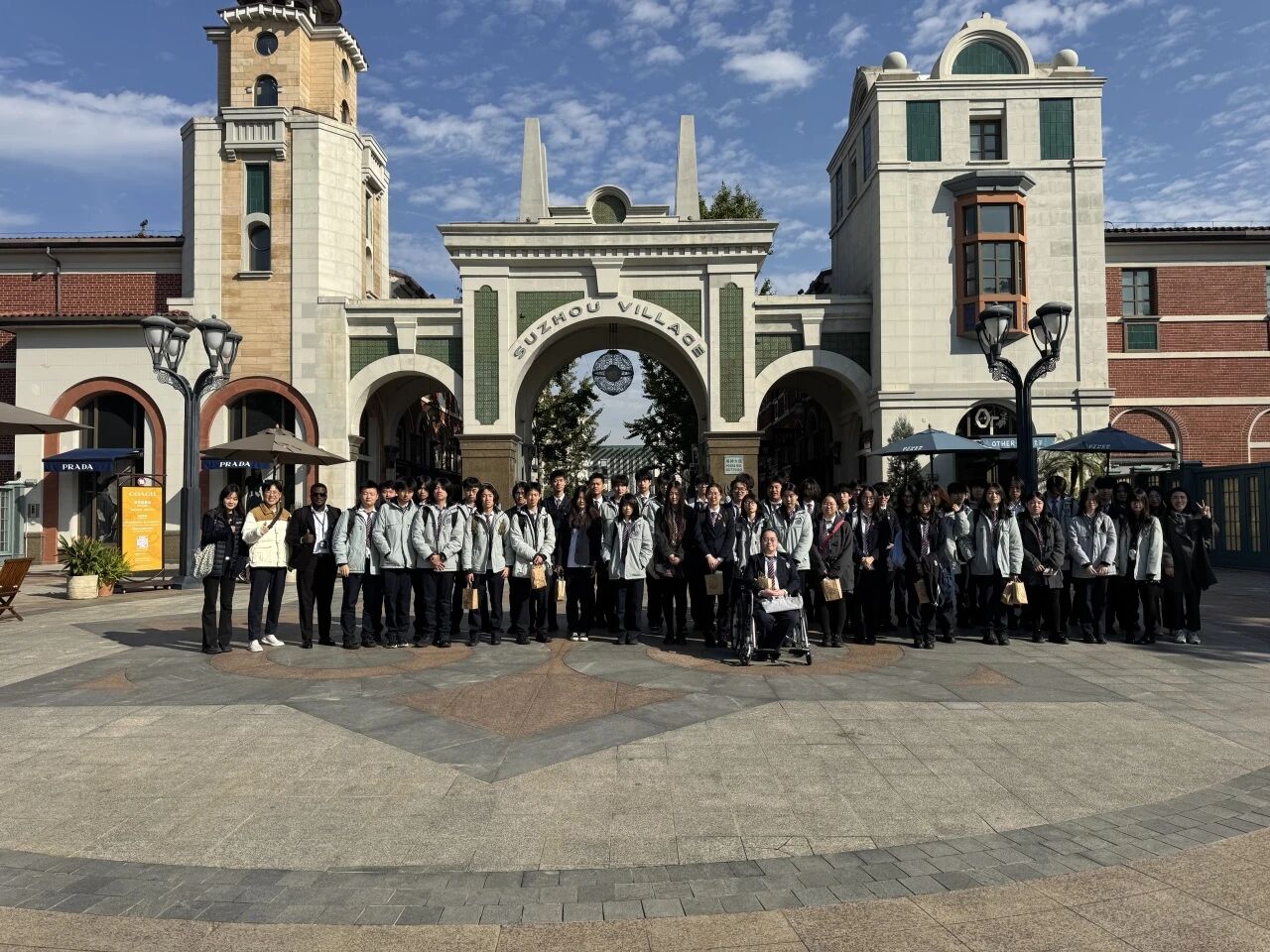
 What happens when 55 young economists and business strategists trade their classroom for China’s first Bicester Collection village? On 11 November 2026, Grade 11 and 12 students from Wuxi United International School (WUIS) found out. Their destination: Bicester Village Suzhou on the Yangcheng Lake Peninsula. Their tools: not shopping bags, but research questions, hypothesis sheets and observation tables. In ten research groups, they spent the day testing IB and A Level theory against the reality of a living, breathing marketplace — and were back on campus by 15:00 to defend their findings in front of their teachers.
Dressed in formal uniform, they observed, counted, photographed and recorded. This is what learning looks like at WUIS.
Inquiry by Design
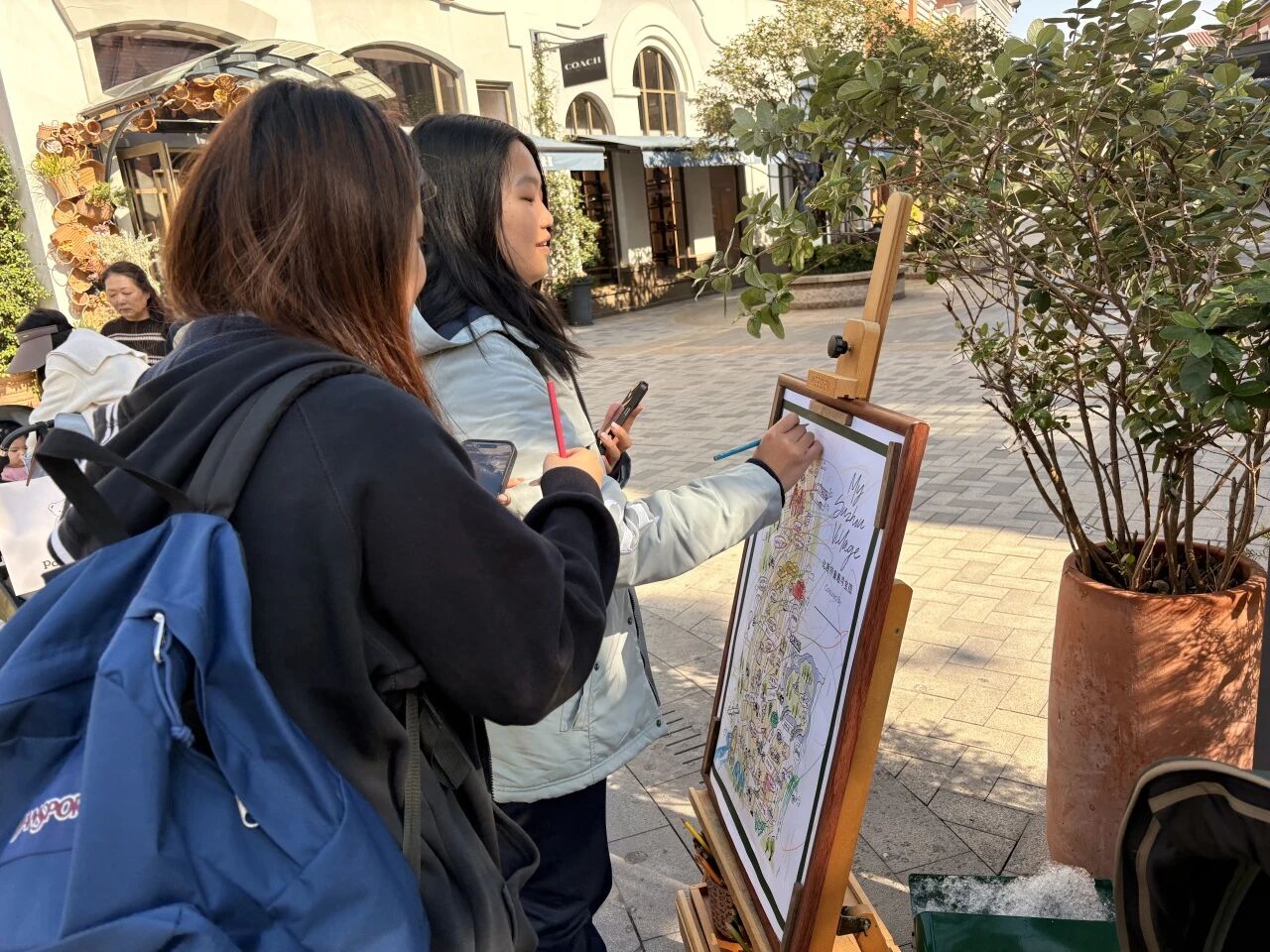 Mapping the village before the hunt for data begins
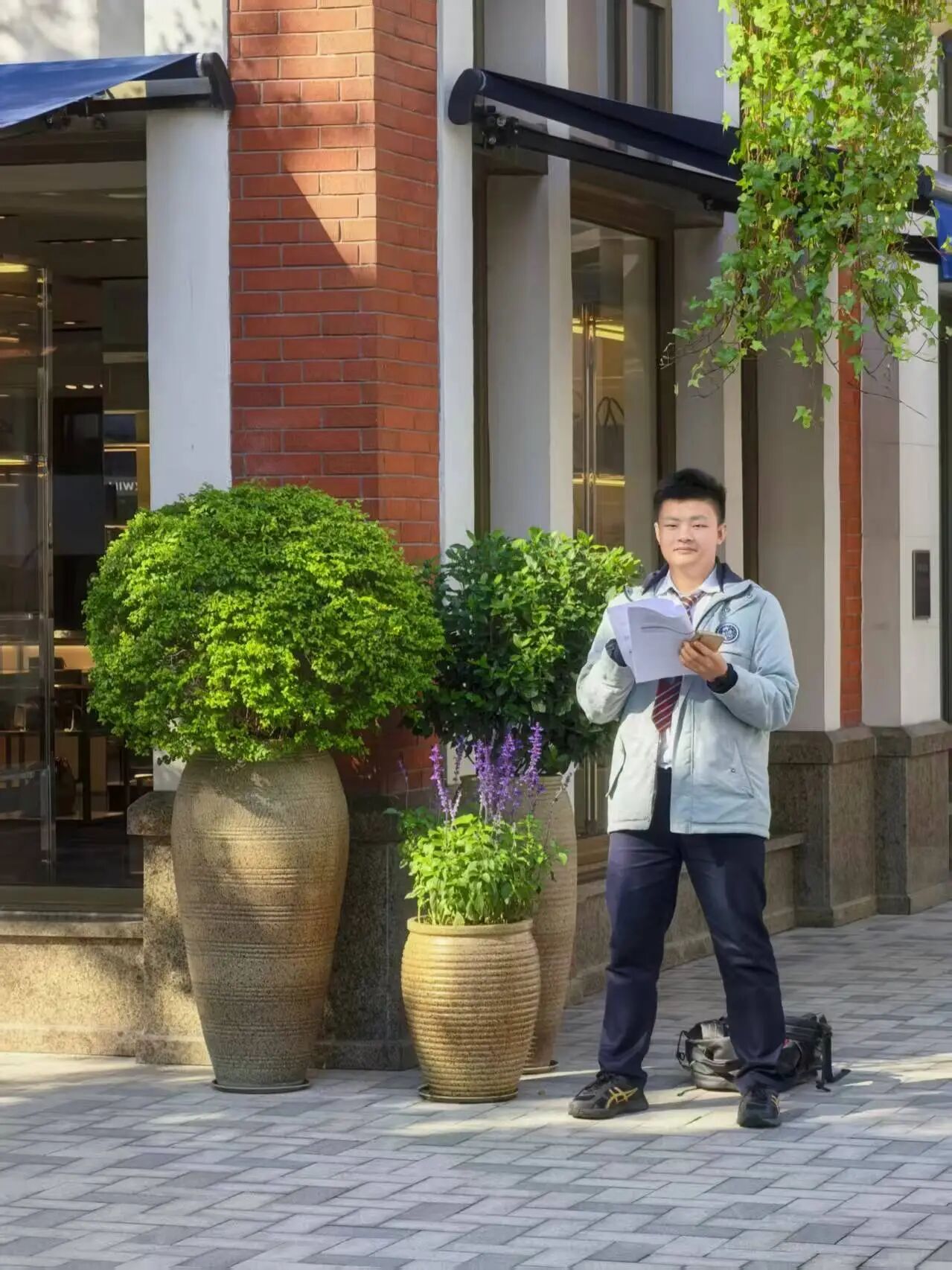 Field booklet in hand, eyes on the evidence
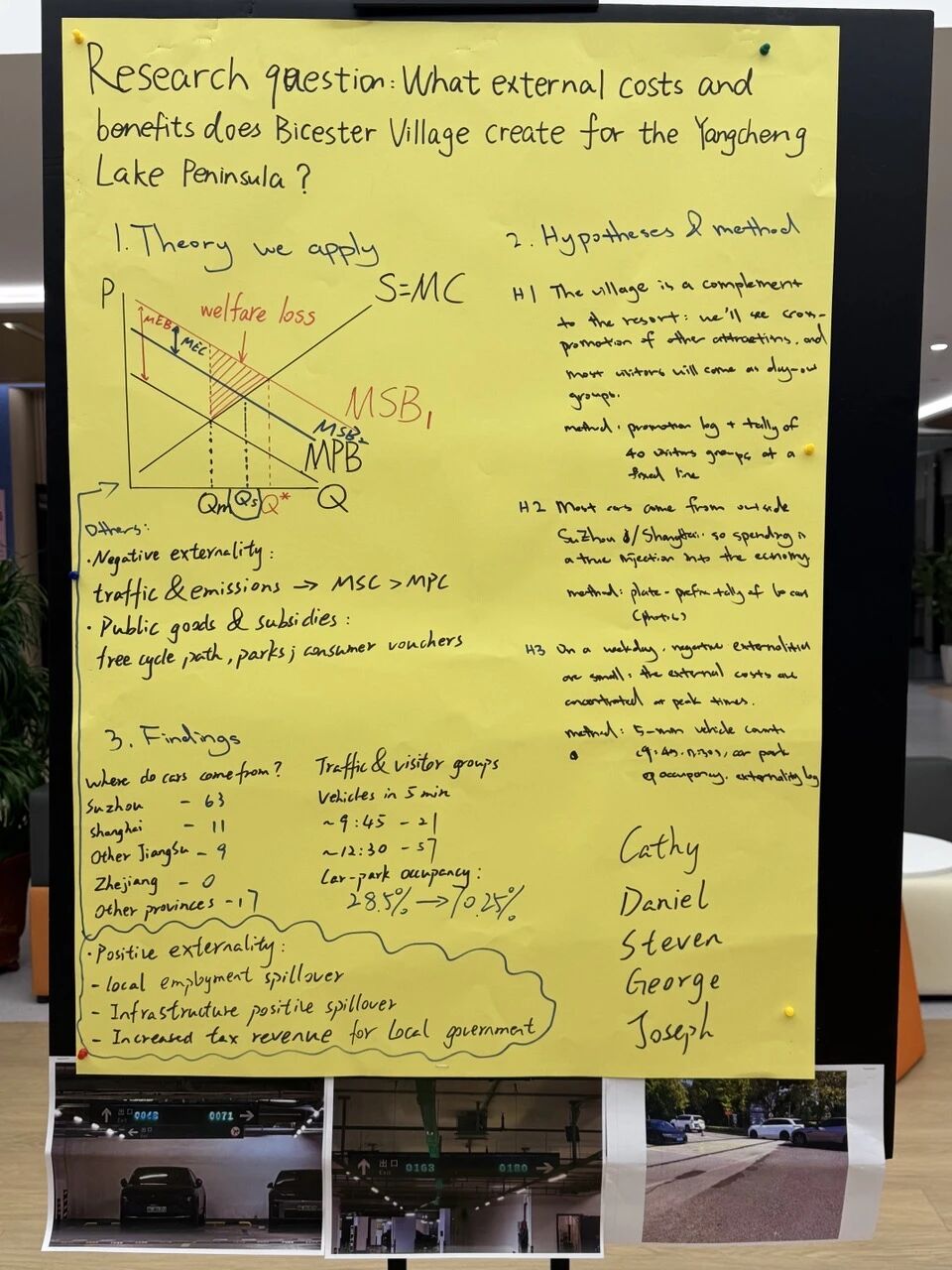
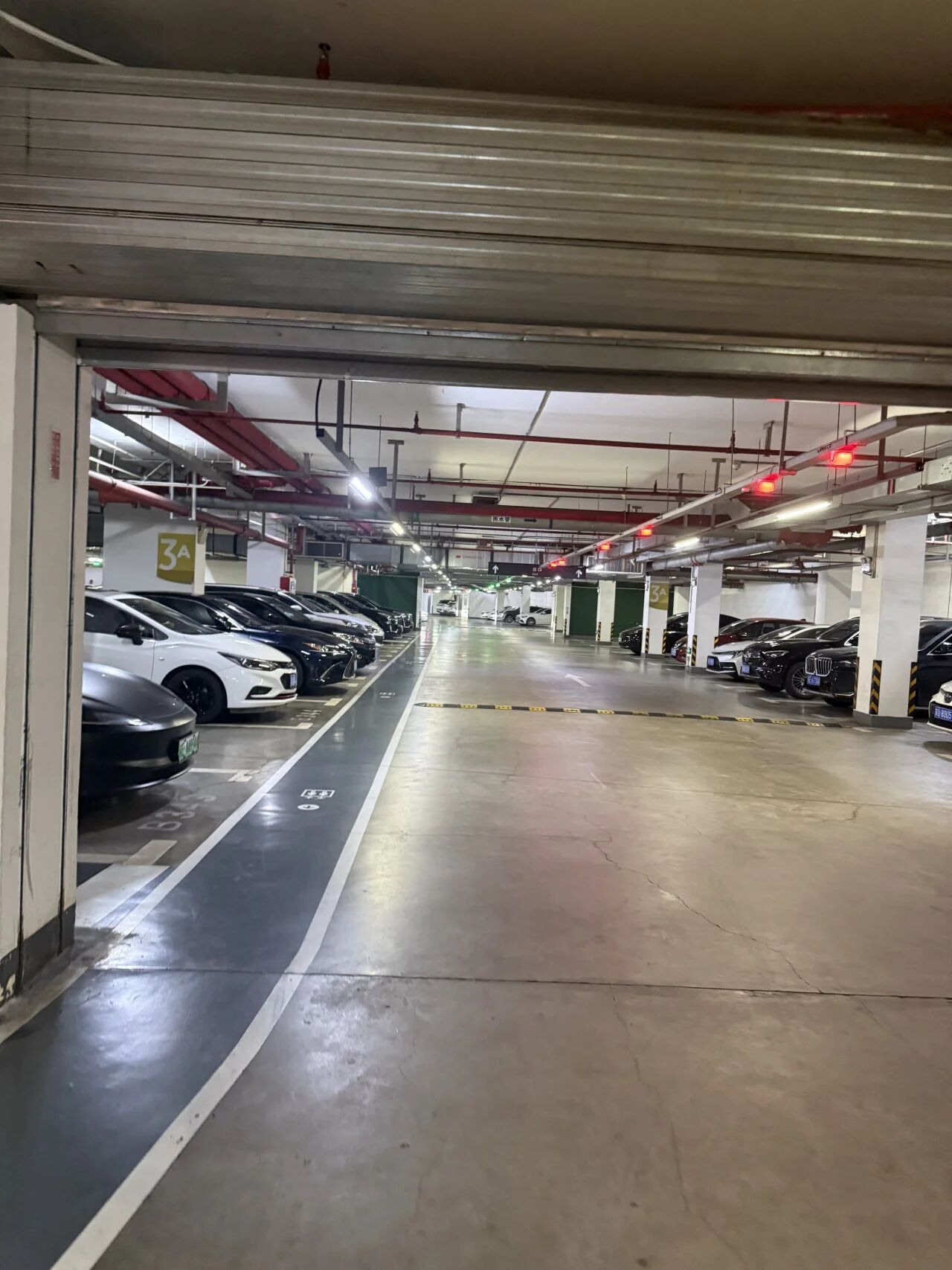 Counting cars, decoding catchment areas
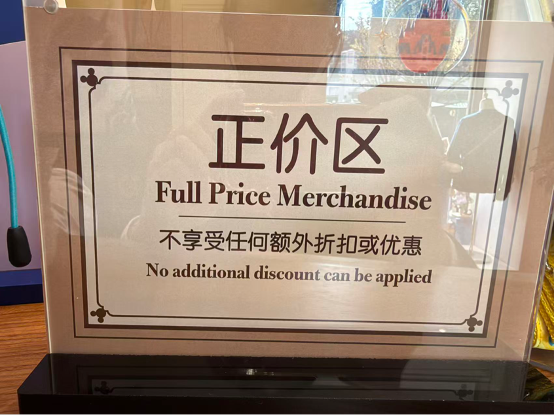 Full Price Merchandise: pricing strategy in the wild
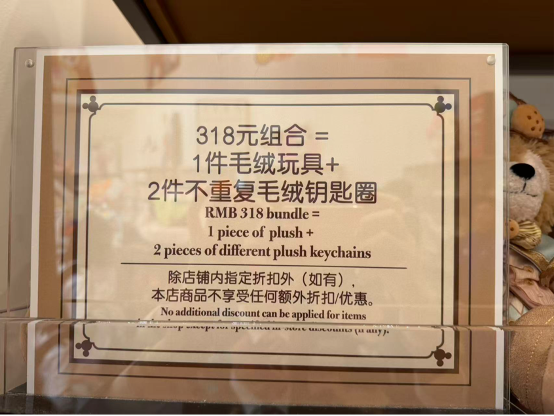 A RMB 318 bundle: price discrimination, up close
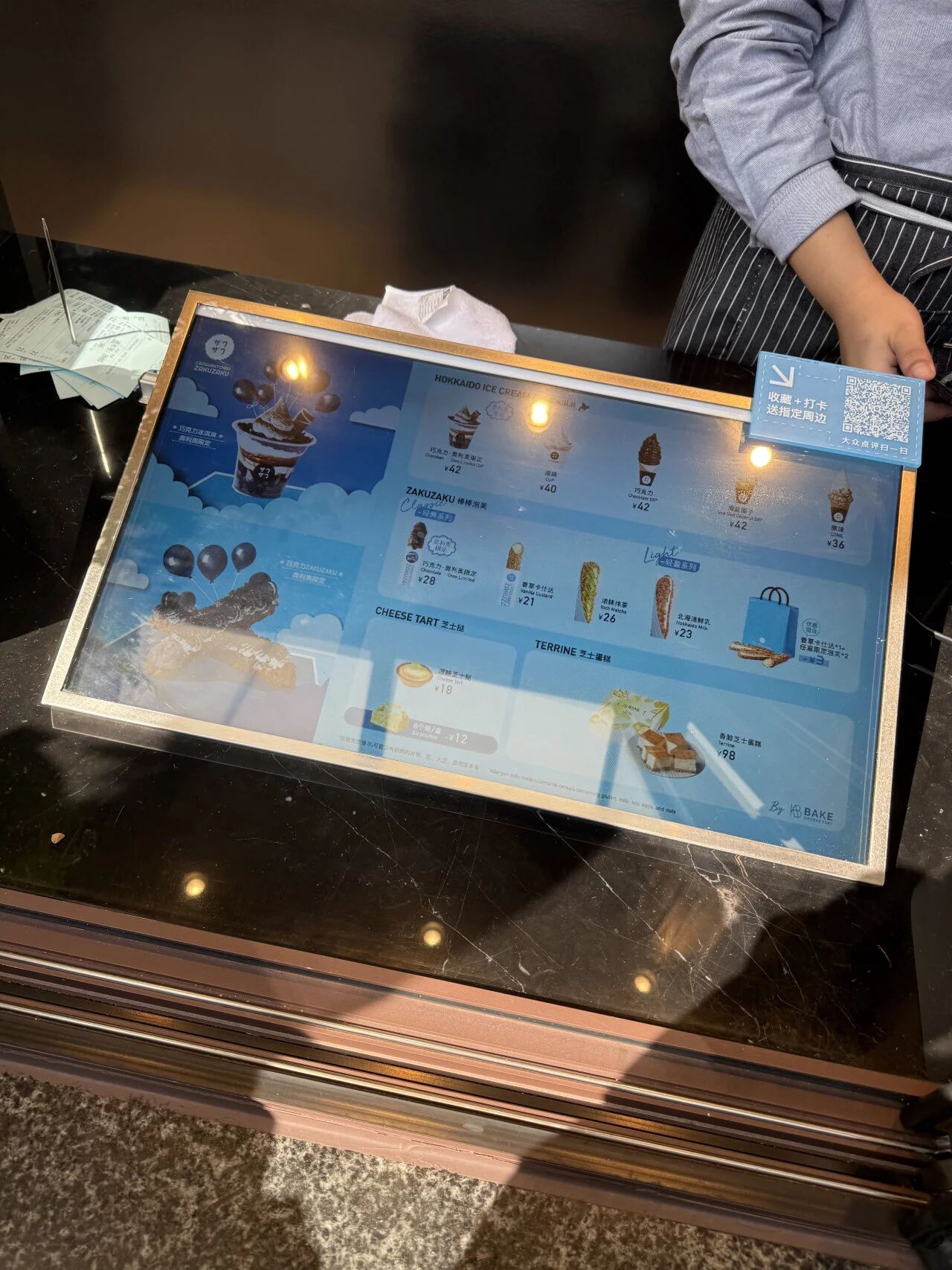 Scan to join: a live case of switching costs
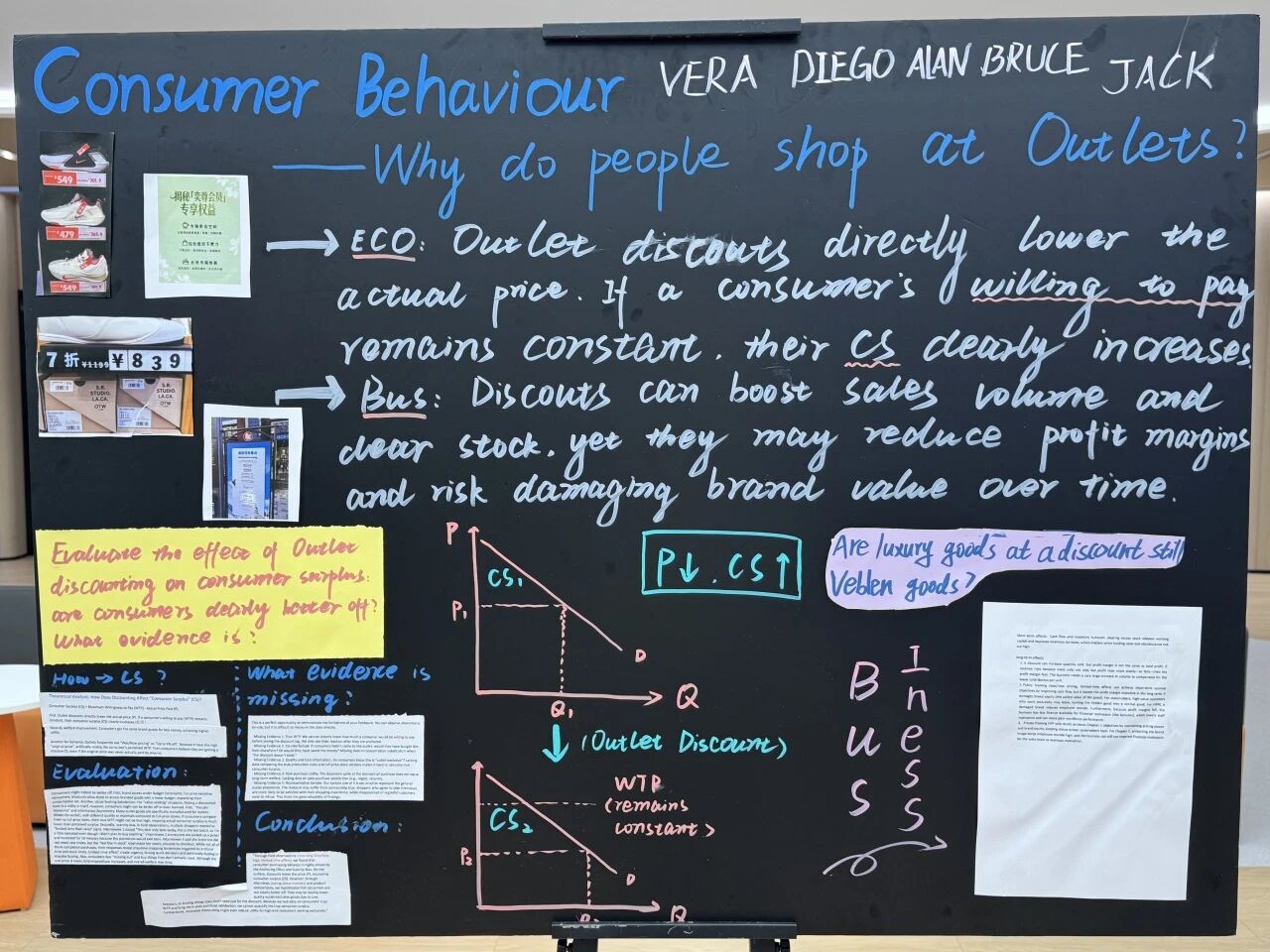
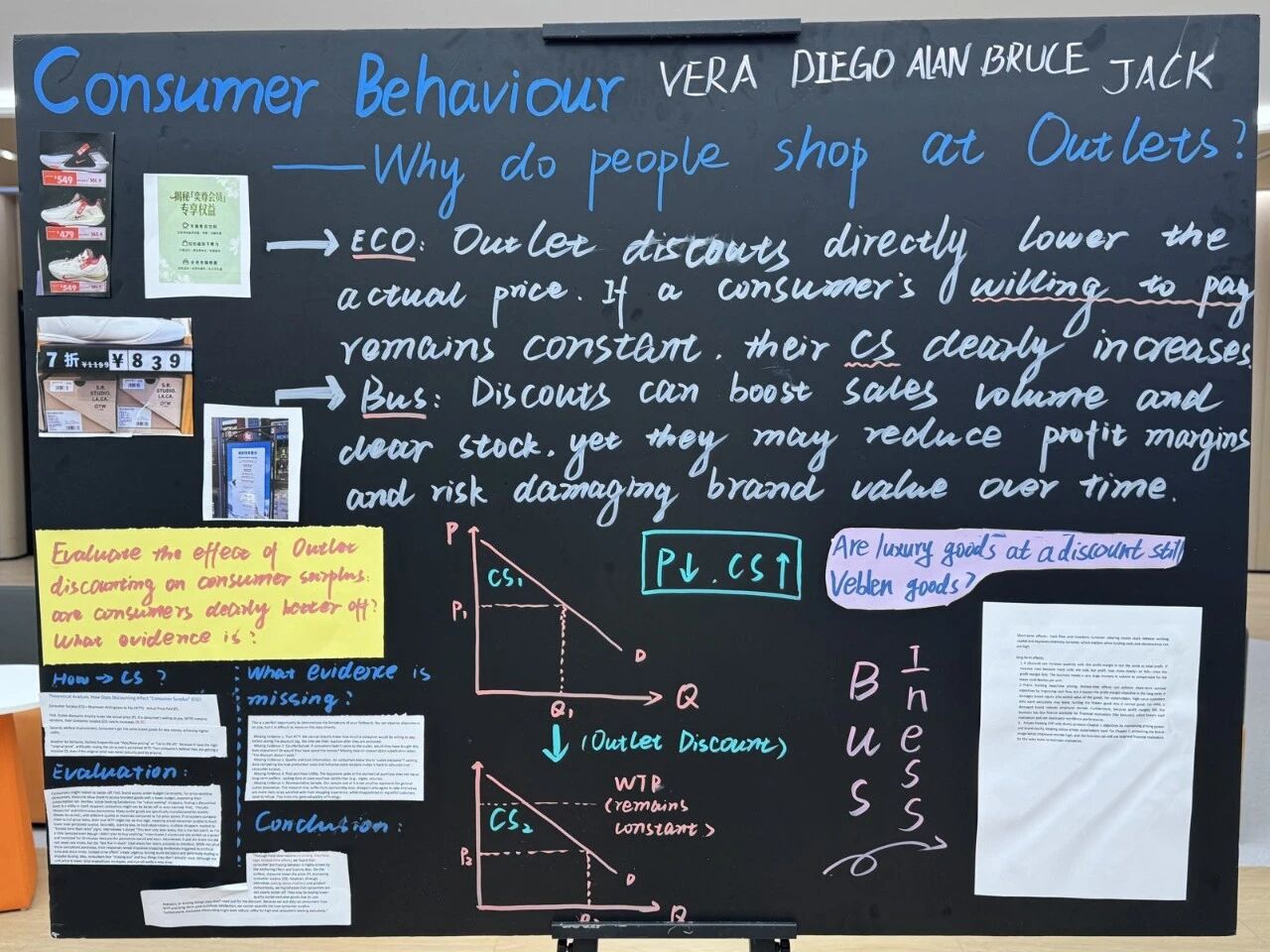 Consumer Behaviour — “Why do people shop at outlets?” Hand-drawn demand curves prove how discounts grow consumer surplus (P down, CS up) — then the group pushes further: Who benefits more?
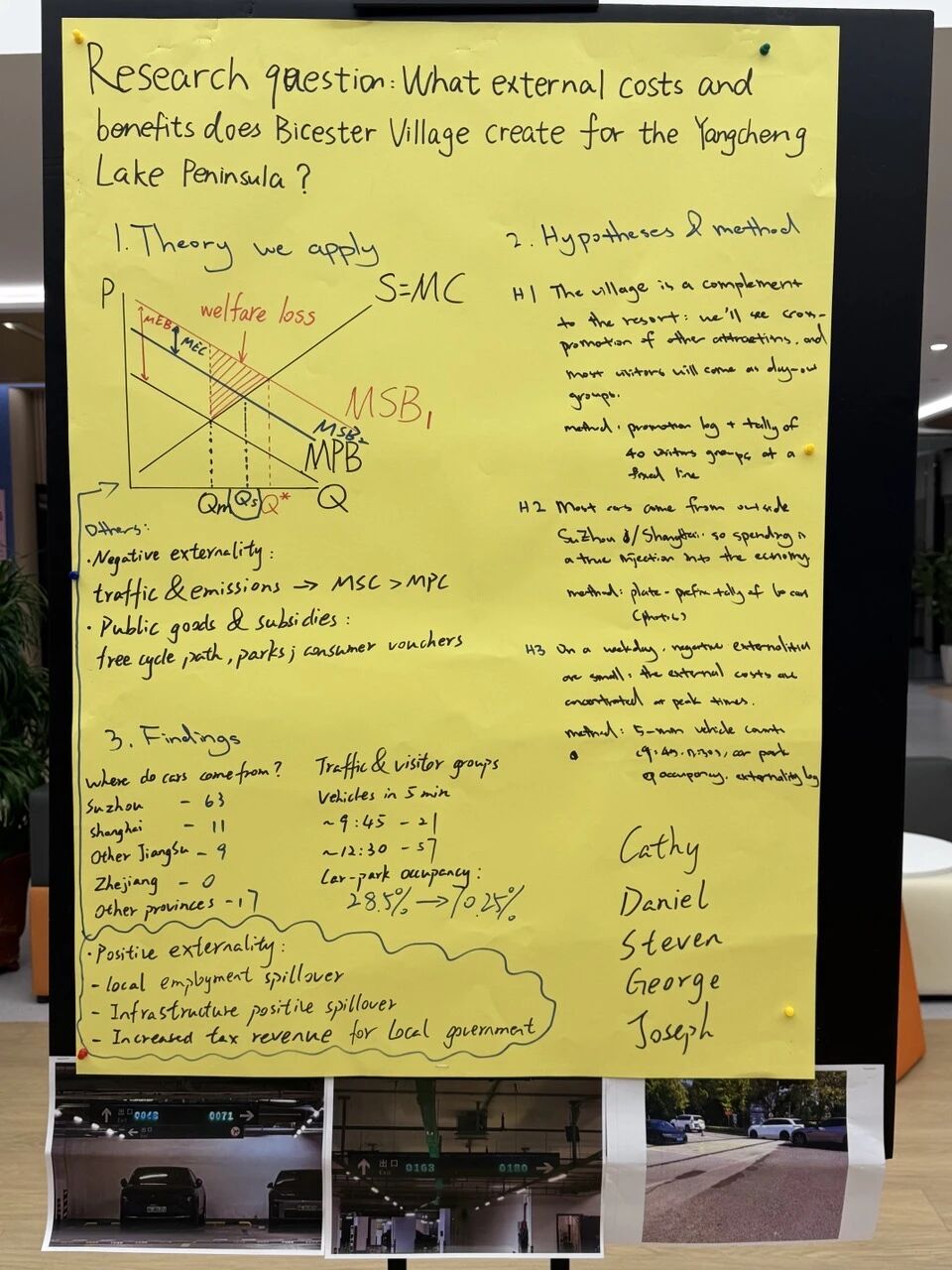 Externalities — MSB/MSC diagrams meet self-collected traffic data to weigh what the village gives to — and takes from — its neighbours.
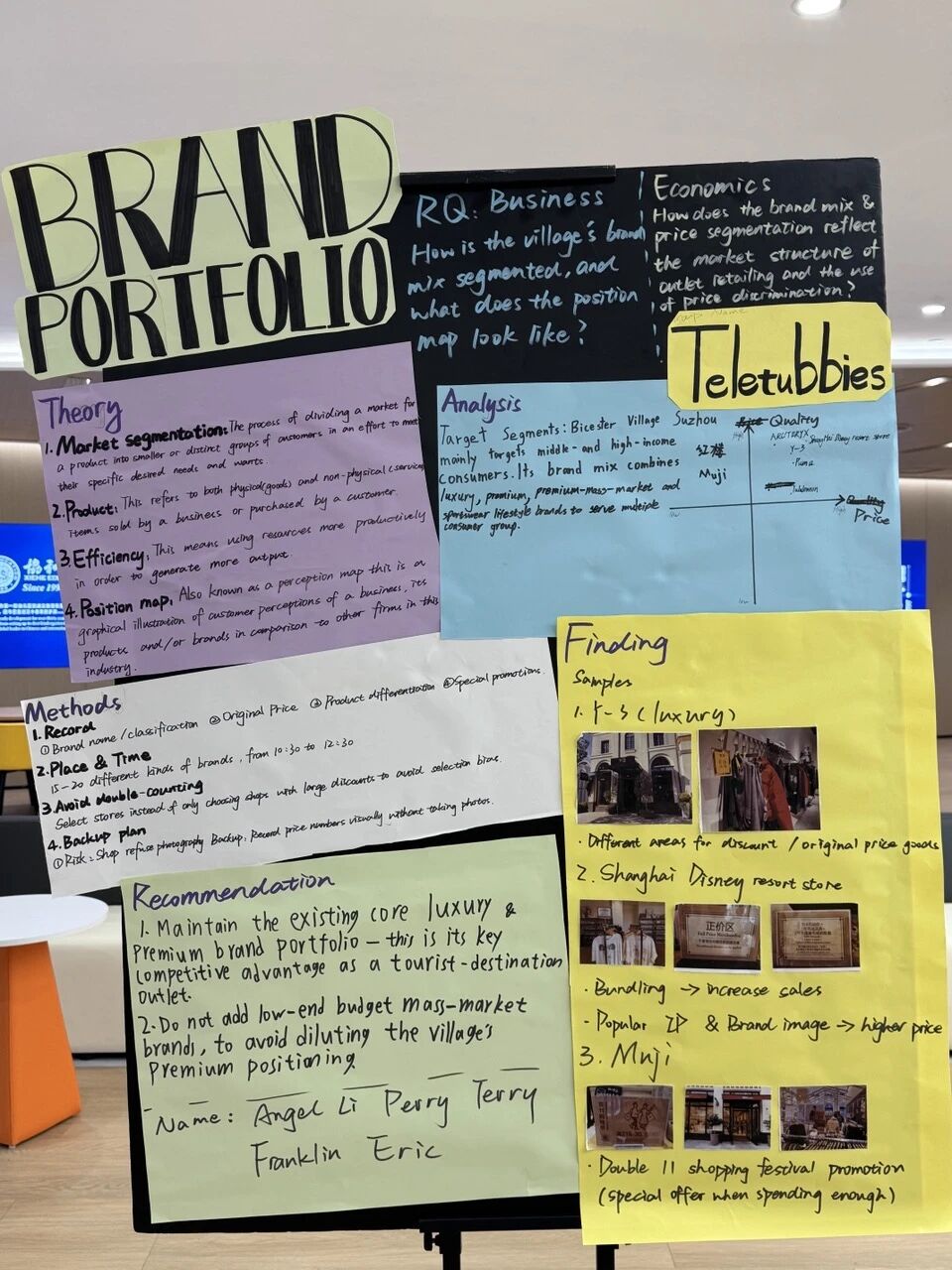
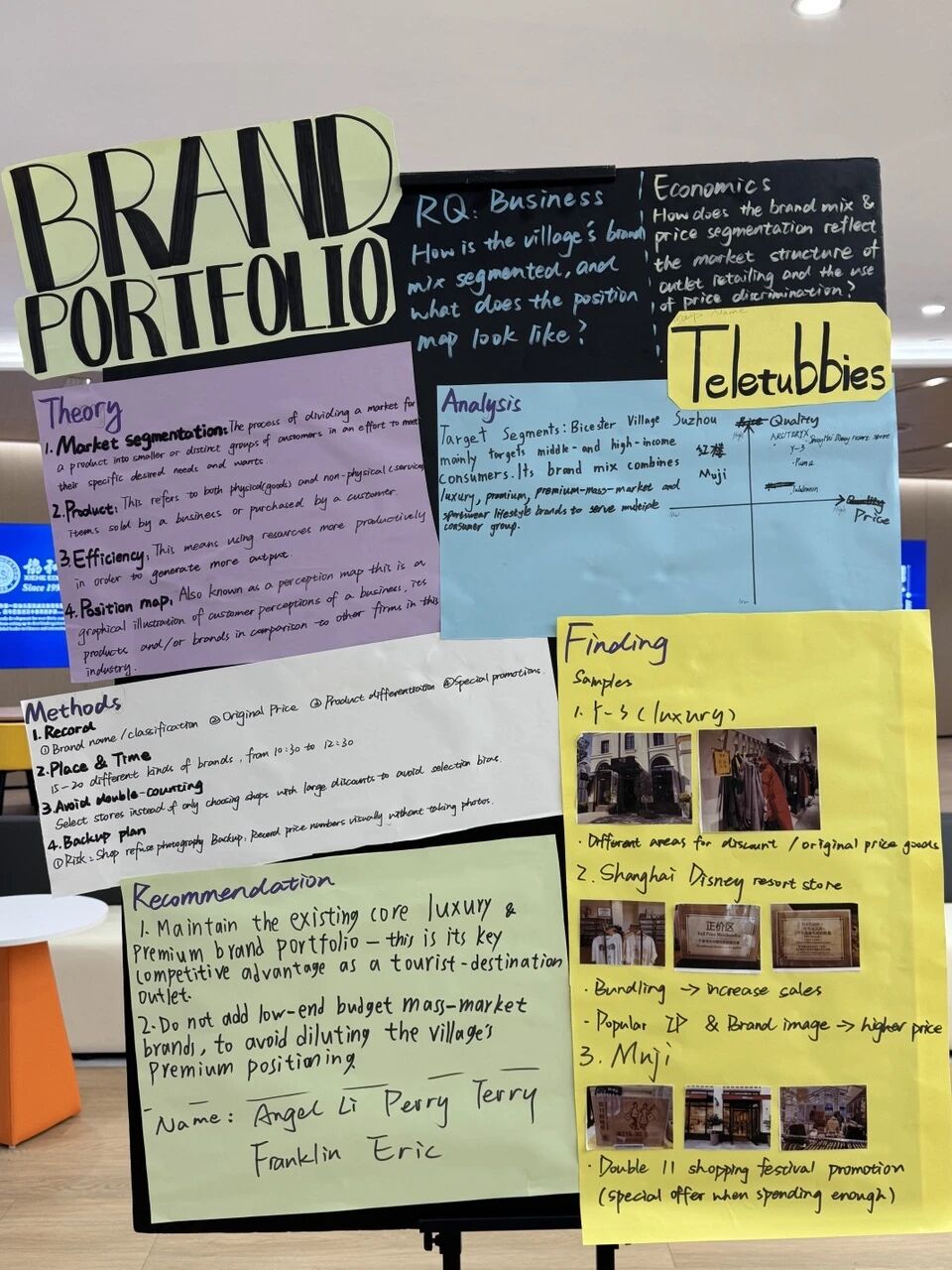 Brand Portfolio — after benchmarking against the Shanghai Disney Resort store, the verdict: hold the premium line. No lower-end brands.
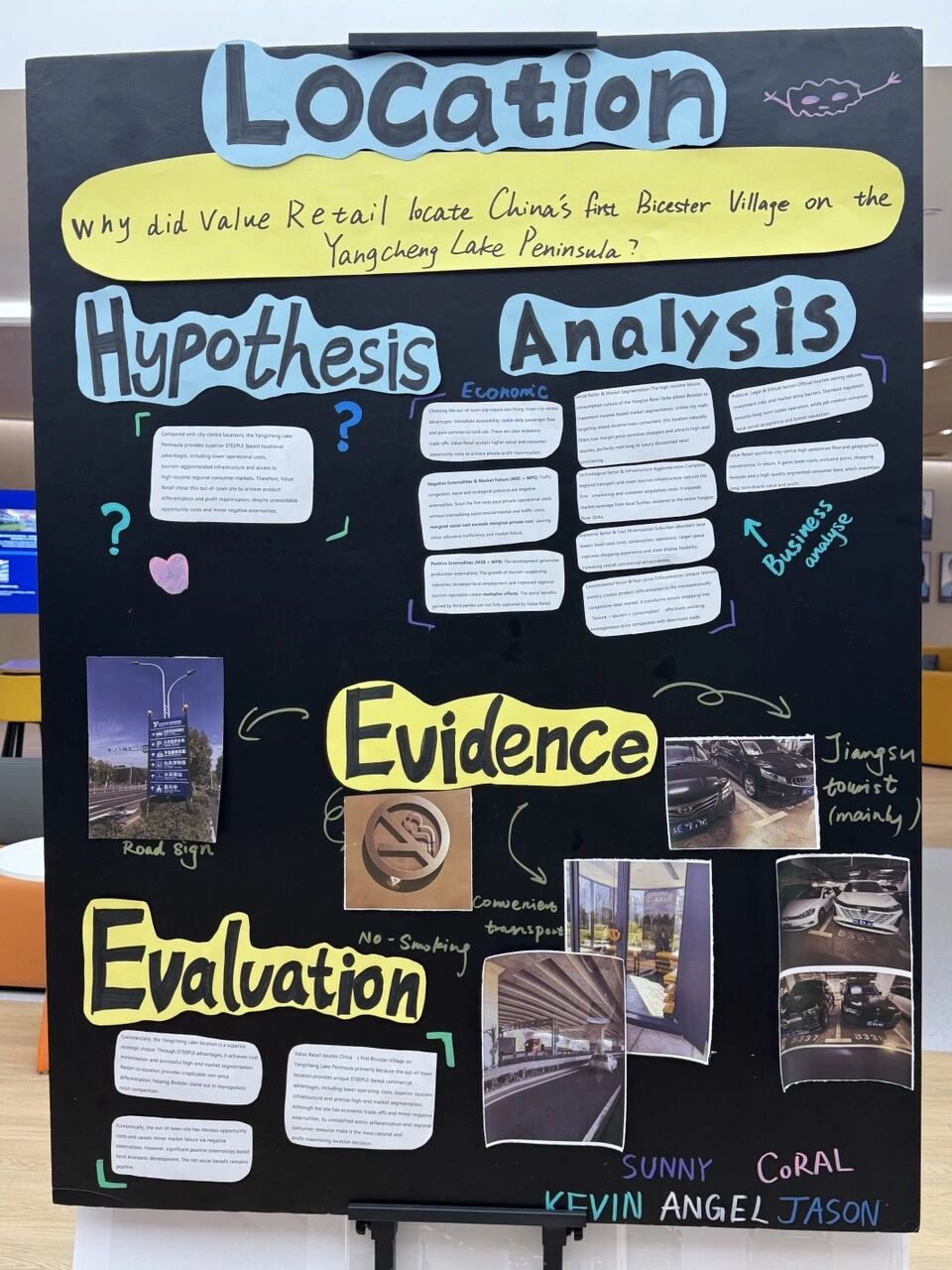
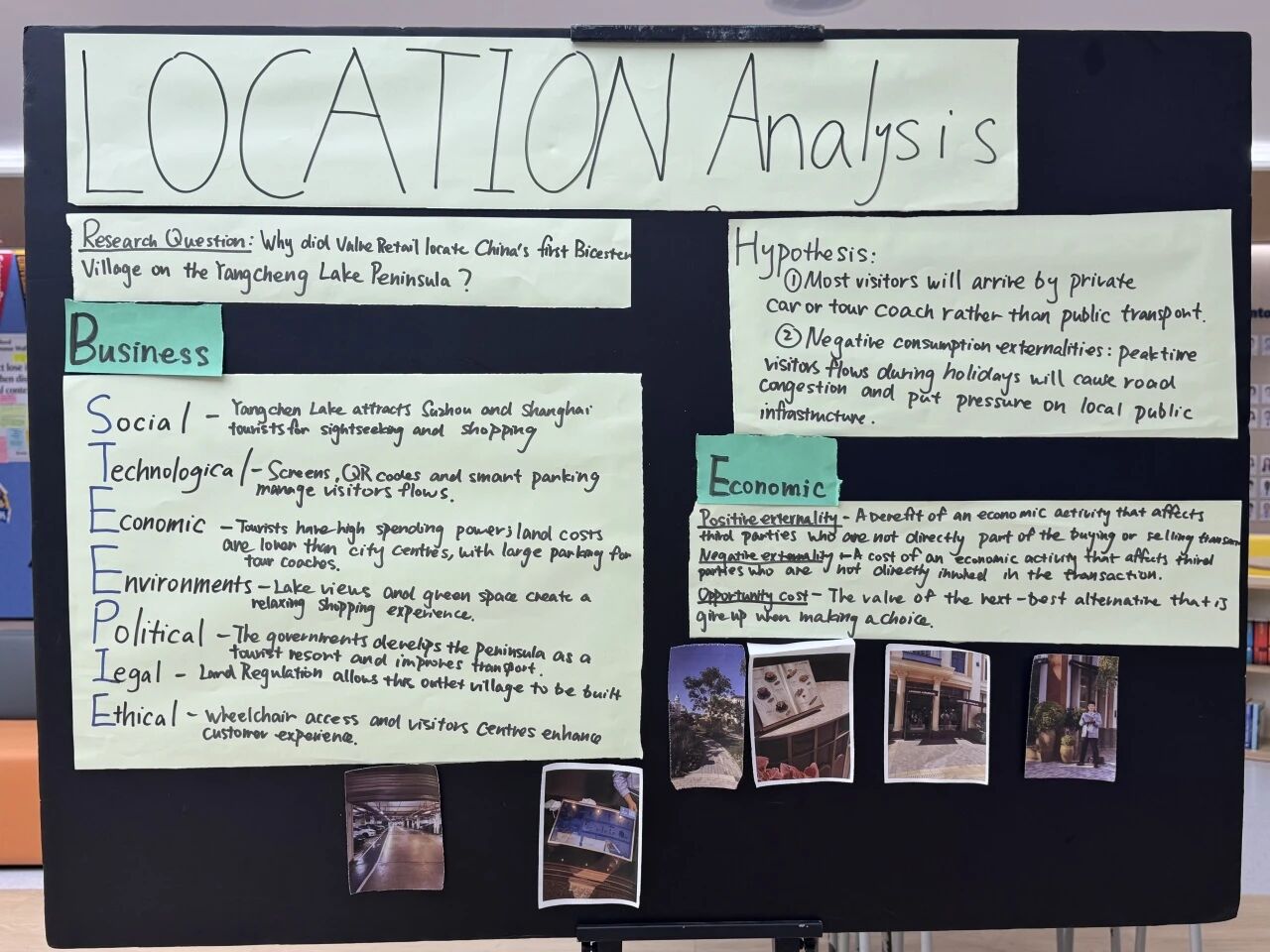
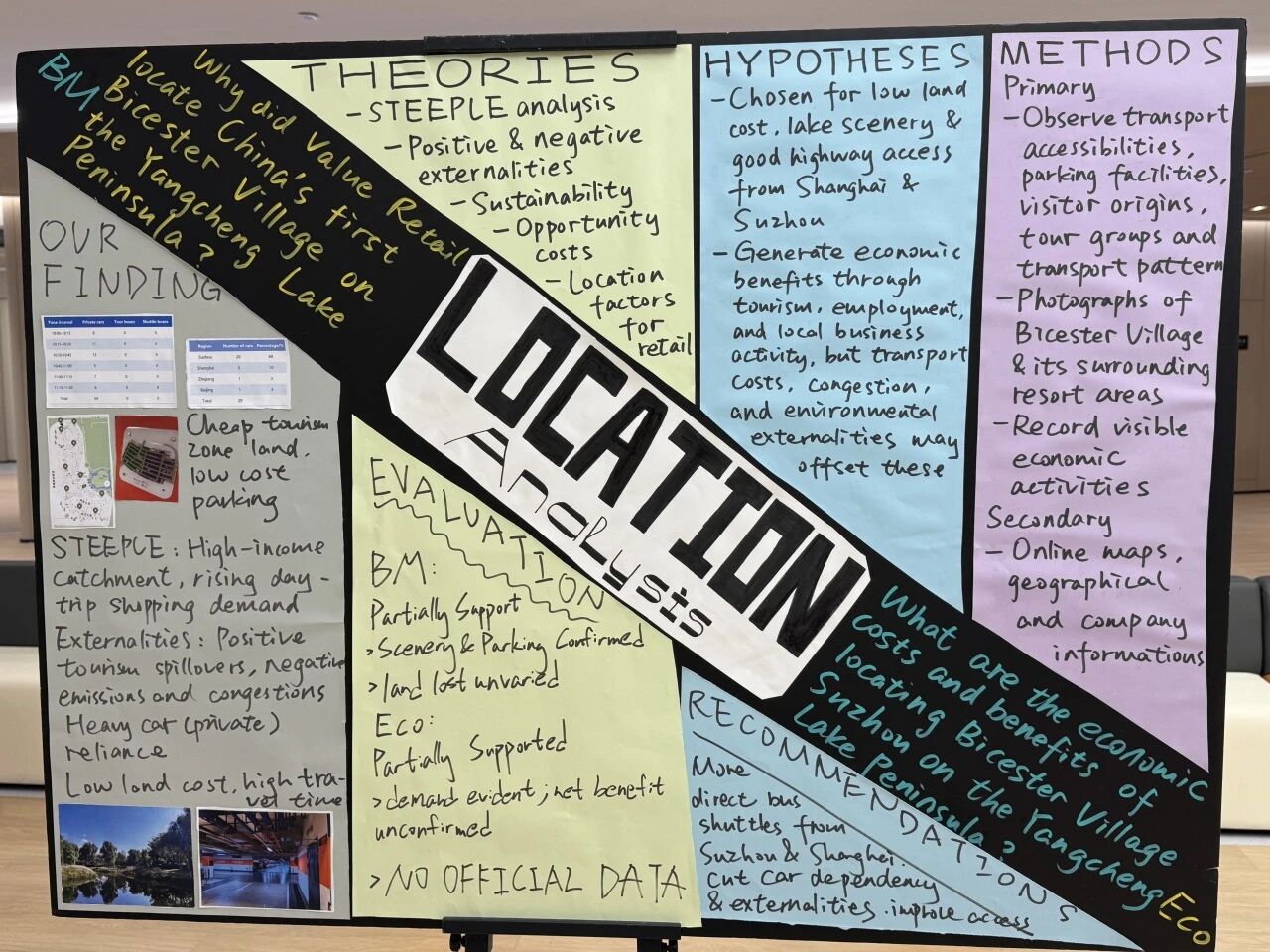
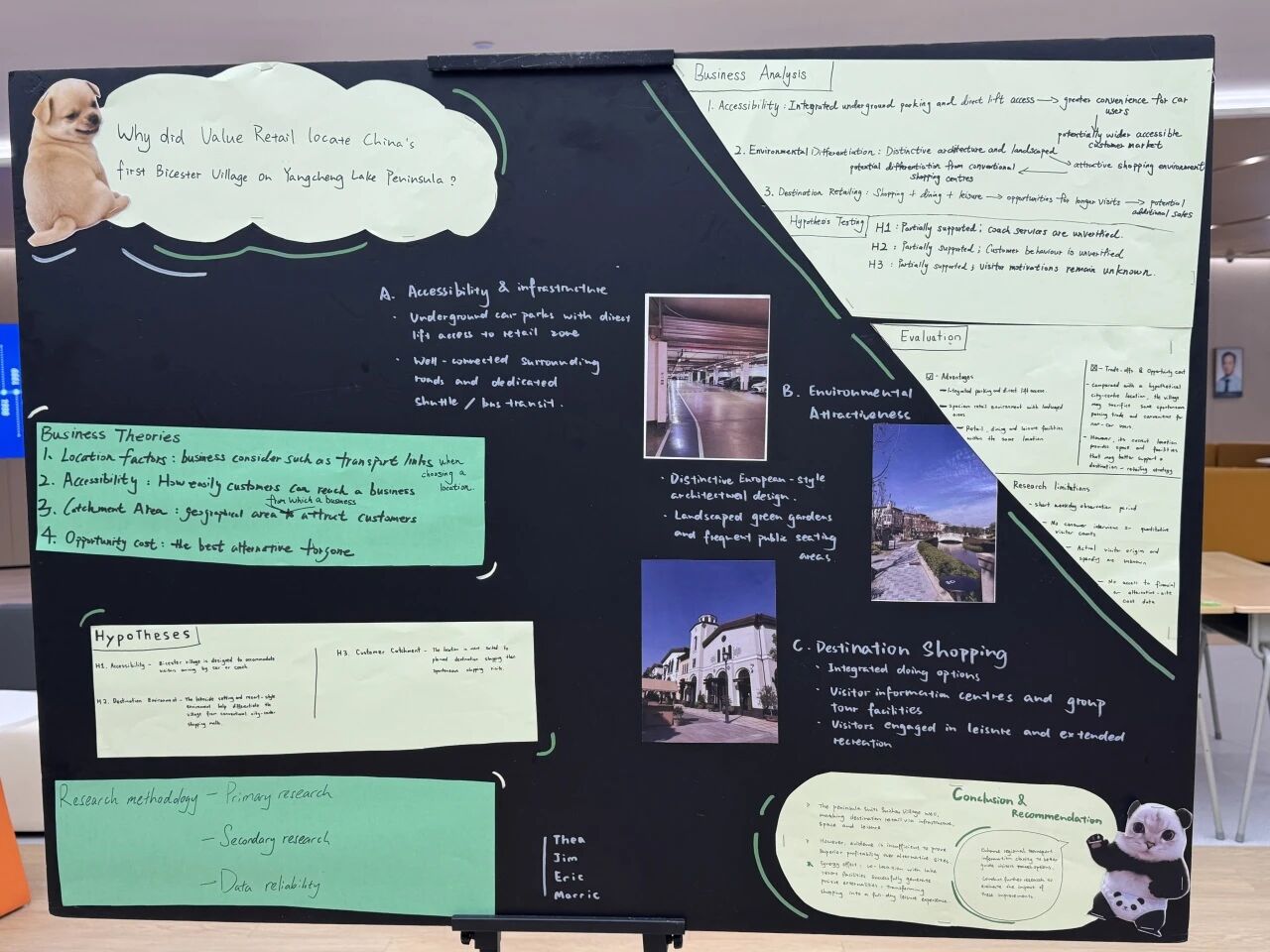
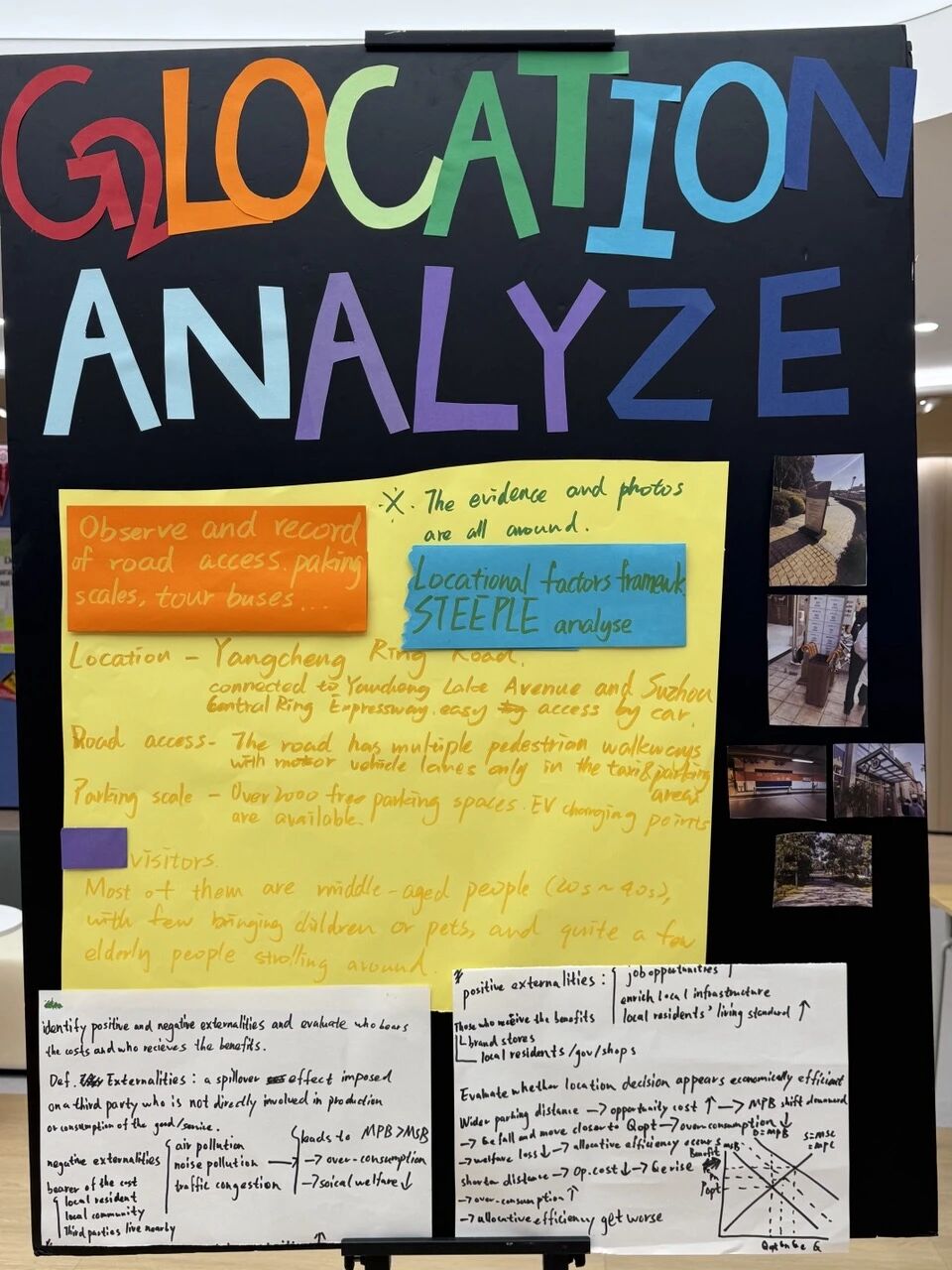
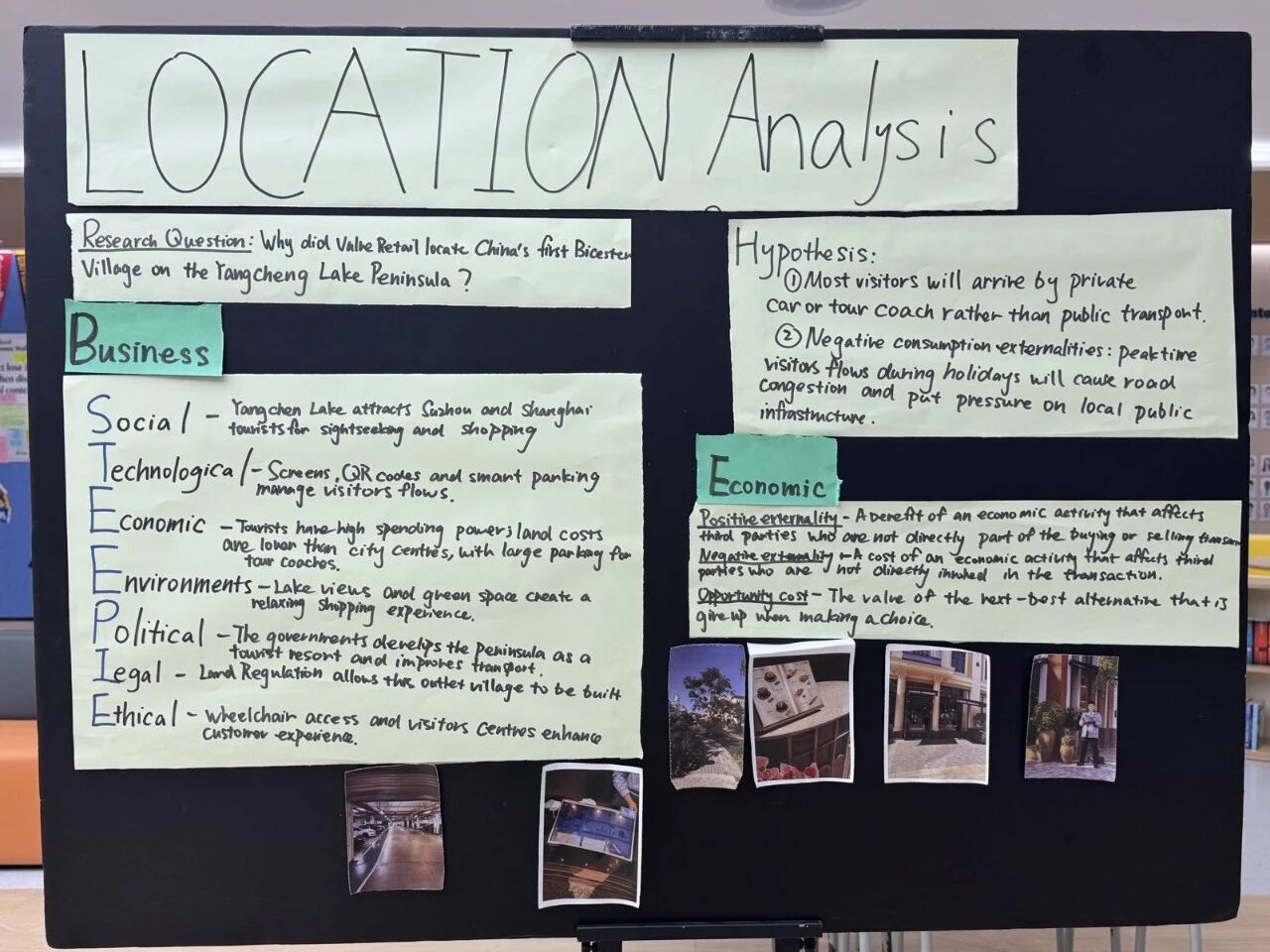 Location Analysis — a full STEEPLE framework decodes the Yangcheng Lake Peninsula choice, ending with a bold proposal: direct shuttle buses from Suzhou and Shanghai.
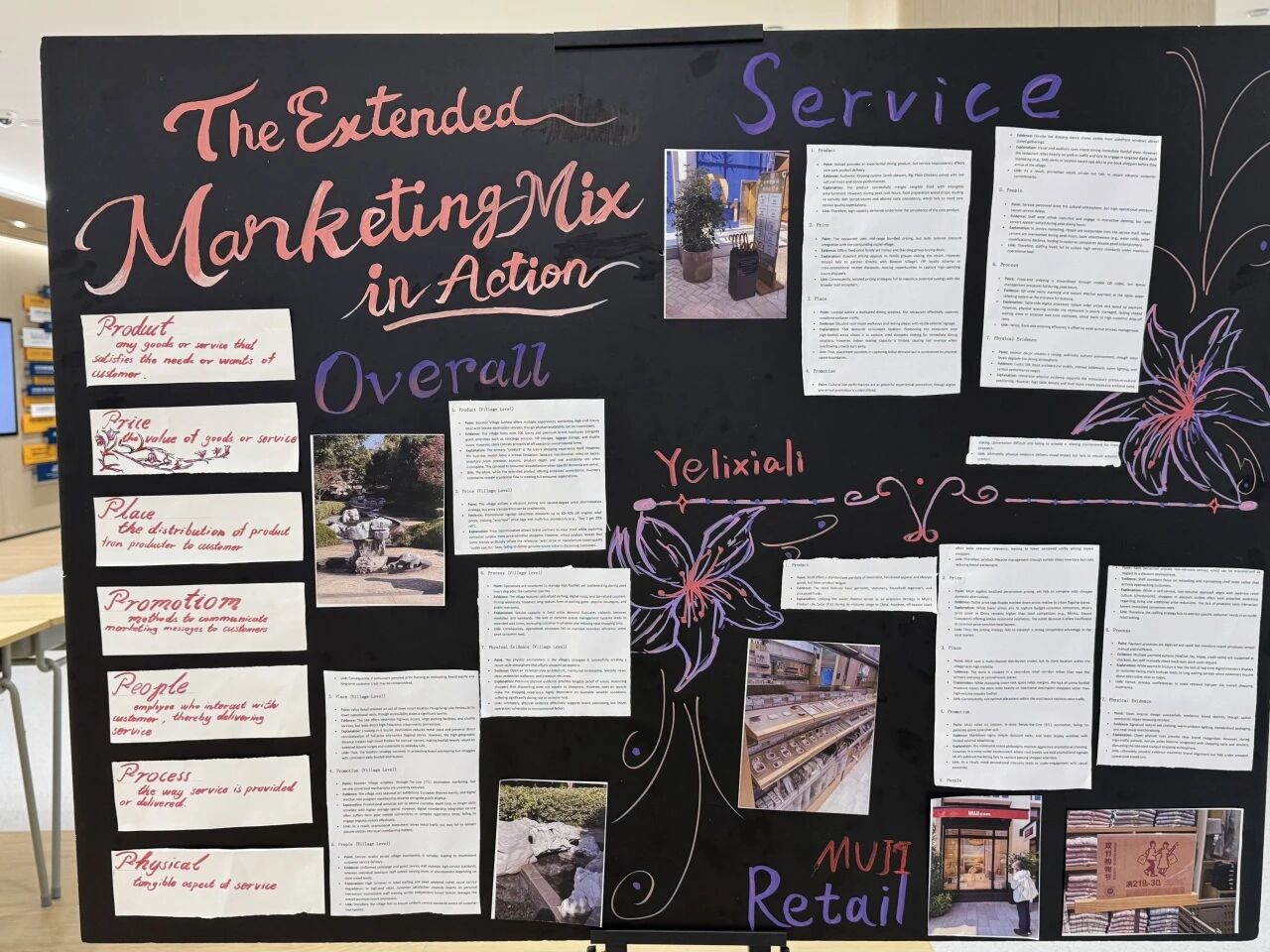
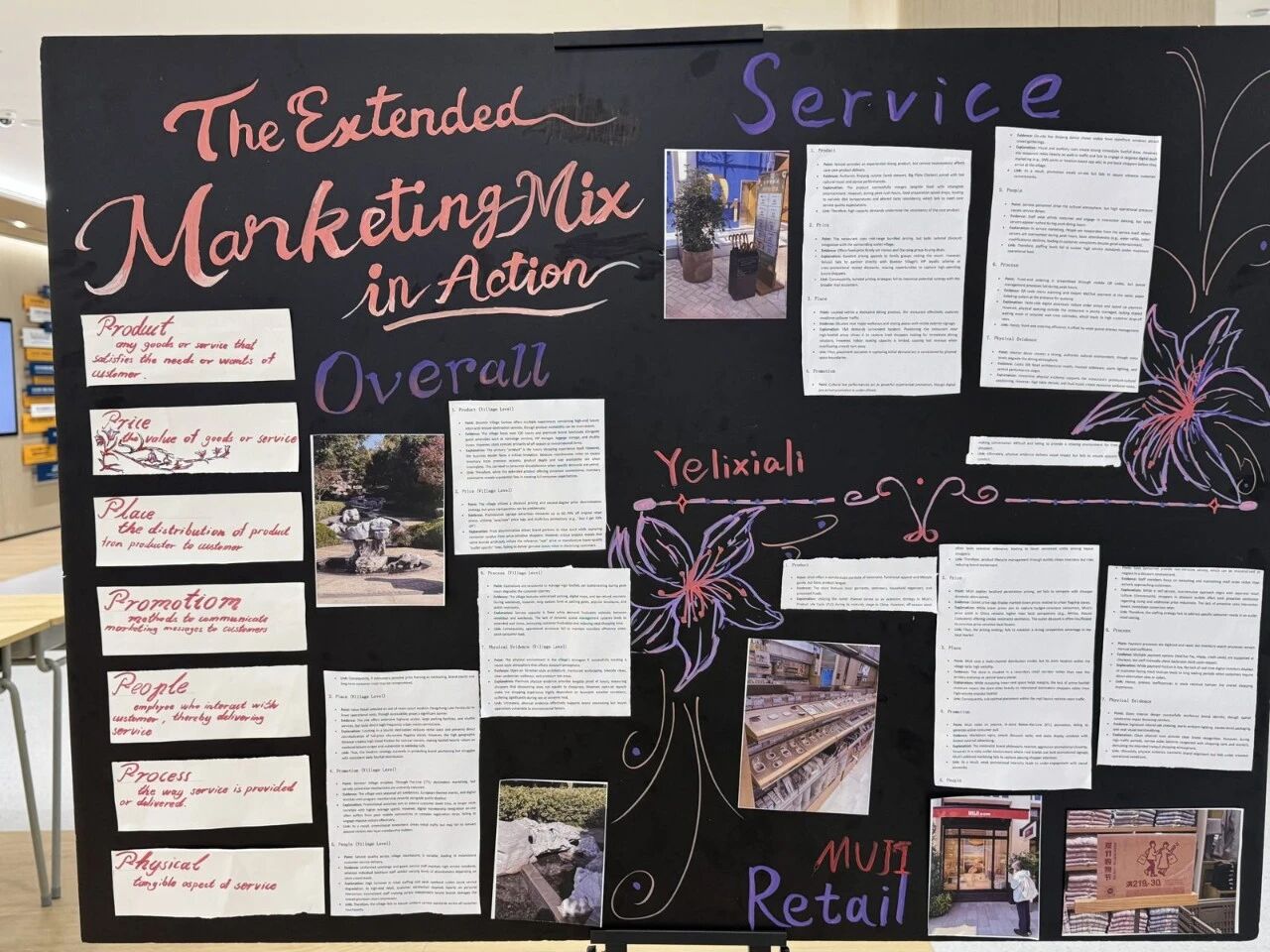 The Extended Marketing Mix — seven Ps in calligraphy, then applied to MUJI as a village-wide case study.
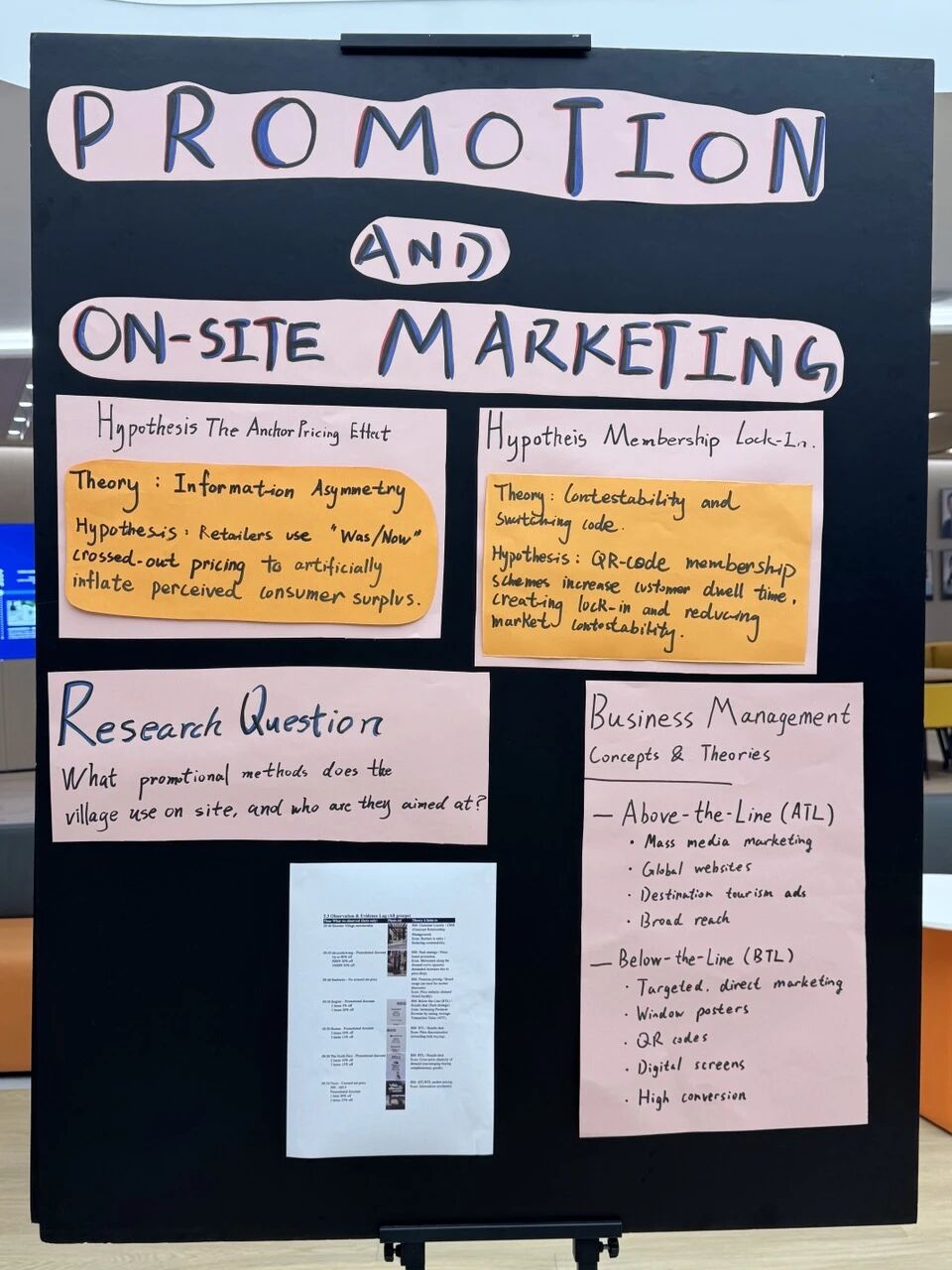
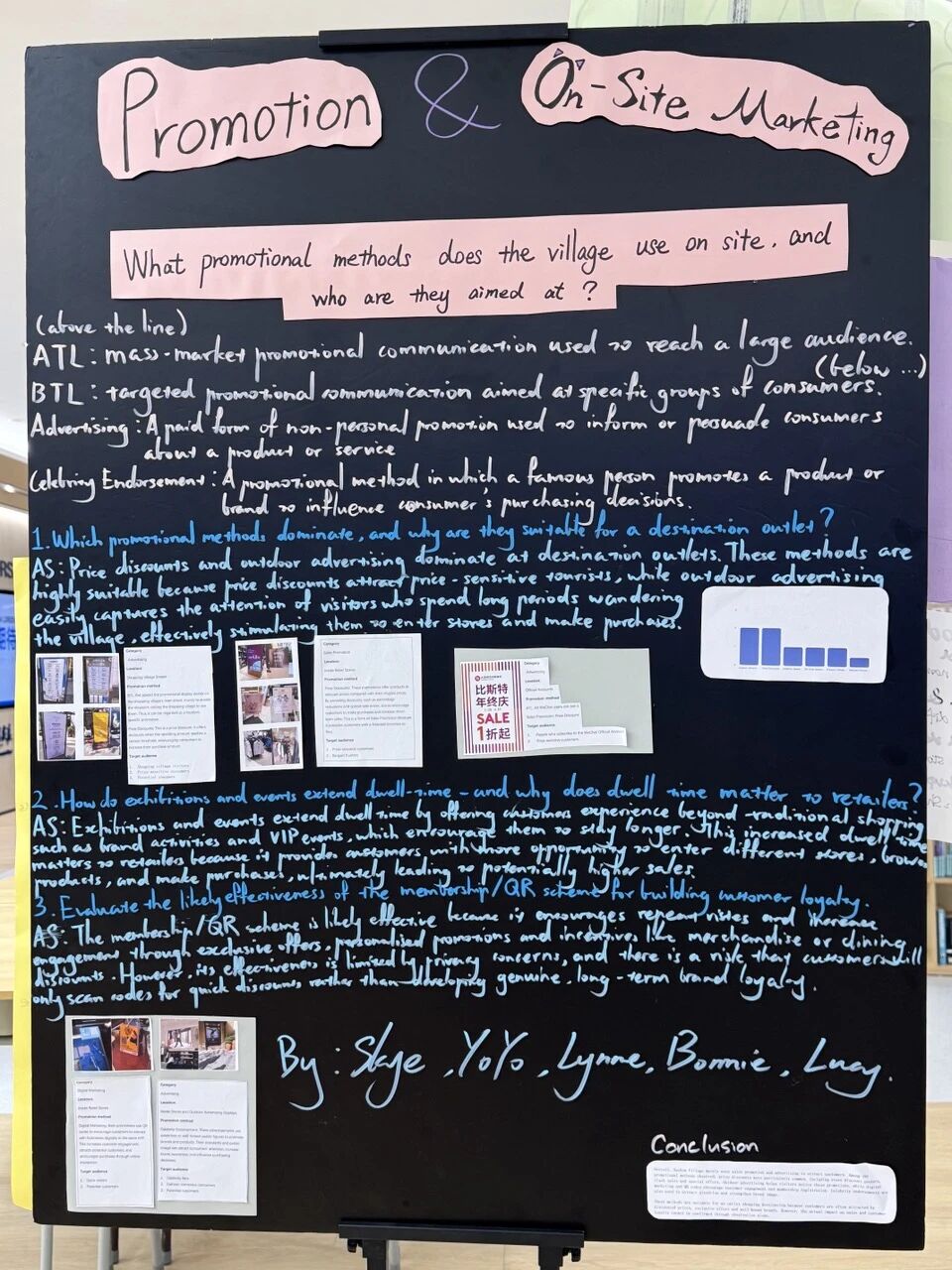
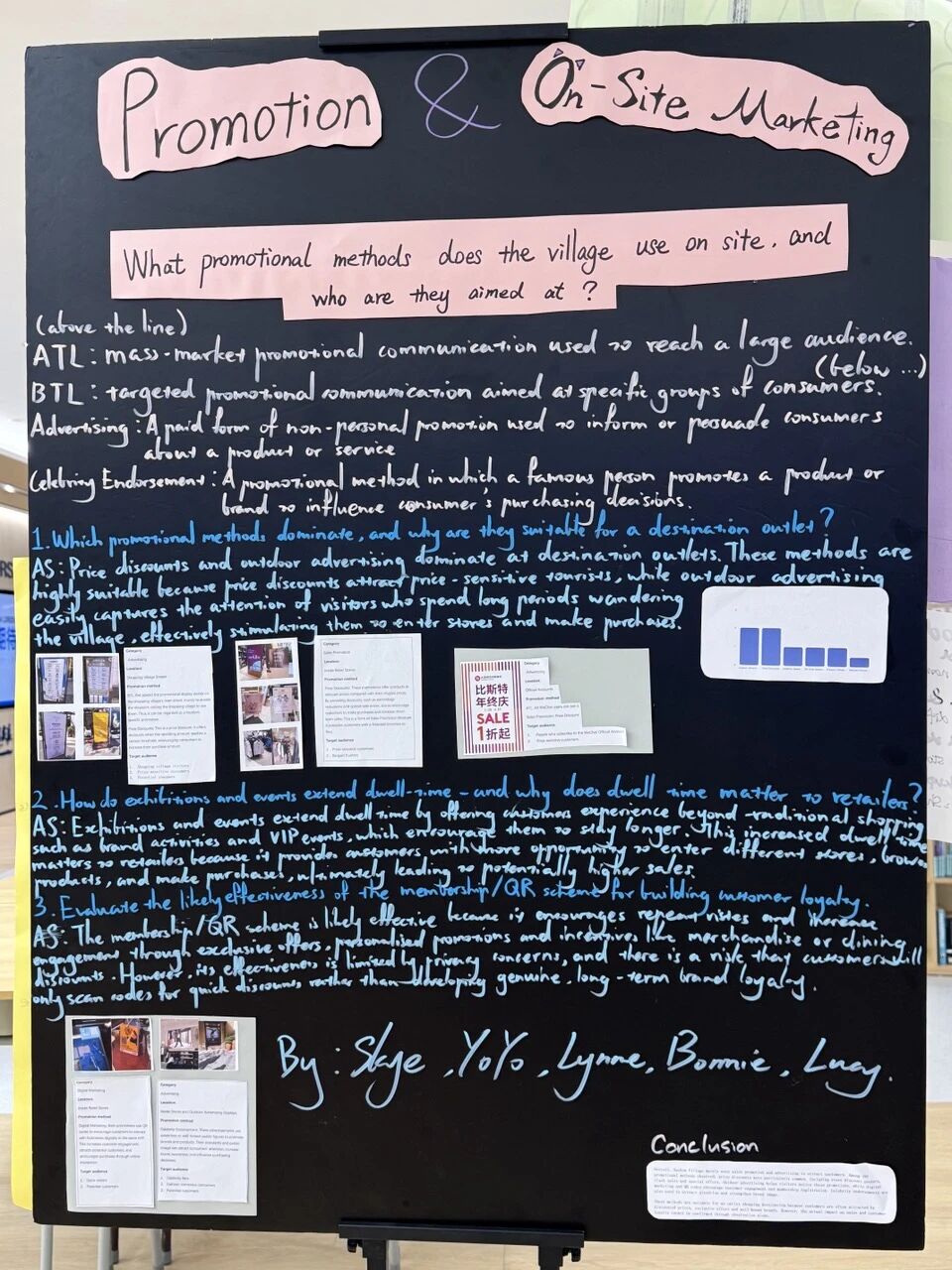 Promotion and On-Site Marketing — ATL/BTL classifications, bar charts and field photos answer: how does the village sell itself, and to whom?
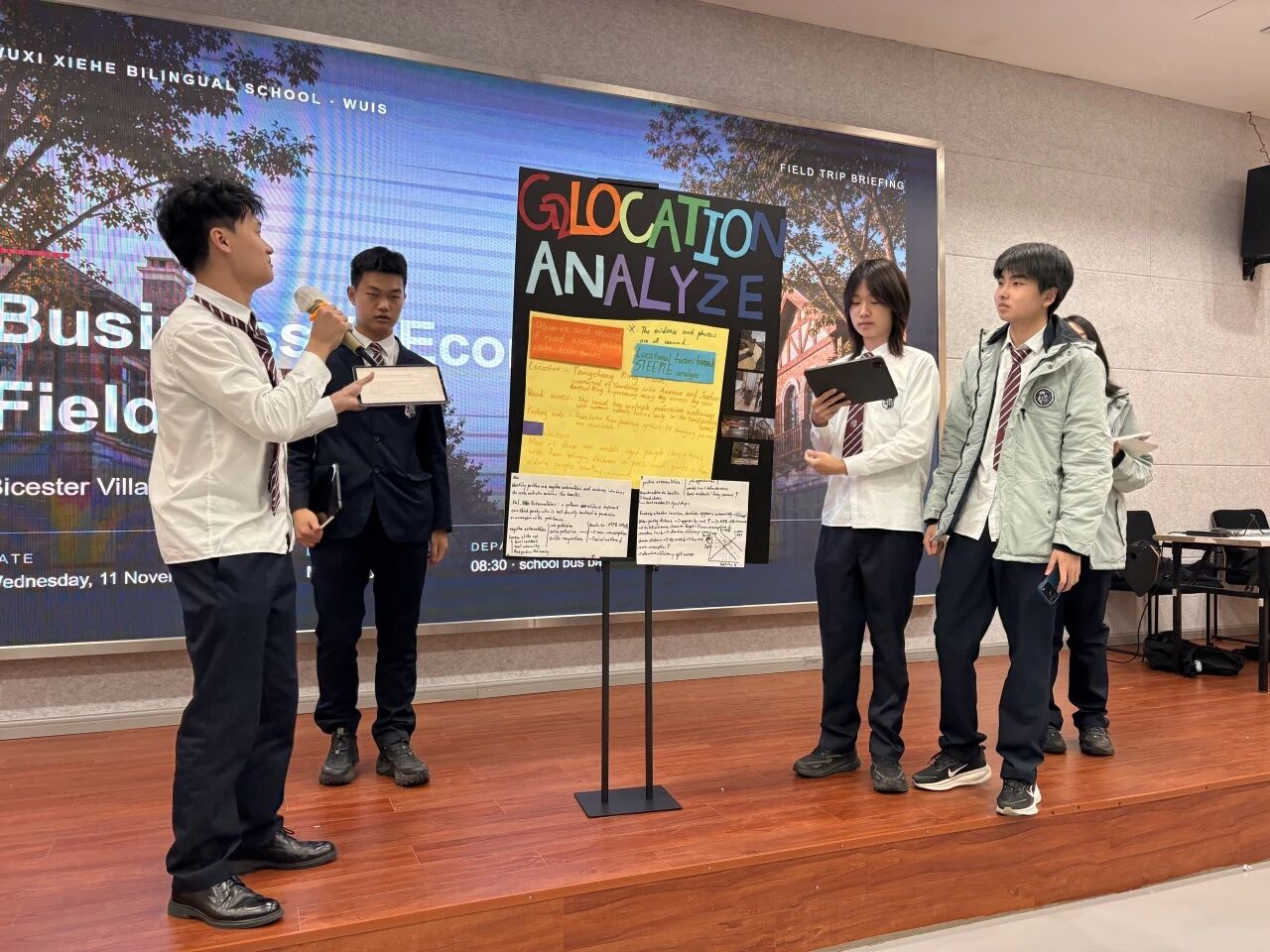
The Location Analysis group presents its STEEPLE findings
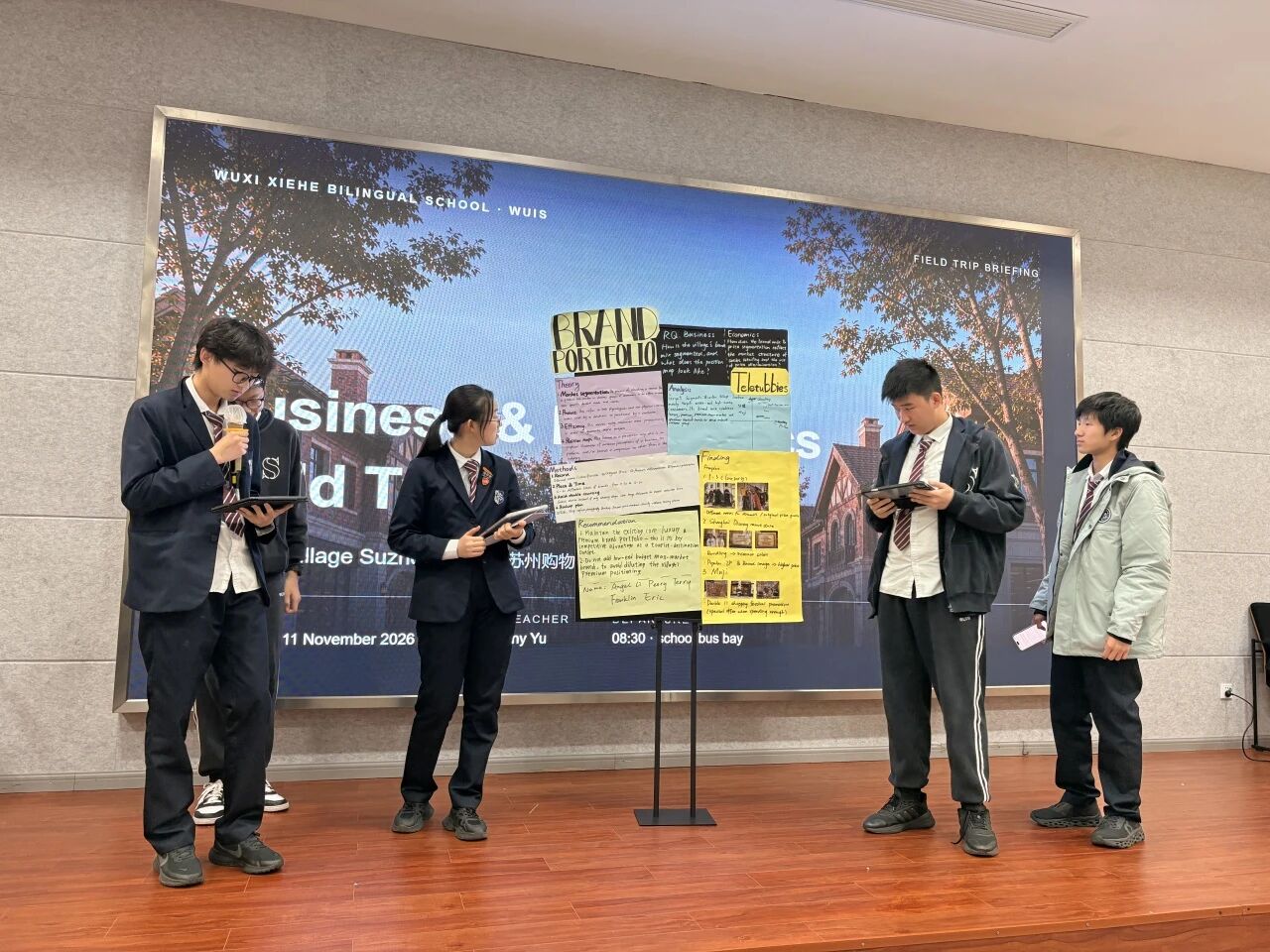 The Brand Portfolio group defends its premium-positioning verdict
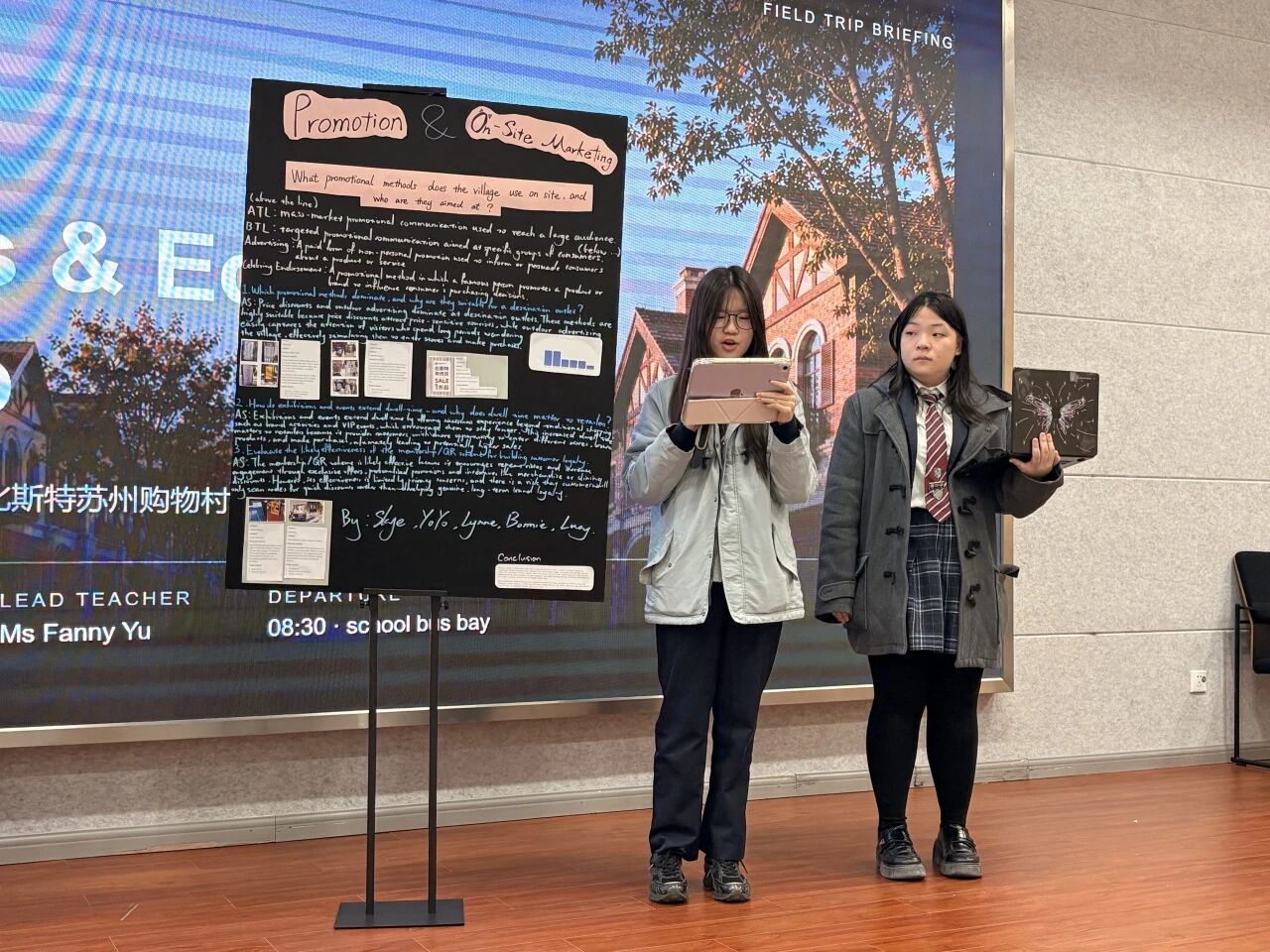 Evidence in hand: presenting from the board
WUIS Business & Economics Department