

 Following its September 2025 feature, Wuxi United International School: Taking the World as the Curriculum and Exploration as the Pathway, Shanghai Education once again published an article in April this year titled Scenes as Learning Power: A Practical Pathway for Students as Campus Explorers, highlighting the distinctive educational practices of Wuxi United International School.
As the first IB school in Wuxi, Wuxi United International School has developed its own distinctive approach to nurturing rooted global citizens and guiding students to become explorers and leaders of the future world.

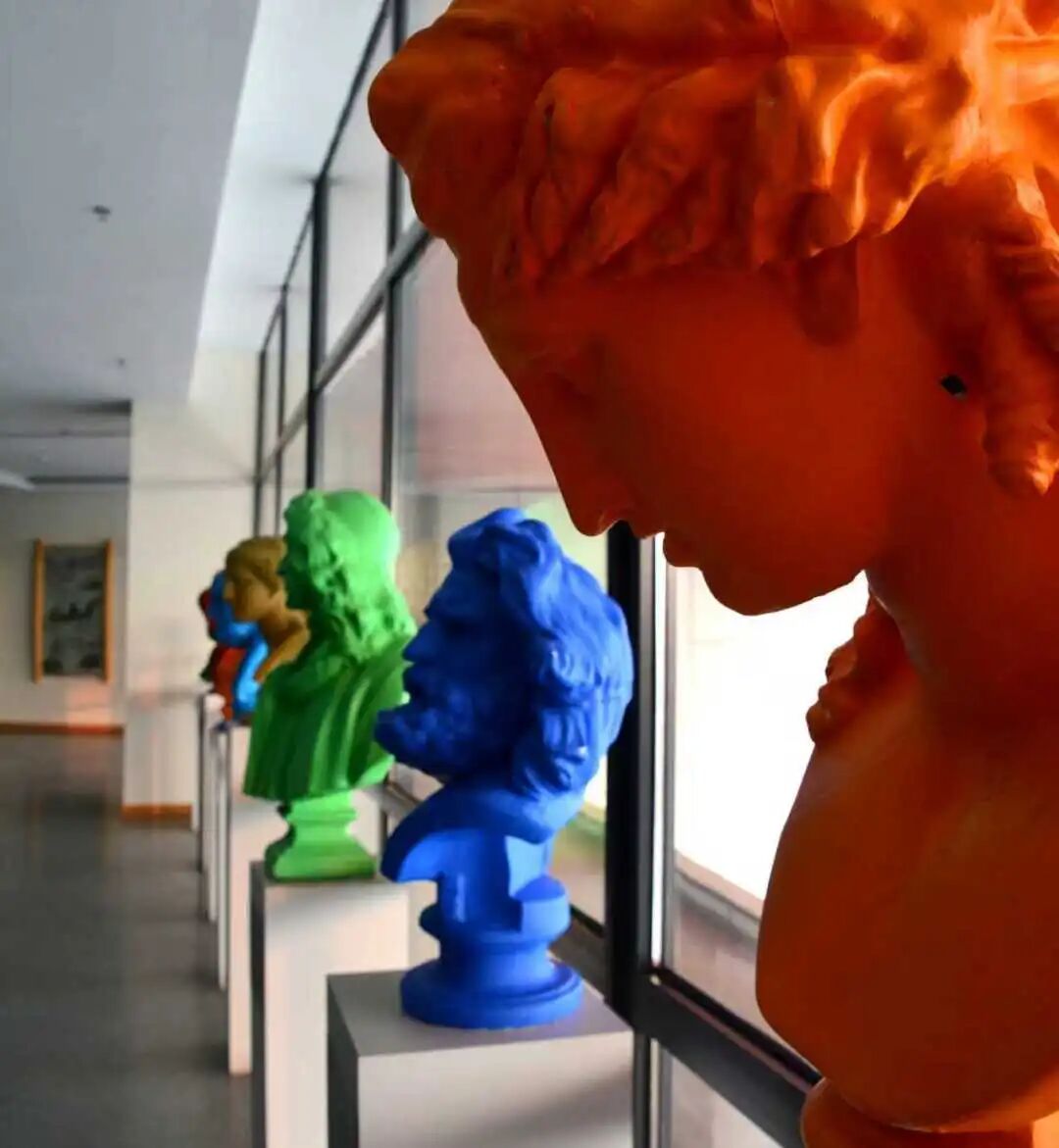
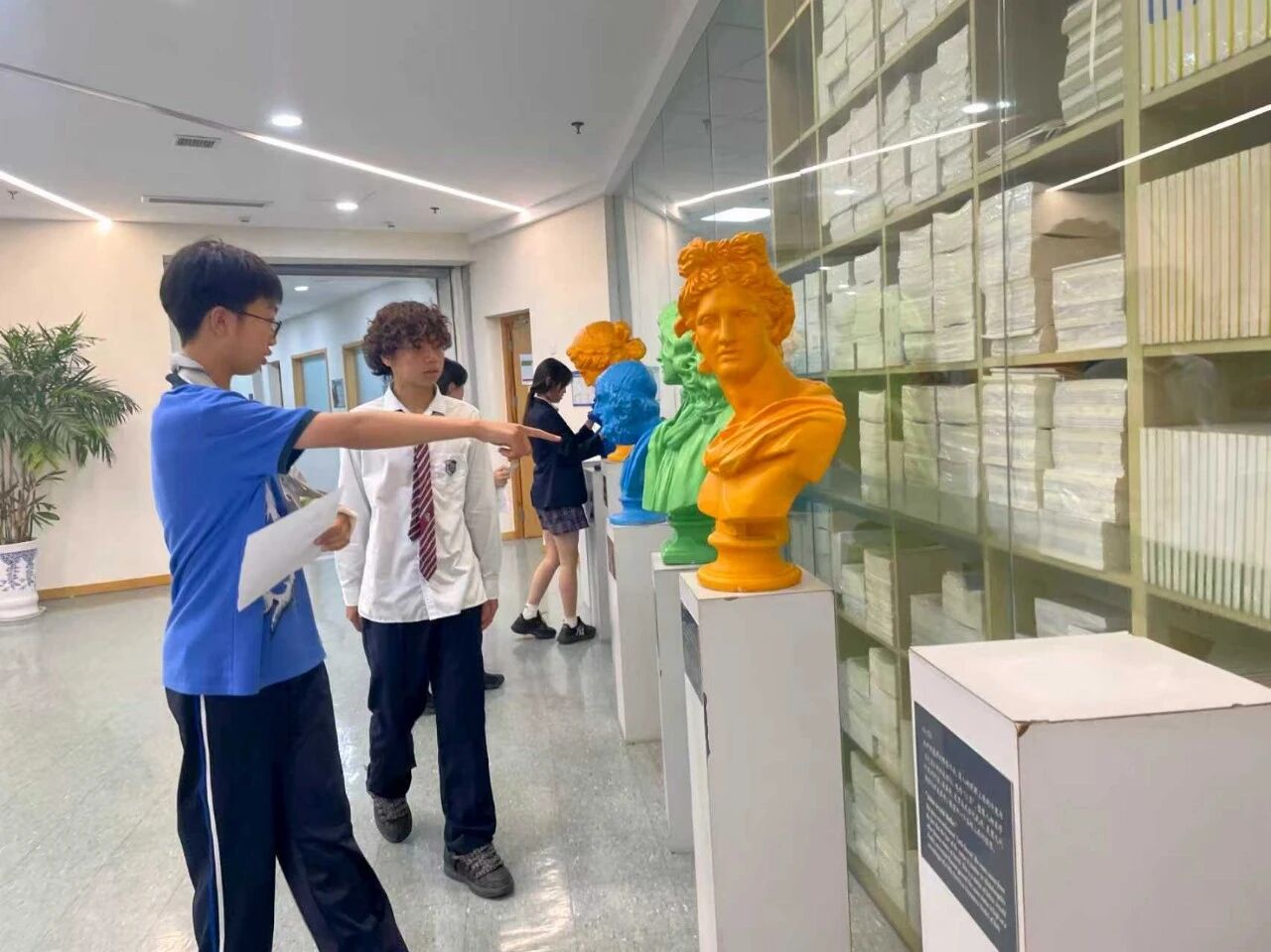

This made us wonder: why not let the students take on the task?
We therefore invited students from the Art Interest Group to help restore the display. Some of the plaster casts were unfamiliar even to the students, so they took photos and compared them with images found online to verify their identities. We then encouraged them to redesign the order of display and explain their reasoning.
A lively discussion soon unfolded. Some suggested arranging the figures according to historical chronology; others proposed ordering them by the sequence of colors on the color wheel; still others suggested ranking them by the influence of the figures. Eventually, they developed a new display plan. Though varied in height, the arrangement was balanced and rhythmic. “It gives the whole scene a stronger sense of musicality,” the students said of their own “work.”
This was a cognitive exploration sparked by a “mistake.” It prompted students to actively construct knowledge. The “mistake” gave the scene educational value. When teachers transformed it into a learning task grounded in a real-life context, it became a driving question. This time, the teacher did not provide ready-made answers. Faced with the misplaced casts and unfamiliar figures, the students were initially at a loss. Yet these very difficulties inspired their willingness to take on the challenge. Through searching, comparing, debating, decision-making, and finally implementing their plan, they came to understand where to find knowledge and what kind of knowledge is useful. In this process, their metacognitive development was strengthened. The scene itself became a “field of inquiry.” When teachers handed the scene over to the students, self-directed learning naturally began to take place.
The core of deep learning lies in students’ ability to actively construct knowledge and apply higher-order thinking to solve challenging problems. In the challenging scenario of “how the plaster casts should be presented,” different viewpoints collided and interacted. Students’ cognitive boundaries were actively expanded; their abilities were stretched and extended; and their thinking was enhanced across the dimensions of analysis, synthesis, and creativity. In this way, learning power was continuously constructed and deepened through the challenges embedded in the scene.
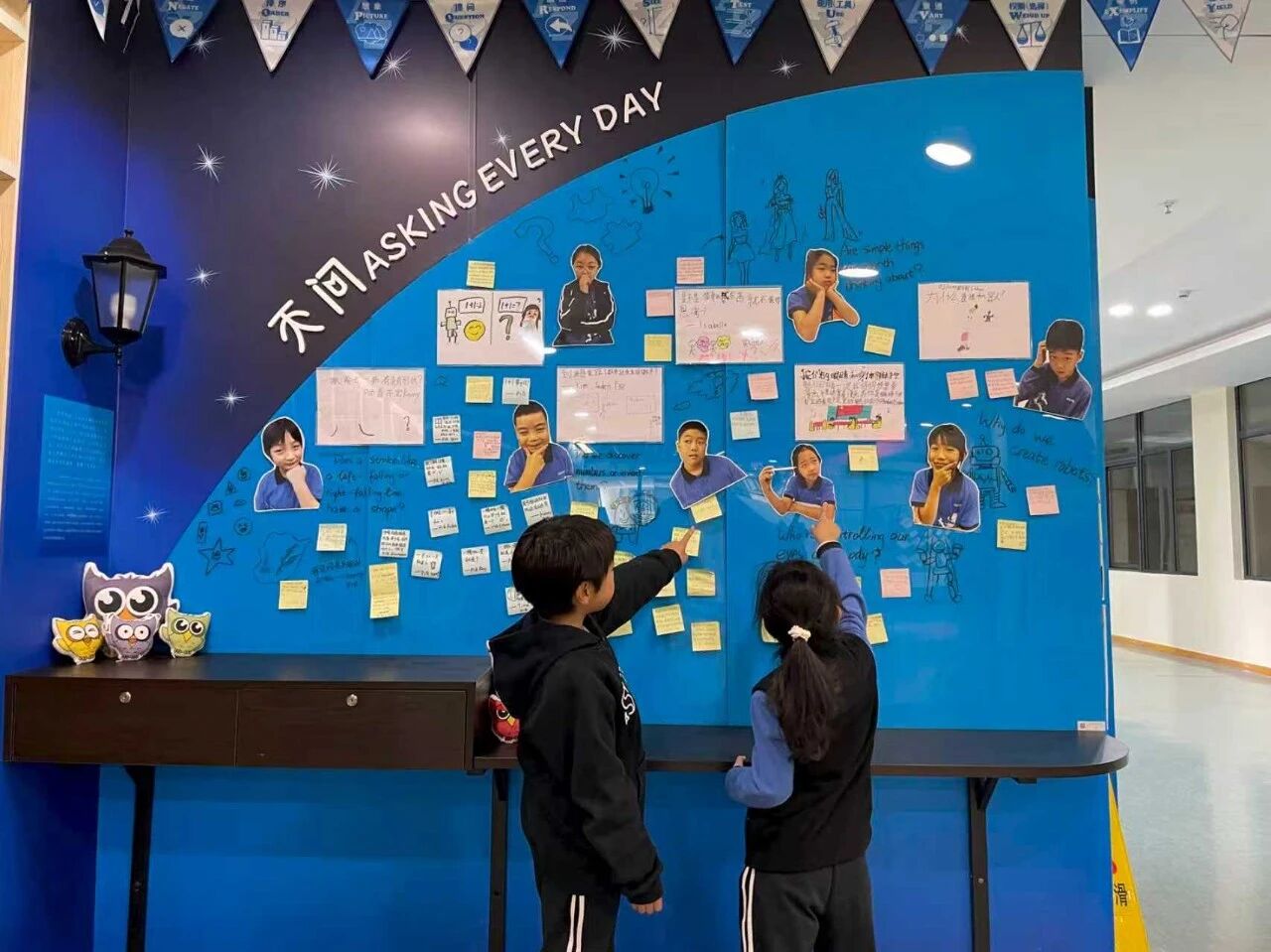
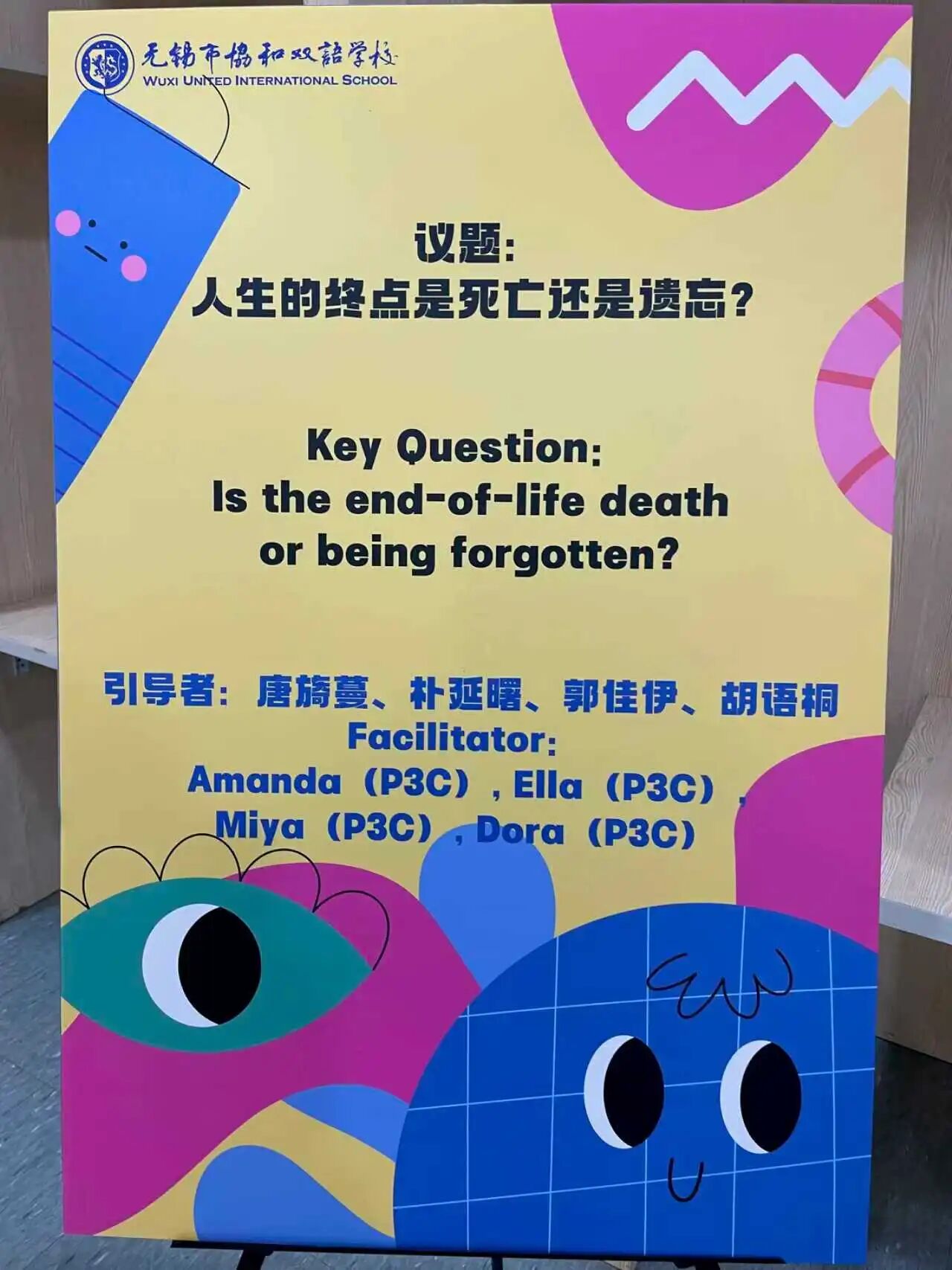
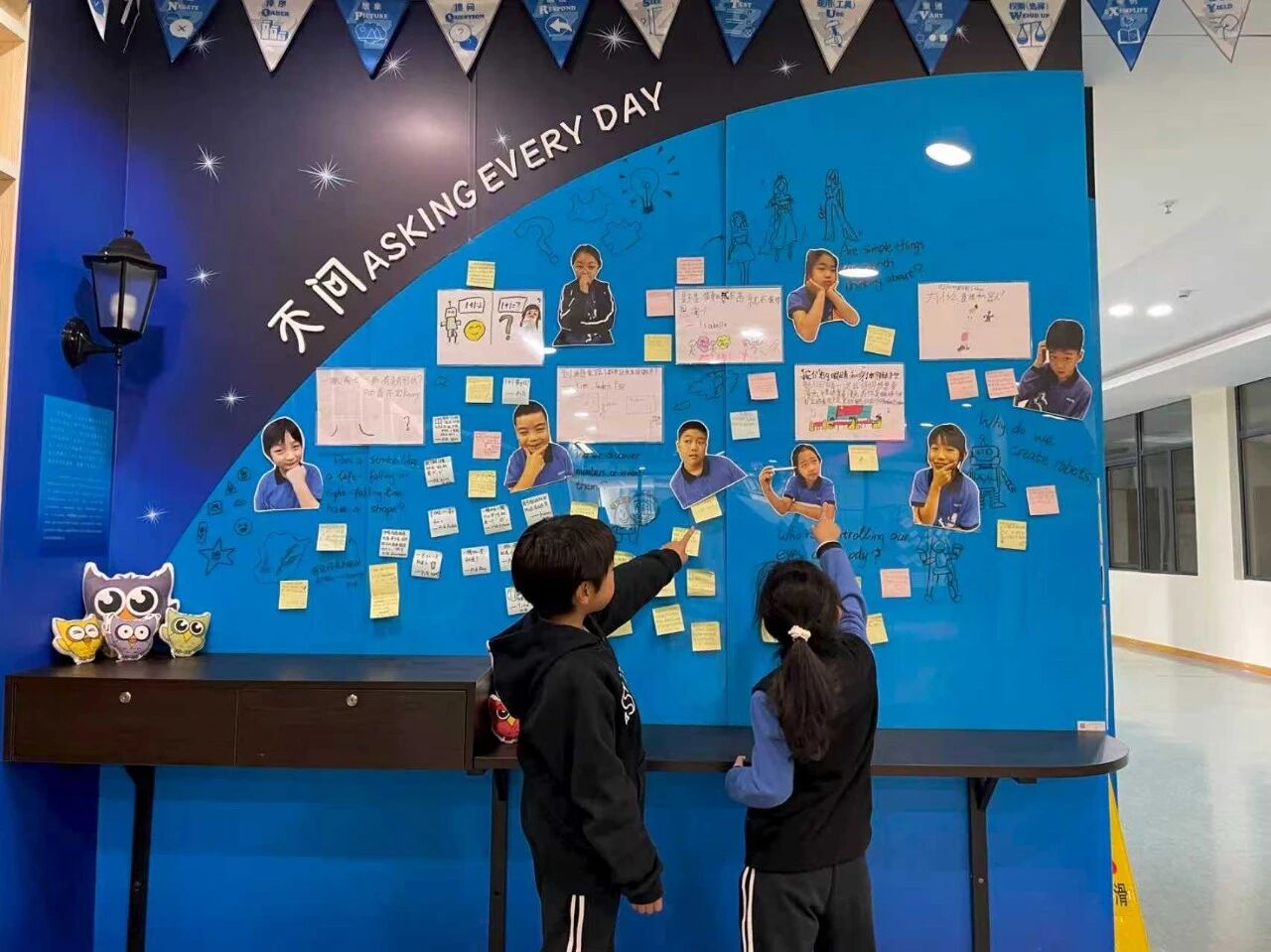
Along the corridor leading to the school gymnasium, there is a blank white wall where students often pause and daydream after PE lessons. Around the same time, Ms. Zhou, who teaches Philosophy for Children, had been planning to create a “Philosophy Wall” to showcase students’ thinking. The idea immediately resonated with us, and we decided to transform the space into a “Sky Questions Corner,” where children’s curious and unconventional daily questions could be displayed.
Once the wall was set up, we opened a small hole beside it and called it the “Question Black Hole.” Students could write down their recent puzzles or confusions on slips of paper, fold them up, and drop them into the “black hole.” After the teacher sorted them, the questions would be posted on the wall, and other students would eagerly write their own responses. Gradually, the wall became lively and turned into a place for students to exchange ideas.
What was once a place for children to stare blankly into space became an “incubator” for new thinking. It transformed the inner, invisible processes of children’s minds into visible and shareable “public products.” The “black hole” absorbs children’s endless questions, while the “Sky Questions Corner” stimulates perspective-taking and judgment. To answer a question, students must first consider how others might think, learning empathy, logical reasoning, and effective expression in the process. For example, Joy, a first-grade student, once asked: “Grandpa and Grandma had very simple toys when they were little—why were they still so happy?” Other children responded enthusiastically: “Because they could always find their own fun,” and “They couldn’t afford to buy toys, so they had to make their own, but they enjoyed the process of creating them.” In such moments, children’s judgment is strengthened, as they no longer seek a single standard answer but instead learn to form their own positions amid diverse viewpoints.
This wall allows us to hear the “tick-tock” sounds of children’s thinking and to understand how they see the world. The school has also created many other spaces where thinking can take flight, such as Philosophy Stations, Philosophy Flash Events, and the Philosophy Drifting House. These spaces enable students to move from individual learning to community interaction. Personal questions and ideas are exchanged and challenged in this “marketplace of thought,” where judgment is sharpened and critical thinking is strengthened through shared reflection within a community.
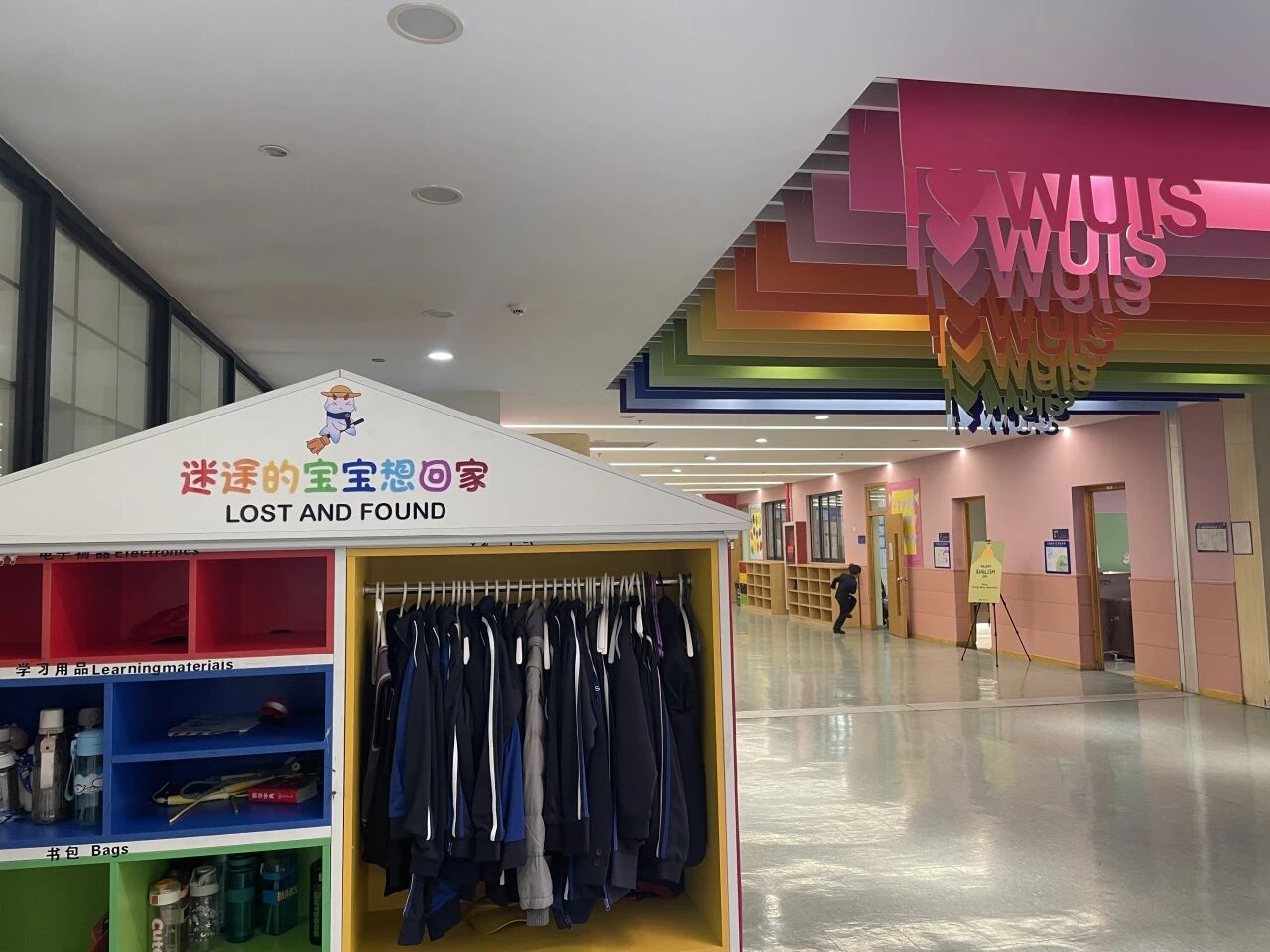
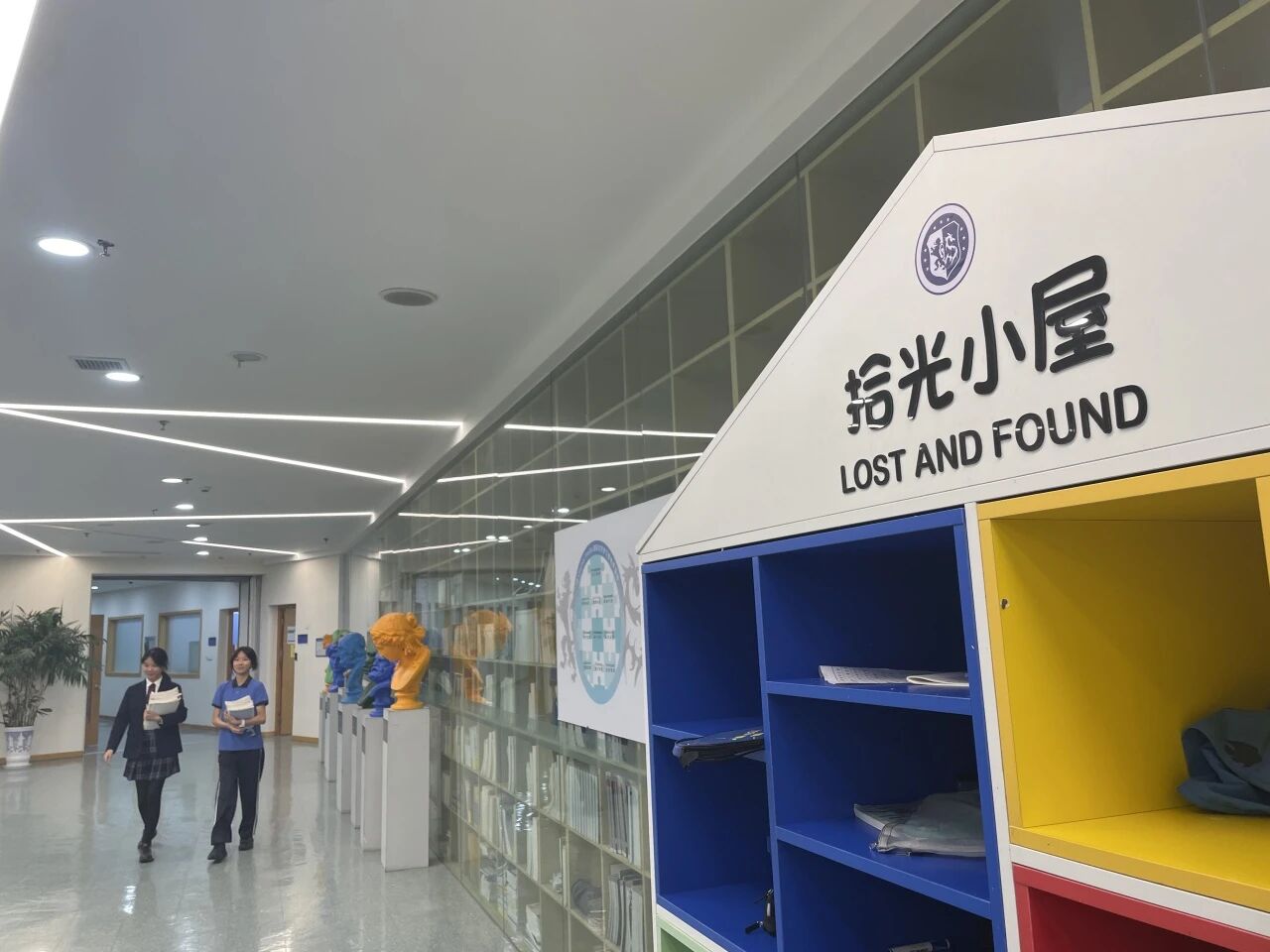
The change from the functional label “Lost and Found” to the more visual and narrative expressions “Lost Little Babies” and “The Little House of Found Time” was more than a change of wording. It represented an iteration of aesthetic education, moving from practicality to beauty, and from management to cultural immersion. In this process, students had to make aesthetic judgments: what kind of language could convey the function while remaining refined? What kind of imagery could be vivid while also aligning with the cultural character of the school? Through understanding, empathy, and cultural exploration, students strengthened their aesthetic judgment.
This was a student-led “aesthetic revolution” on campus. Students moved from solving a practical problem to engaging in aesthetic creation and realizing their own sense of value. This “revolution” shows that when campus scenes truly shape students’ aesthetic capacity, their learning power naturally develops toward a higher-order form.