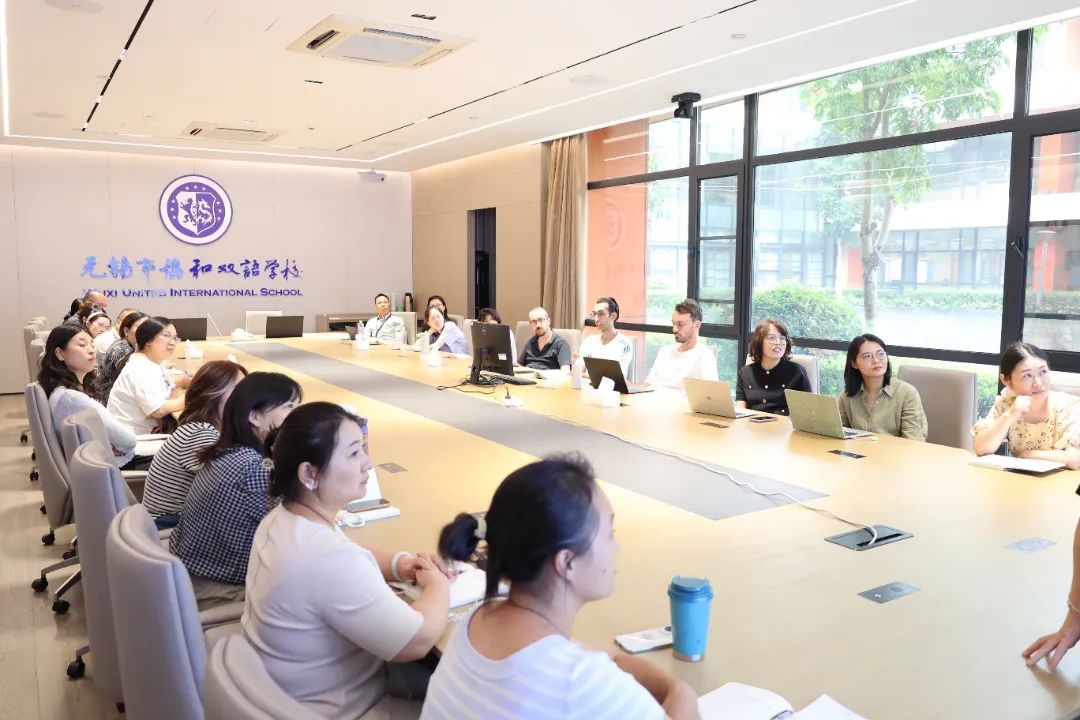
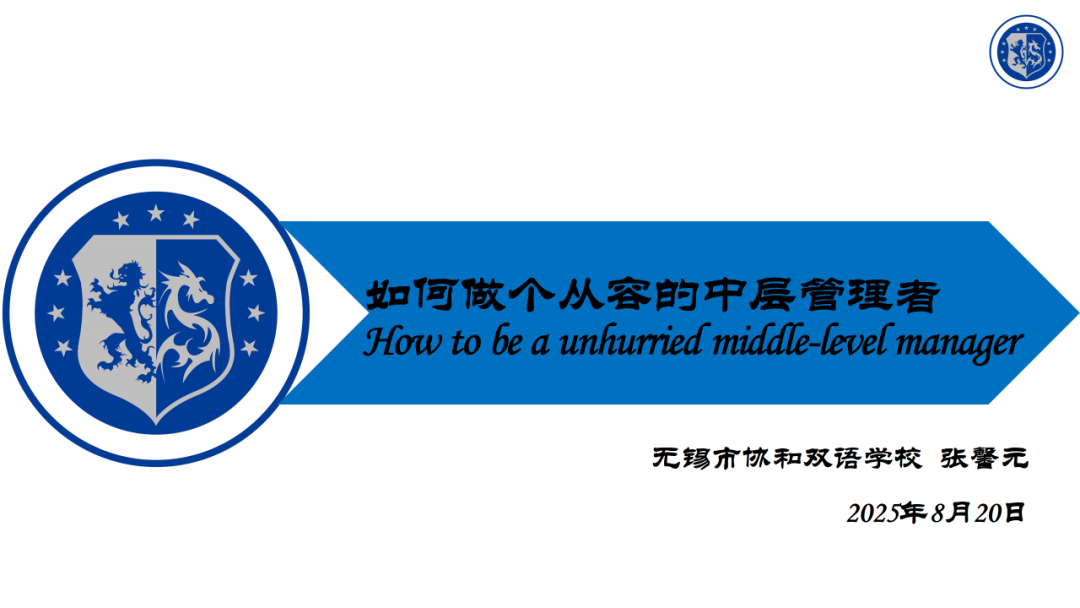
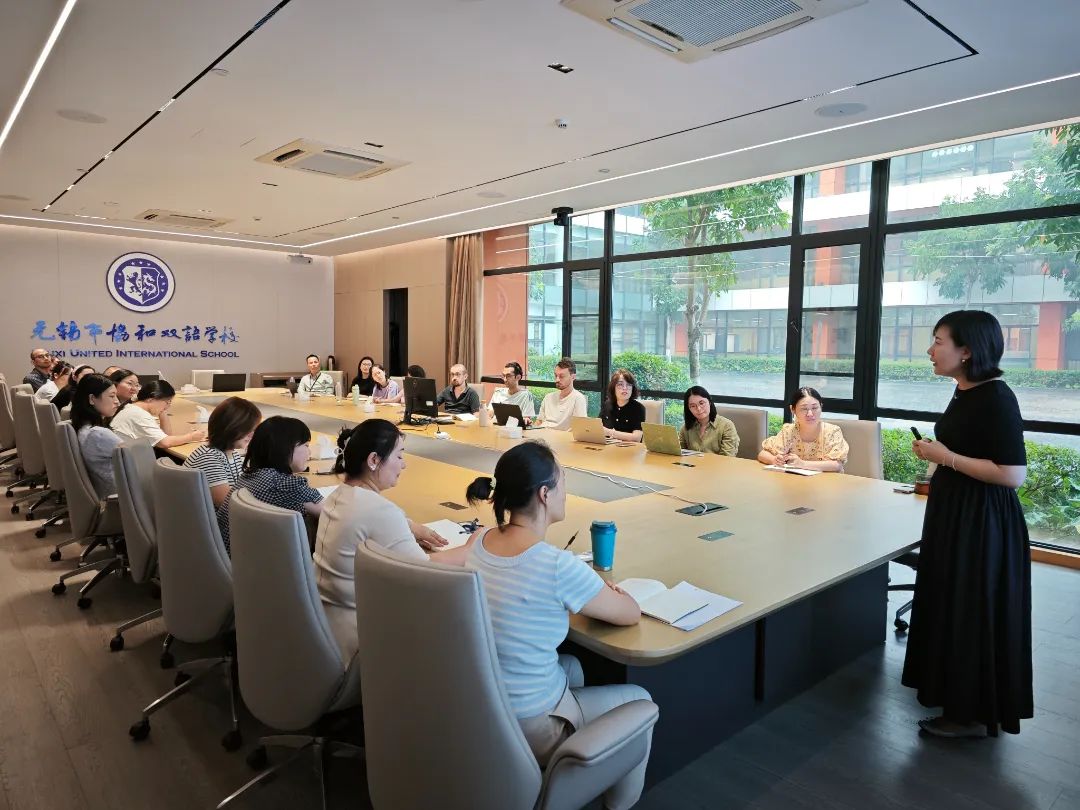
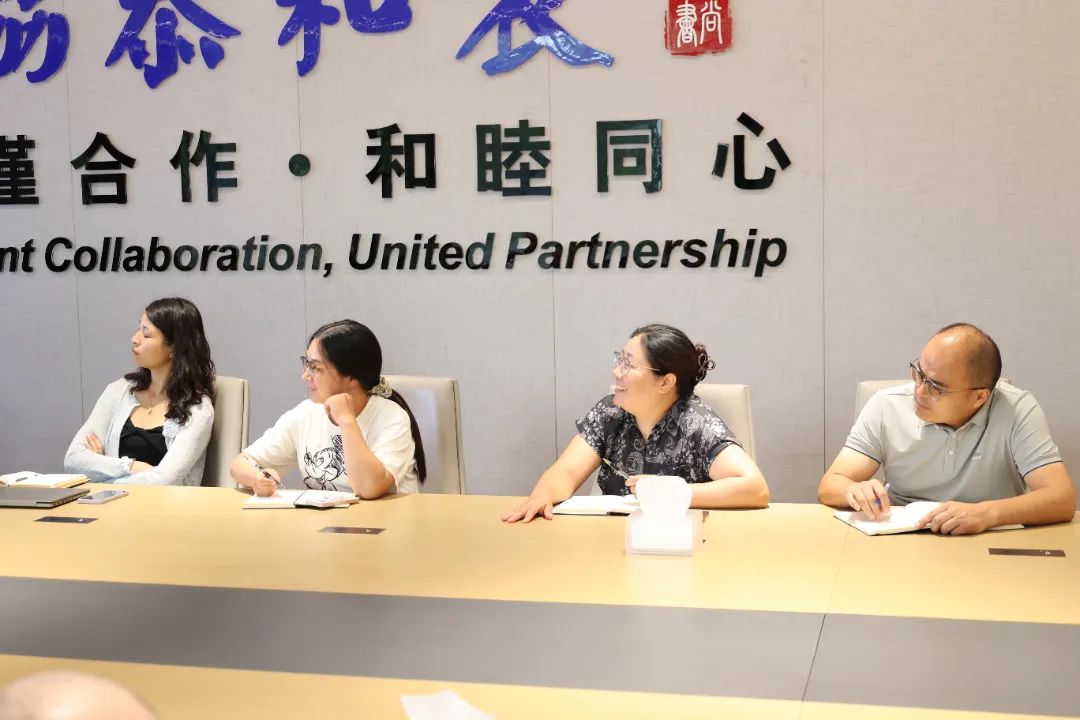
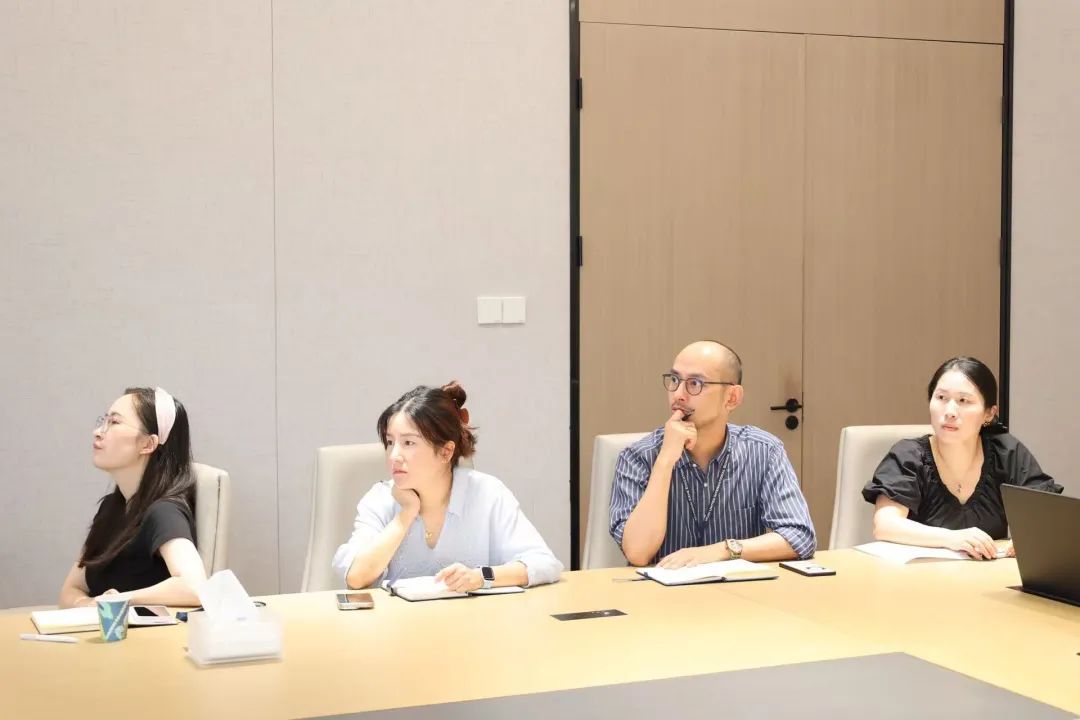
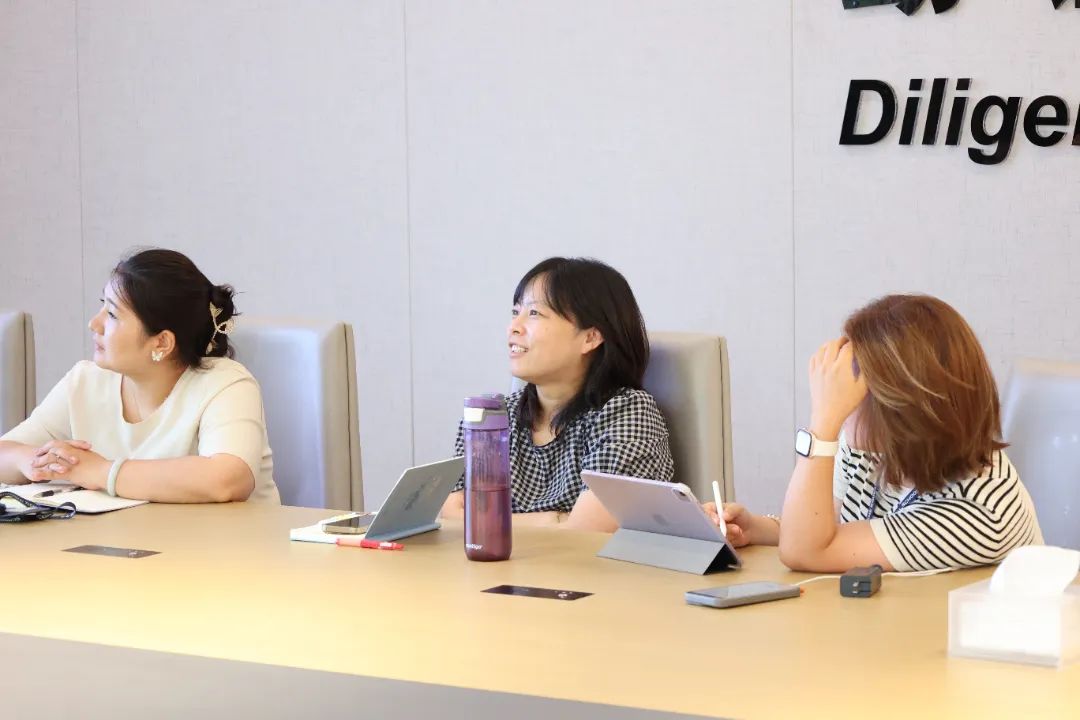
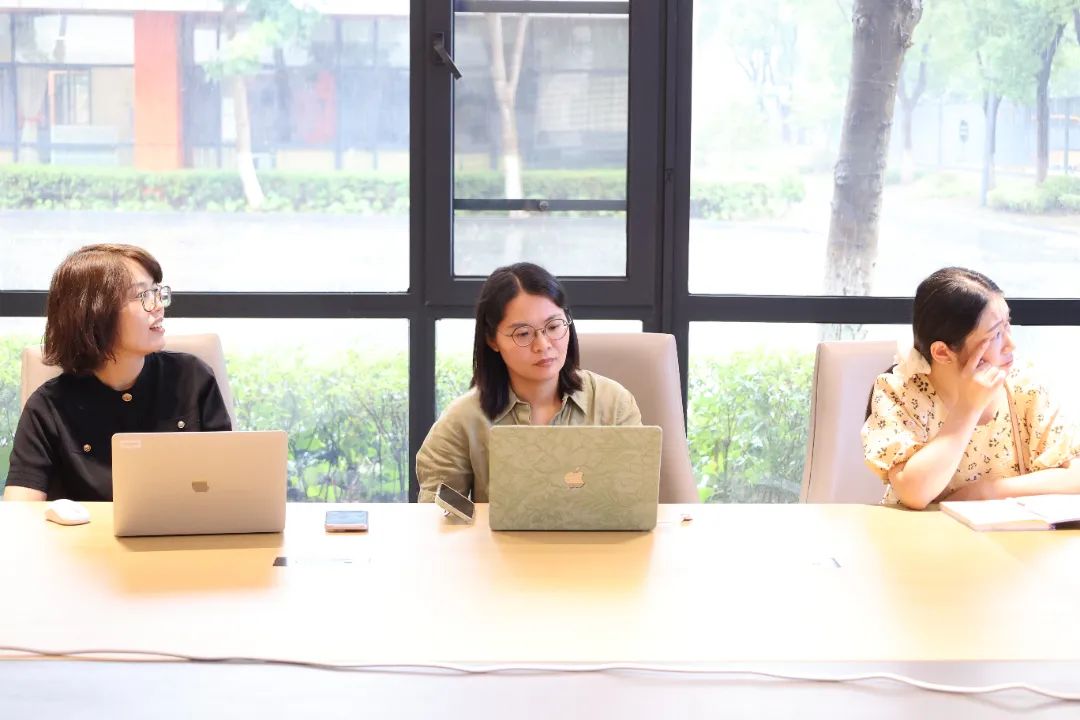
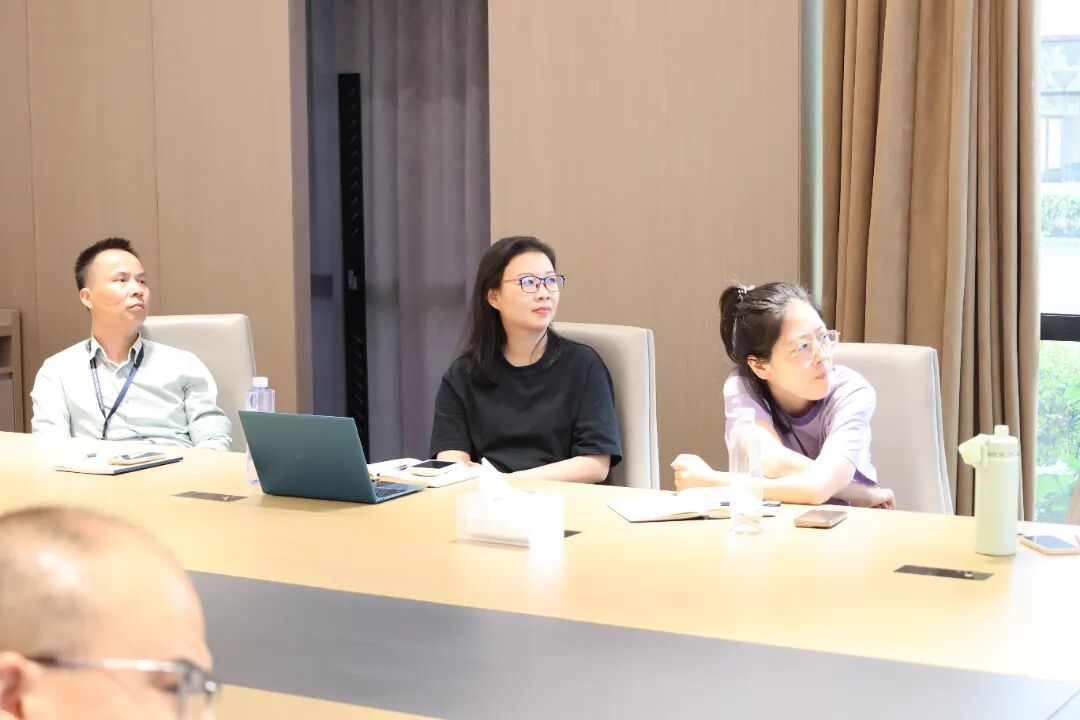
On August 20th, at the administrative office of Wuxi United International School, Vice Principal Zhang Xinyuan delivered an in-depth training session to the leaders of the Primary and Middle School Integration Department on “How to Be a Composed Middle Manager.” The training provided clarity on the direction for middle management work by analyzing challenges and advancing skills.
Breaking Through: Confronting and Overcoming Challenges
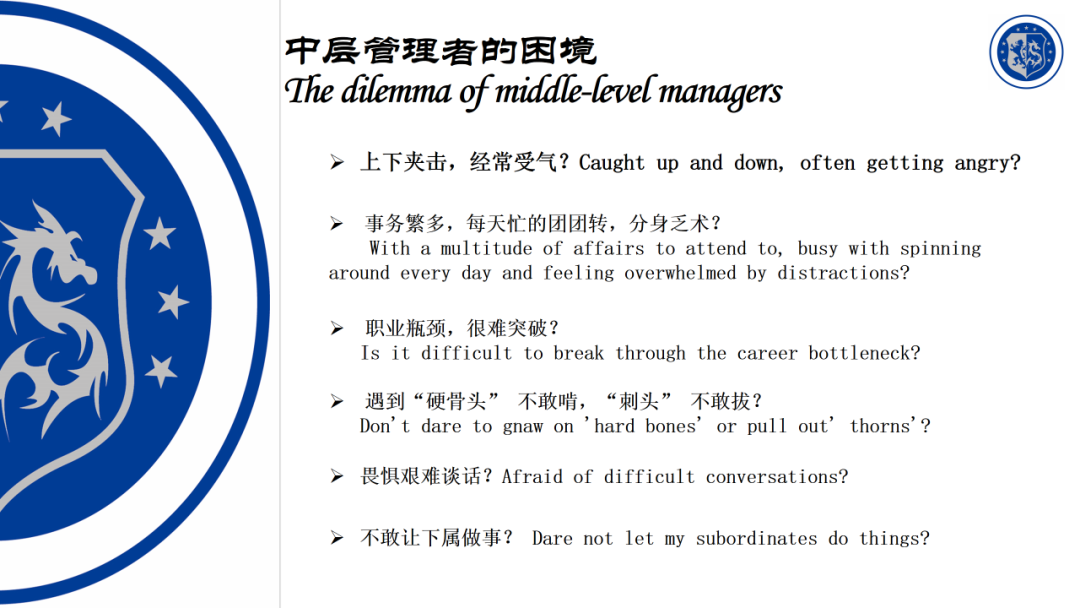
At the training’s outset, Vice Principal Zhang addressed the challenges faced by middle managers: the pressure from above and below, the busyness of handling complex tasks, the constraints of career stagnation, the apprehension when faced with difficult problems, fear of challenging conversations, and the reluctance to delegate authority. These real “pain points” resonated deeply with the middle managers present.
Positioning: Reconstructing Value in Two Dimensions
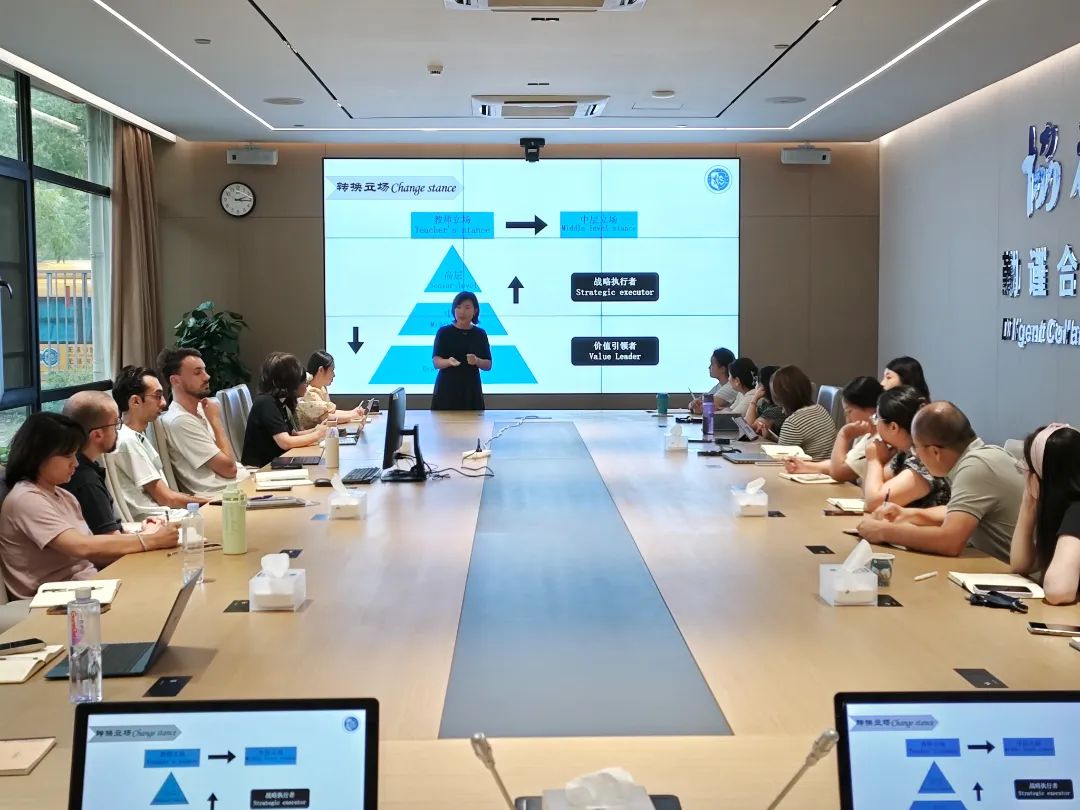
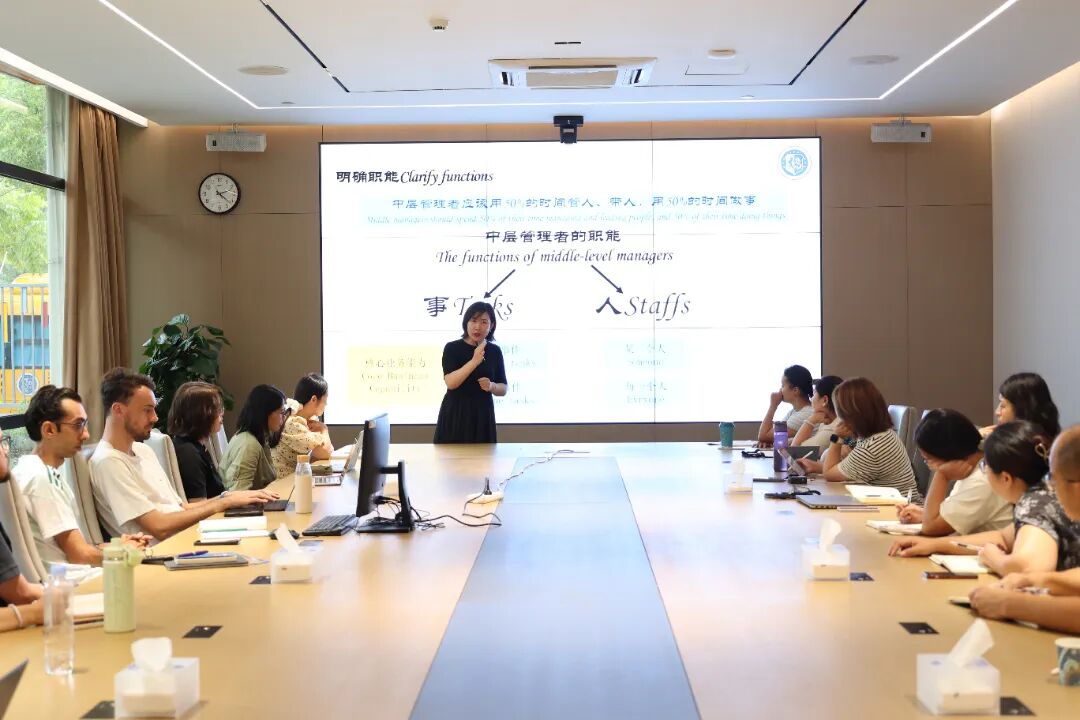
Vice Principal Zhang used the “Leadership Pyramid” to elucidate the value of middle managers. Top management sets the direction, middle management converts strategy into action, and frontline staff executes tasks. Middle managers need to shift from a “teacher stance” to a “middle management stance” to become “value leaders,” decoding school strategy into actionable teaching and igniting team enthusiasm for education. The “50% time managing people, 50% time managing tasks” rule was illustrated through case studies—showing that when managers allocate their attention effectively and focus on empowering their teams, the efficiency of educational research outcomes significantly improves, demonstrating the power of role transition and time management.


Practical Training: Sharpening Research Prowess
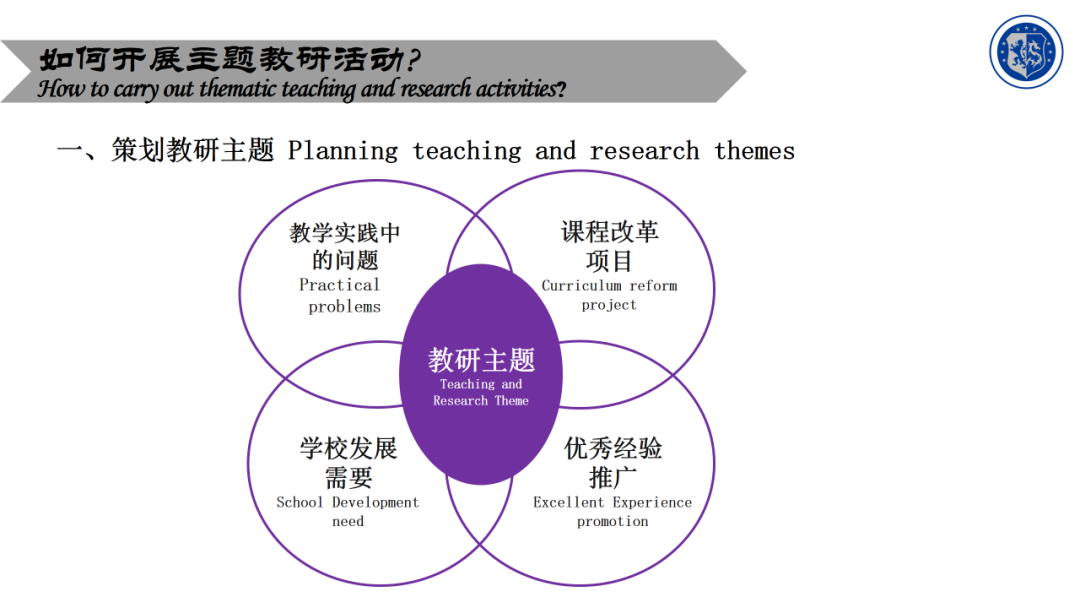
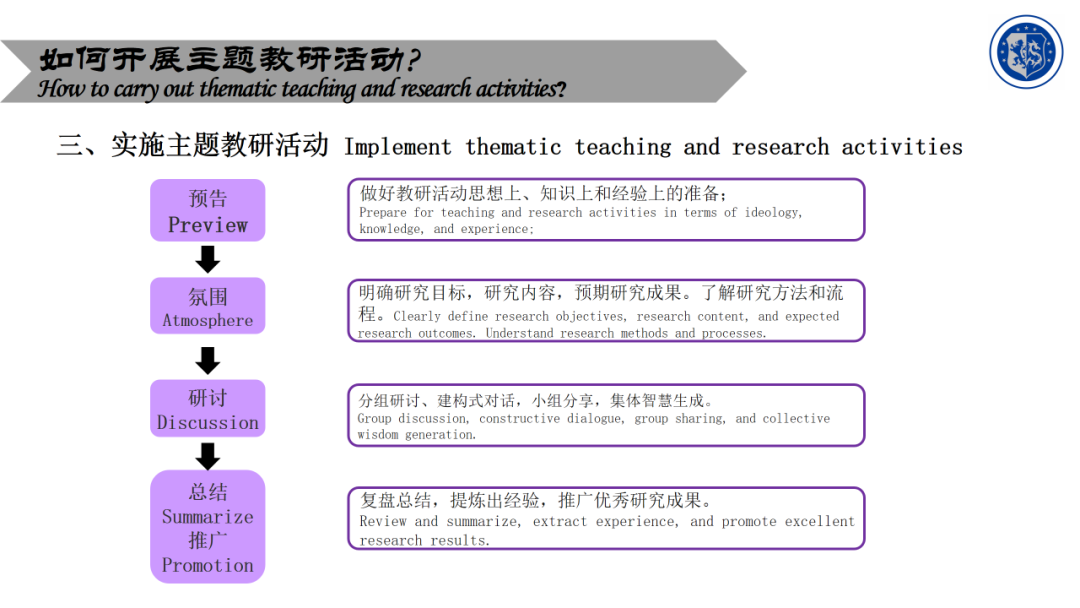
The training emphasized that curriculum leaders need core capabilities in organizational management, professional expertise, teaching research, and educational research. In theme-based educational research, the process spans from “theme planning” (focusing on teaching practice issues, curriculum reform, school development, and experience promotion), to “scheme design” (clear objectives, content, pathways, and procedures), to “implementation advancement” (creating a conducive atmosphere, stimulating wisdom through discussion, and summarizing and promoting results), and finally “reflection and consolidation” (reviewing goal achievement, plan implementation, and teacher-student growth). This forms a complete educational research cycle, offering practical methods for strengthening foundational research quality for curriculum teams.

Empowerment: Revitalizing Organizational Life
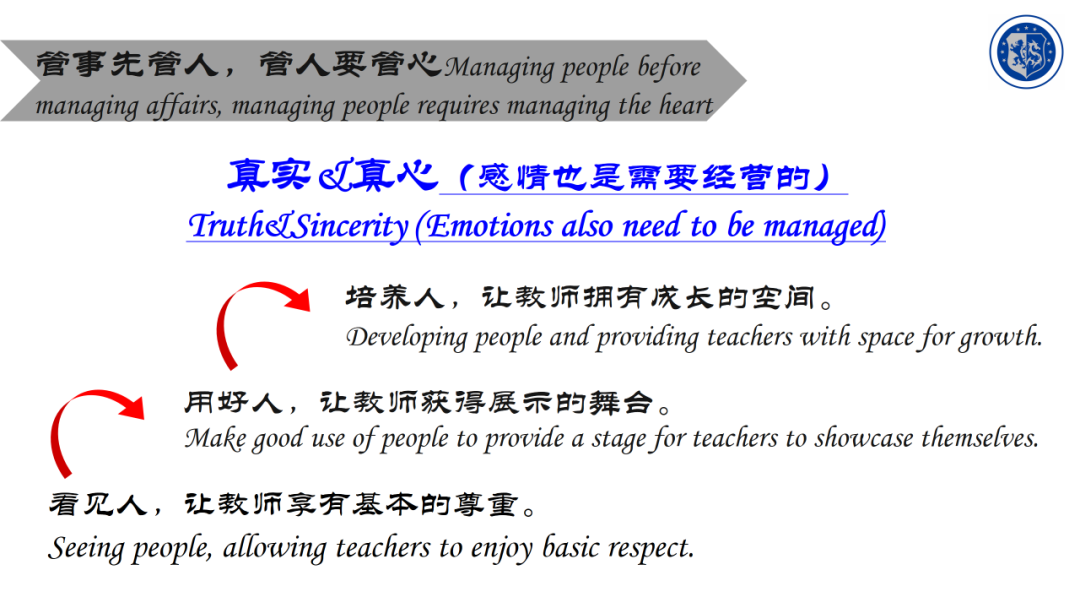
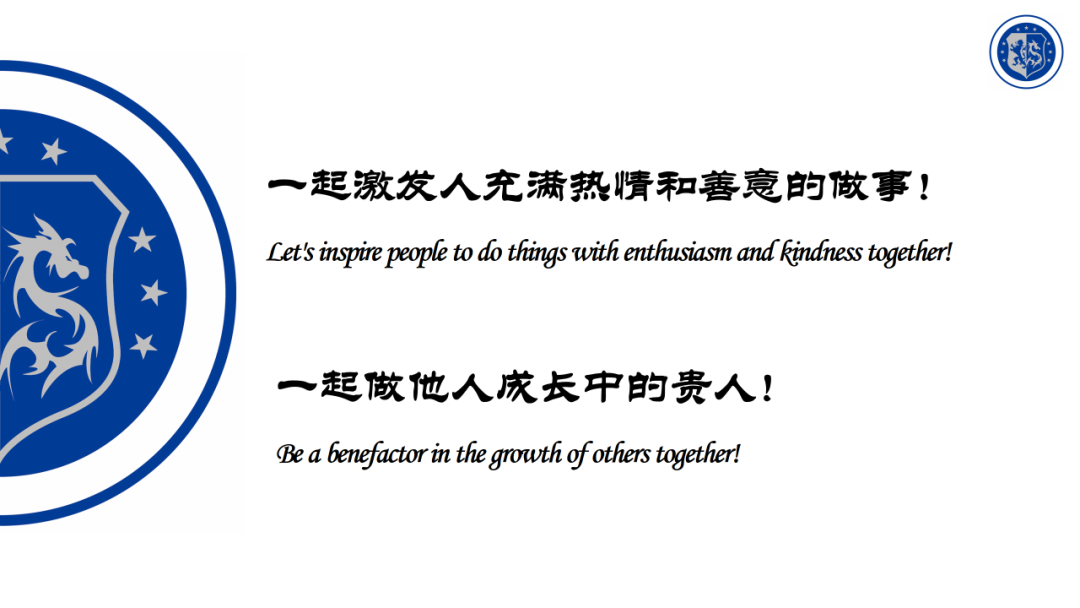
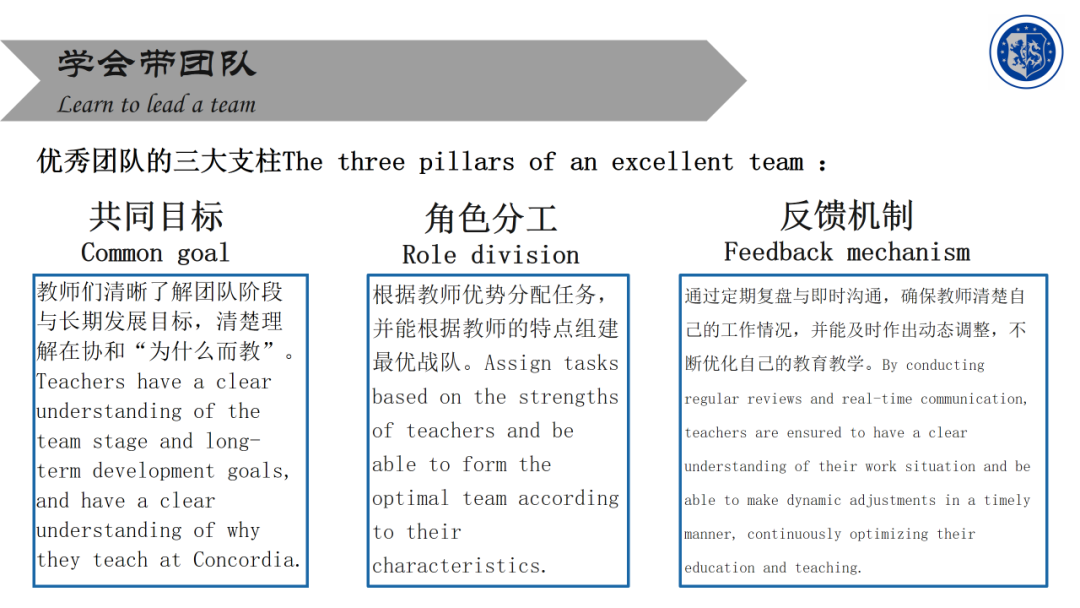
Leading a team is an essential course for middle managers. Vice Principal Zhang proposed the “three pillars of an outstanding team”: consolidating collective goals to unify hearts and minds, allowing teachers to understand “why they teach”; leveraging role-based advantages to form the “optimal team”; and using feedback mechanisms to dynamically optimize and assist teacher growth. He also emphasized “manage tasks by first managing people, manage people by managing their minds,” fostering relationships with sincerity and authenticity, seeing and utilizing people effectively, developing their potential, providing a growth stage for teachers, and inspiring team enthusiasm and goodwill to break through the “personal management ceiling.”
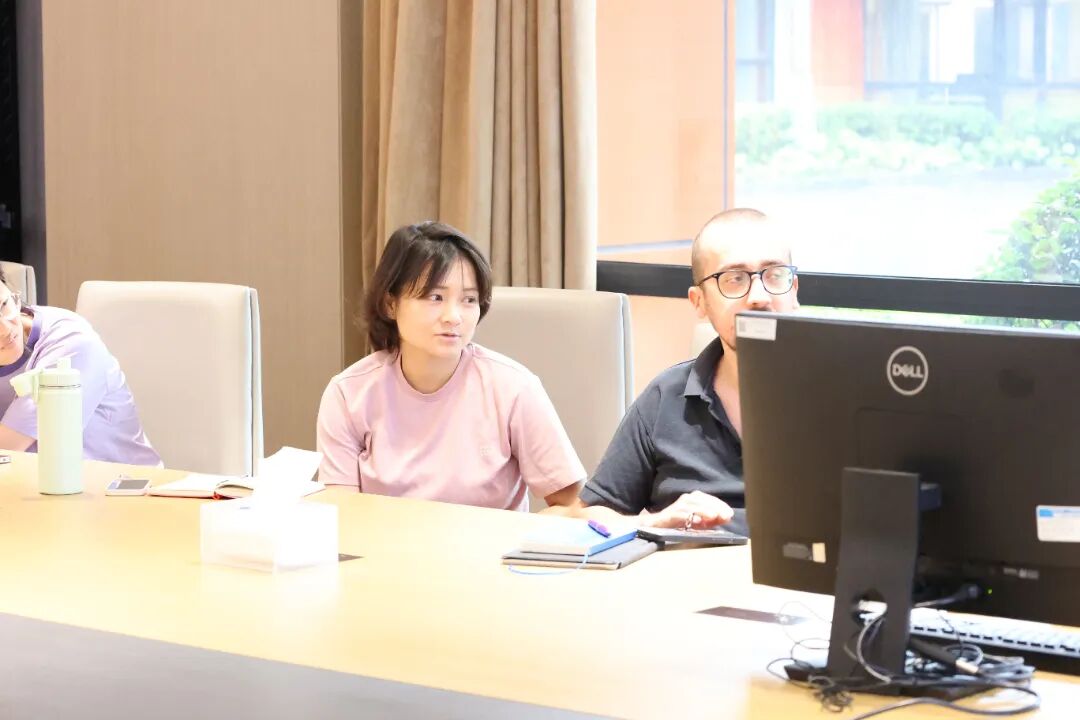 This training served as a “power-up lesson” for middle managers, shifting from cognitive restructuring to skill practice, from research leadership to team cohesion, infusing leadership wisdom into the Primary and Middle School Integration Department. Equipped with these insights and methods, these leaders are poised to guide their teams confidently, deepening educational engagement, supporting school’s continued educational excellence, and transforming management efficiency into the driving force behind student growth and teacher development.