

In order to further radiate the teaching experience of our P4C’s backbone teachers, our kindergarten recently held a special seminar called “Workshop for P4C’s Backbone Teachers.” The activities were divided into “One Lesson, Three Research” and ” Classroom Demonstration.”
PART. 01
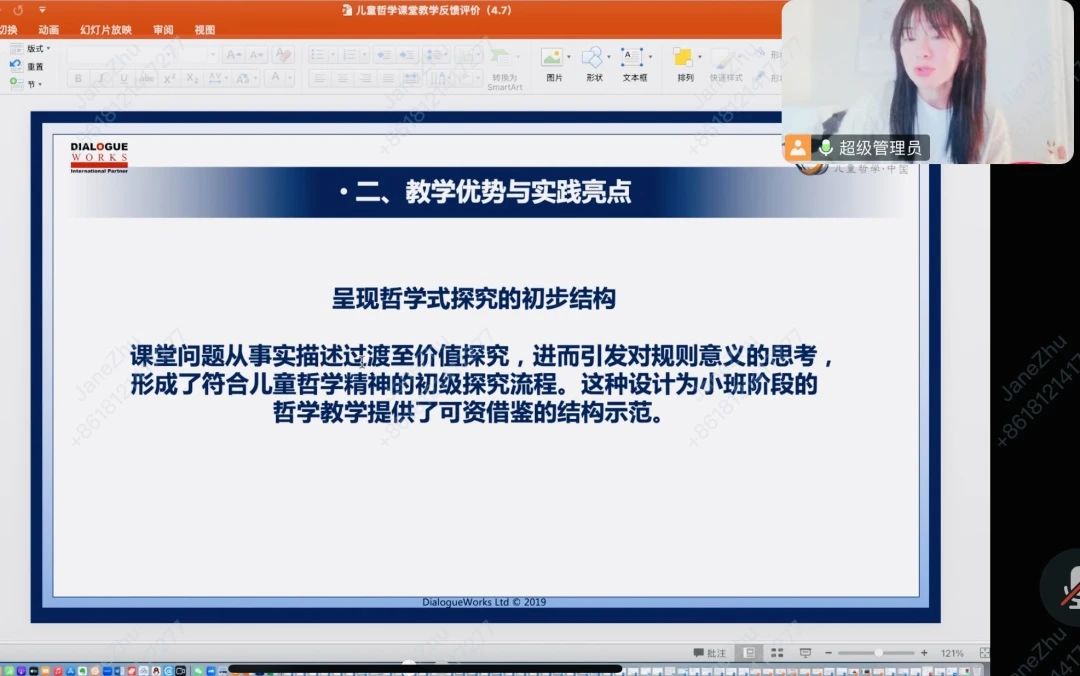
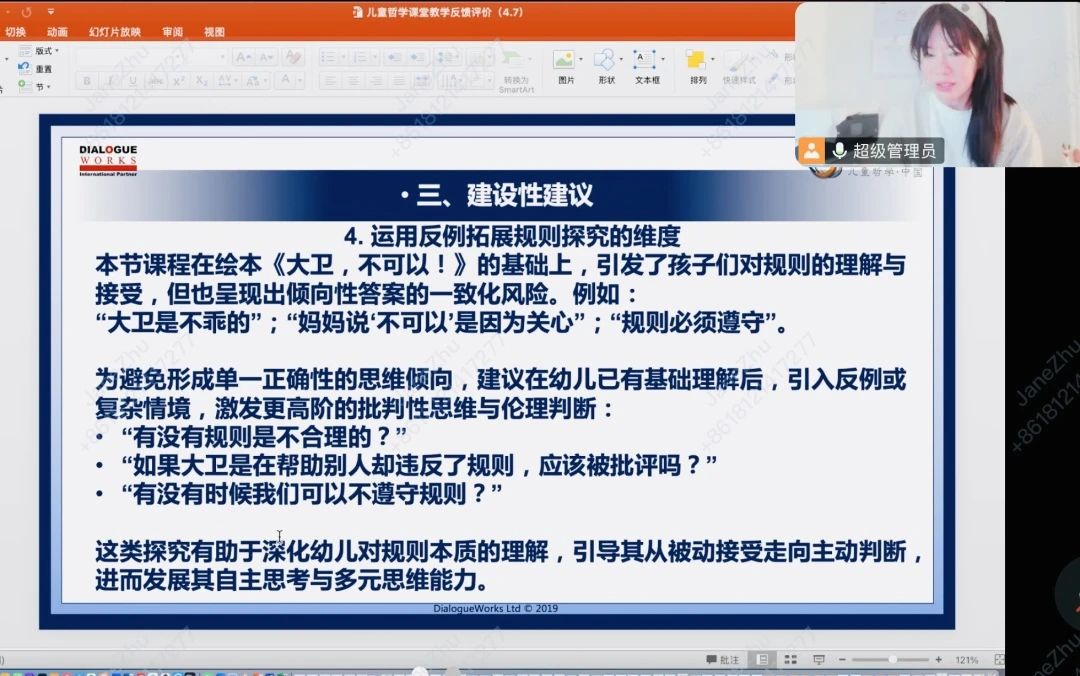
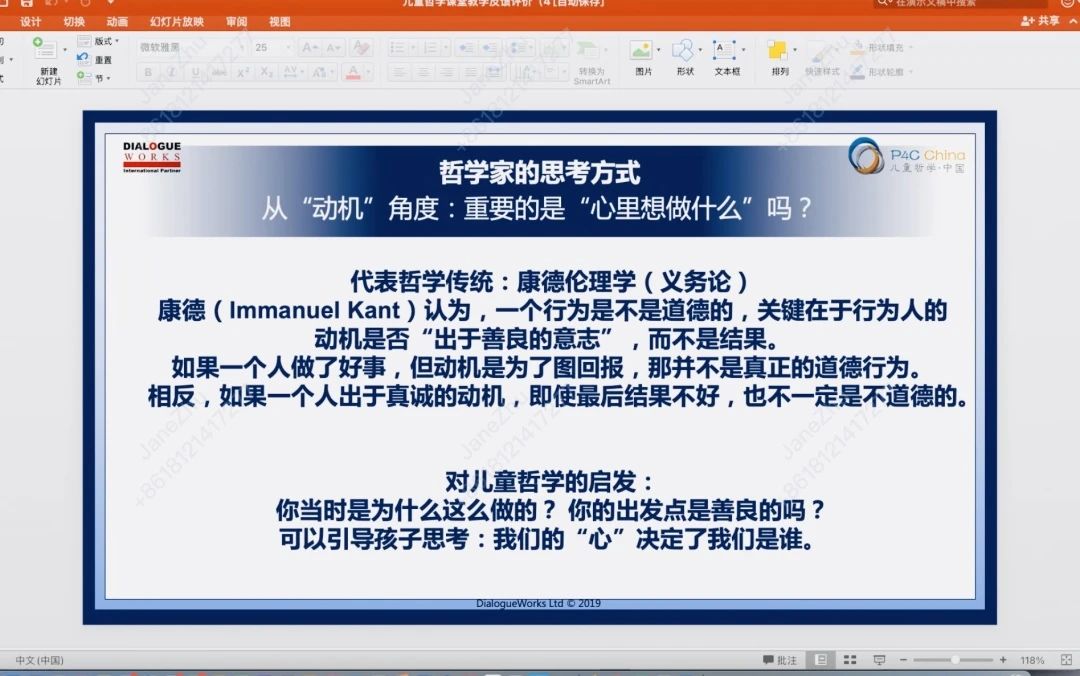
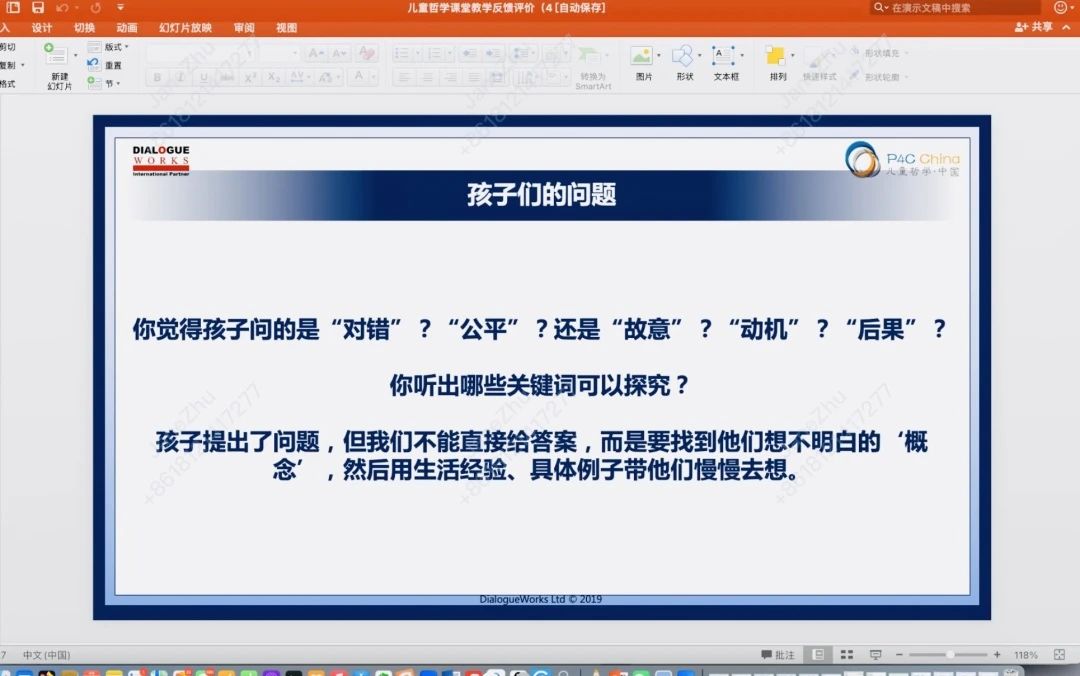
TeDuring the teaching and research activities, we especially invited Professor Yun, an expert in P4C China, to provide an online course evaluation and guidance. Three key teachers recorded children’s philosophy activities for each of the levels: Pre-K, K – 1, & K – 2 classes. Teacher Yun provided professional suggestions on teaching objectives, classroom interaction design, and thinking guidance to help teachers optimize teaching design and deepen practical path of children’s philosophy activities.
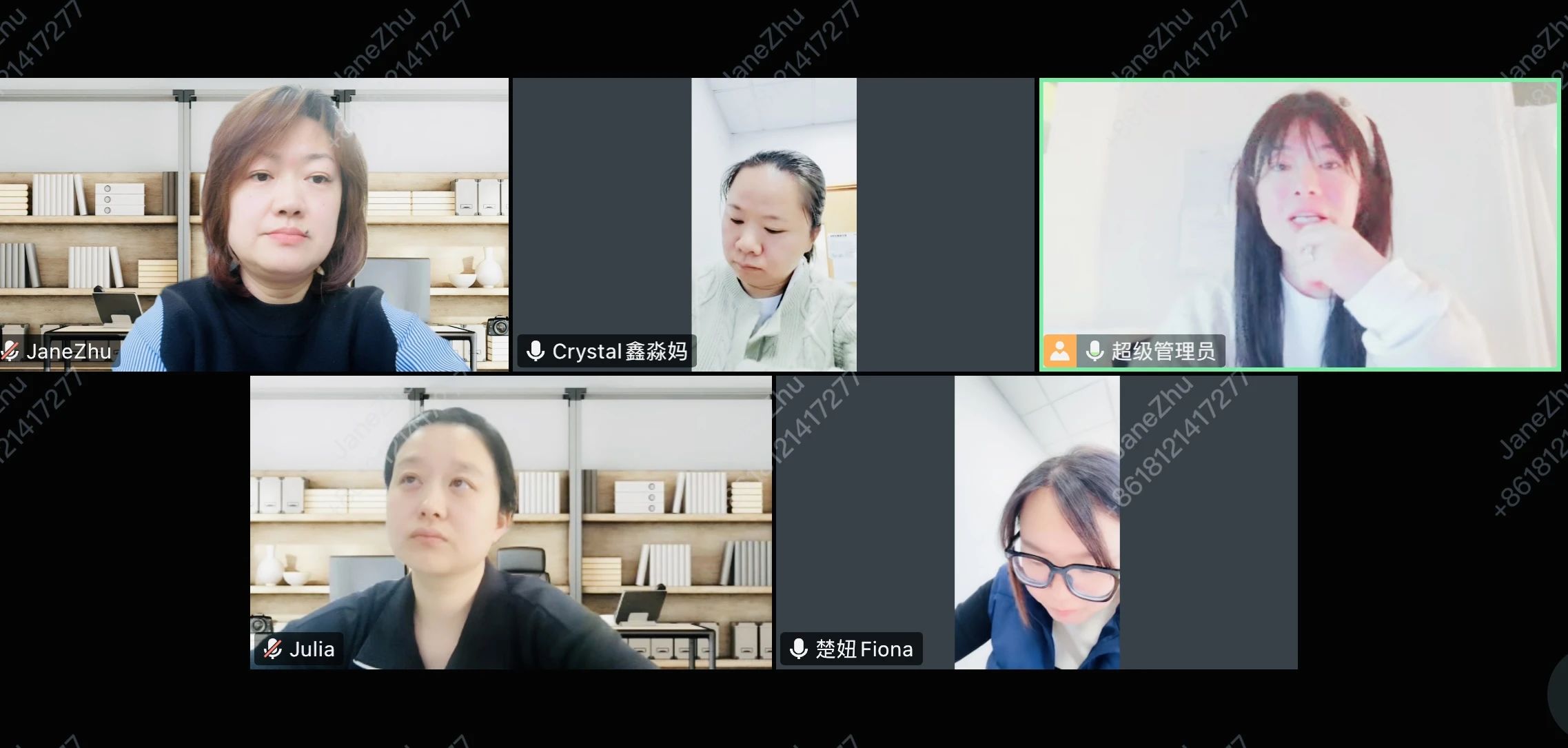
Teacher Yun specifically pointed out that the language used by teachers in children’s philosophical activities should be inspiring, open, and guiding, to stimulate children’s thinking skills. Language should be concise but specific, close to children’s cognitive level, while maintaining a neutral attitude, respecting children’s different perspectives, helping children understand abstract concepts, and cultivating critical thinking and dialogue skills.

 PART. 02
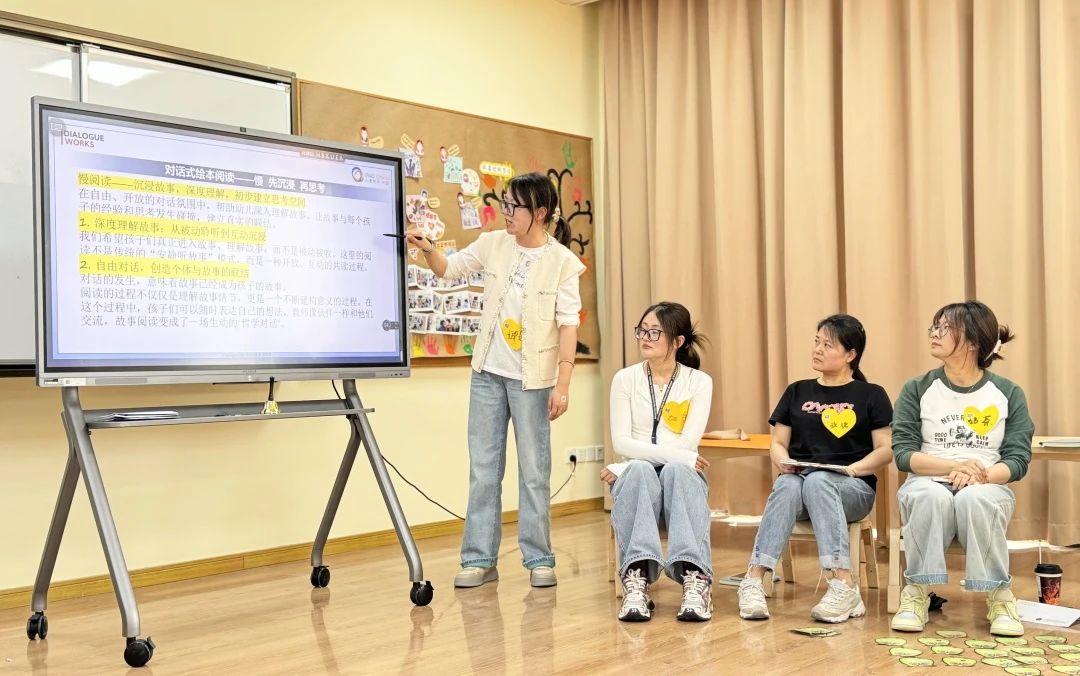
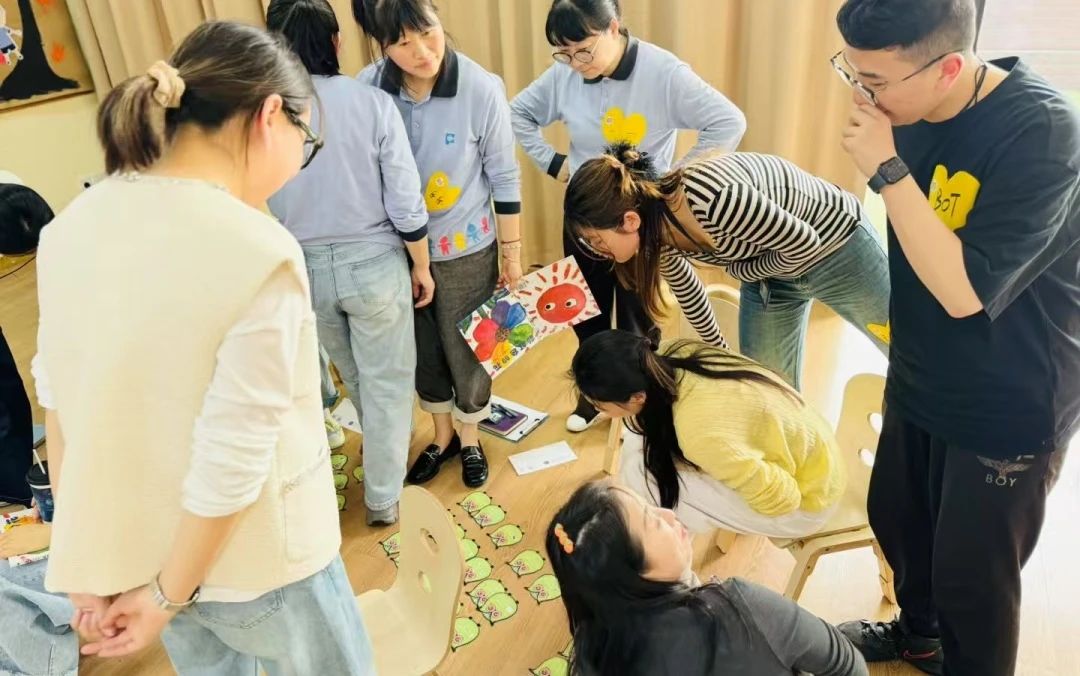
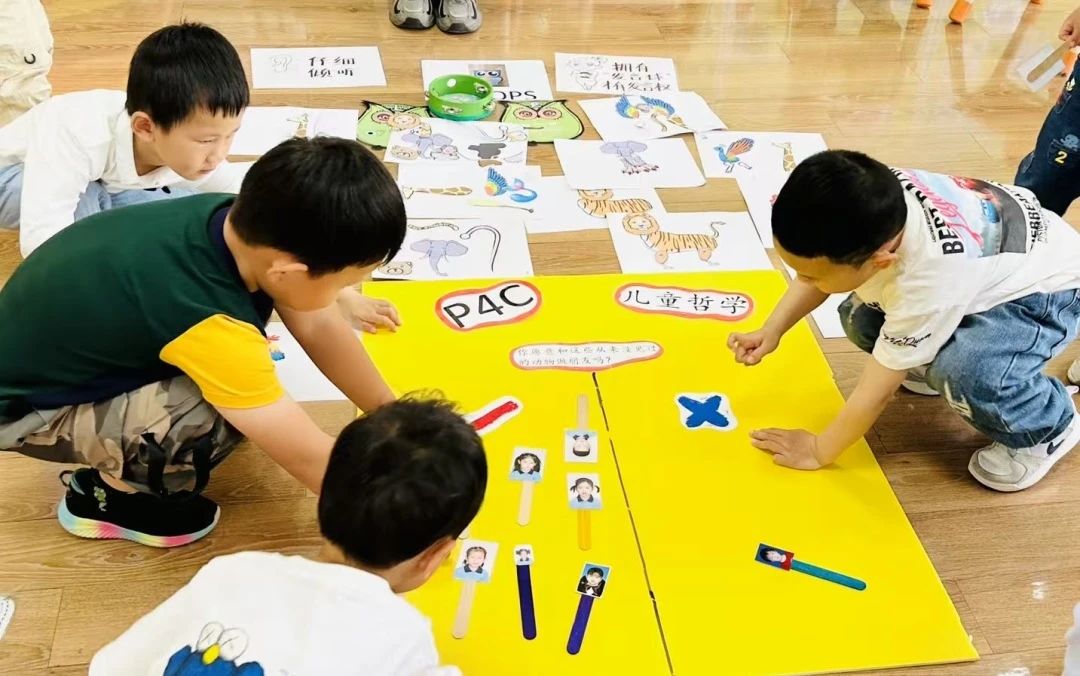
The next day, three key teachers showed three lively children’s philosophy activities to the visiting teachers from our sister kindergarten: the Pre-K class stimulated curiosity and questions through fun “thought experiment – are you willing to make friends with these animals you have never seen before;” The K – 1 class carried out the “Little Artist – Title” thinking pace activity to stimulate children’s innovative spirit; the K – 2 class conducted an in-depth discussions based on the picture book ‘Little Beautiful Cat.’ The classroom fully presented the charm of children’s philosophy, which is problem-oriented and cultivates the “4C spirit” of children, providing valuable learning examples for observing teachers.




 PART. 03
Come and listen to the feelings of the teachers from our sister kindergartens after the classroom observation!
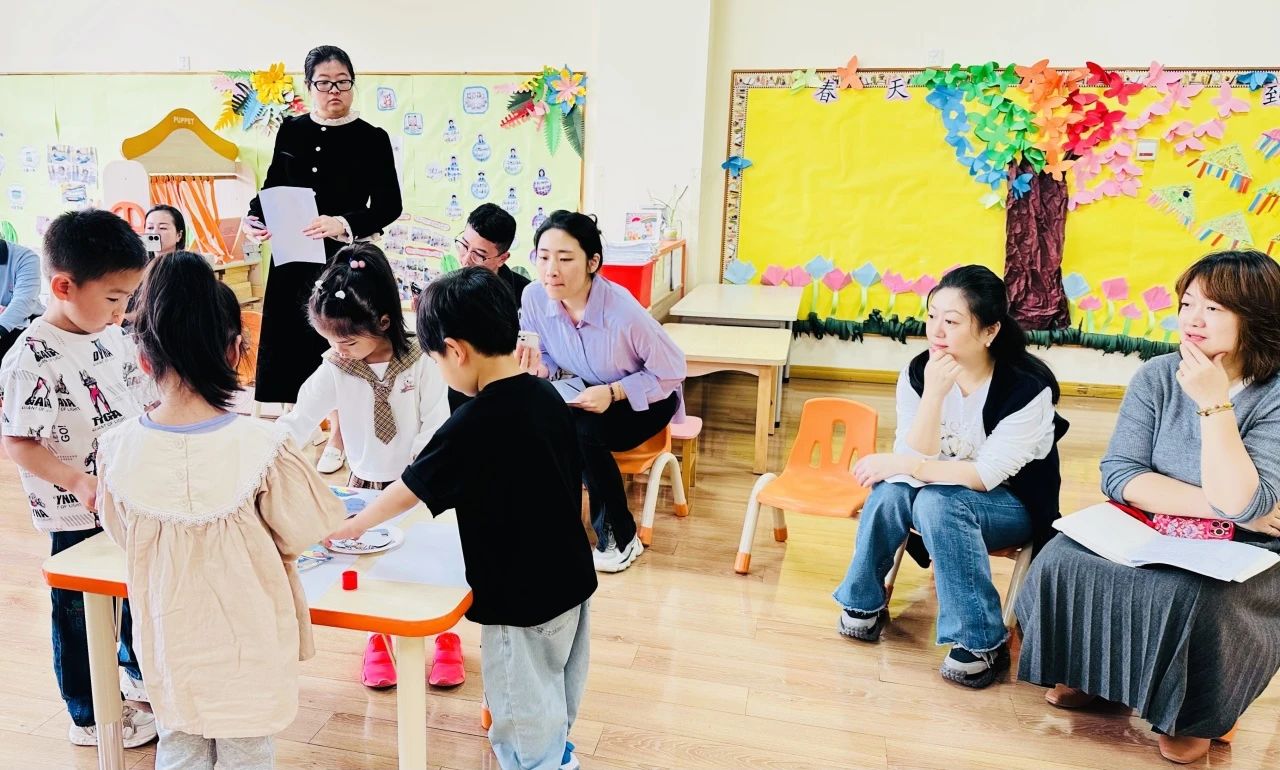
Teacher Suo:
I have the honor to be a part of the P4C training at Wuxi Xiehe Kindergarten. This activity reflects the wonderful landscape of children’s thinking world, and also let me have new understanding of children’s philosophy education.In class, we found out that we can use the 26 letters from A to Z to represent different actions. Creating a mind movement for children and making the classroom fun and filled with logical perspectives and has made me realized that young children are not ignorant, they have a unique way of thinking, a keen sense of the world and their own understanding.This visit made me realized that education should not be simply the inculcation of knowledge, but rather the inspiration of thought. P4C activities provide children with space to think, express and cooperate, and help them develop good thinking habits and skills.
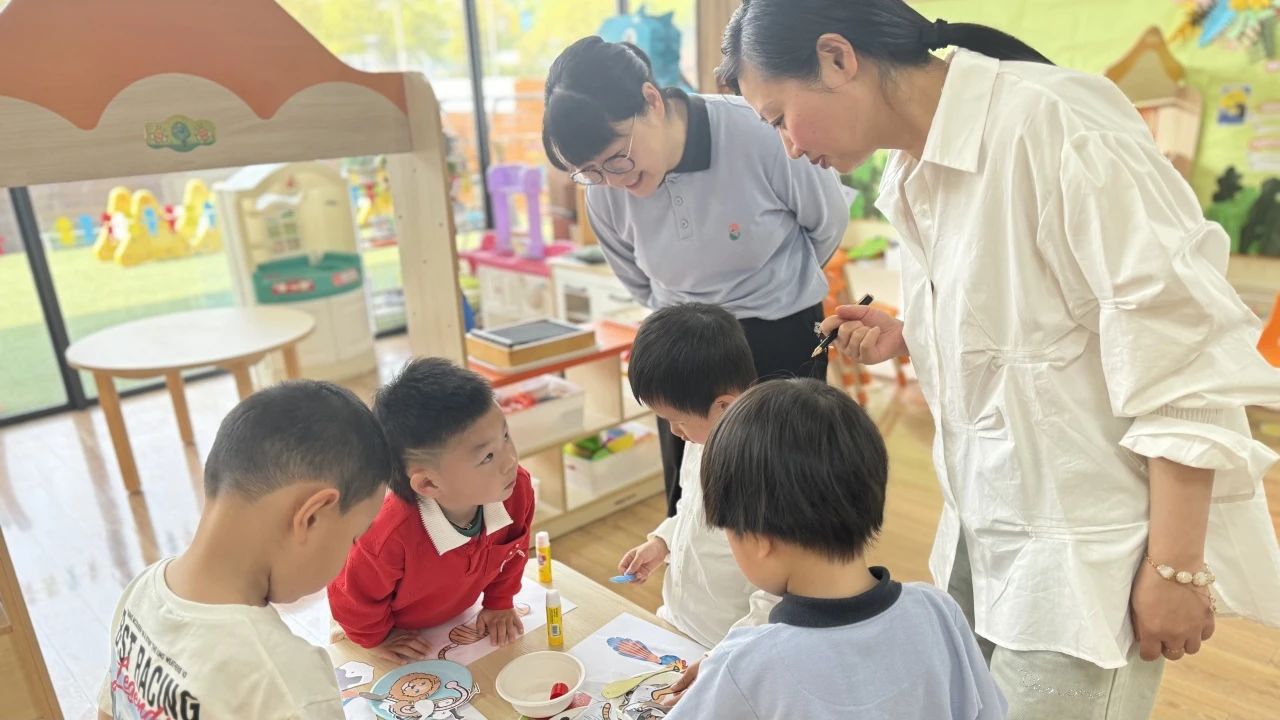
Teacher Qian:
Thank you very much for this opportunity to communicate and learn more closely. I have gained a lot. When I tried to carry out P4C activities before, I was very troubled by the lack of children’s awareness of rules and the instability of their state during discussions. After observing three P4C activities today, these confusions have been answered to some extent. The skill of teachers to extract keywords and questions has also made me gain a lot. I hope I can apply these skills in the future. The “A-Z” thinking method has also made me intuitively understand how P4C activities can be carried out, which will greatly help me in the future.
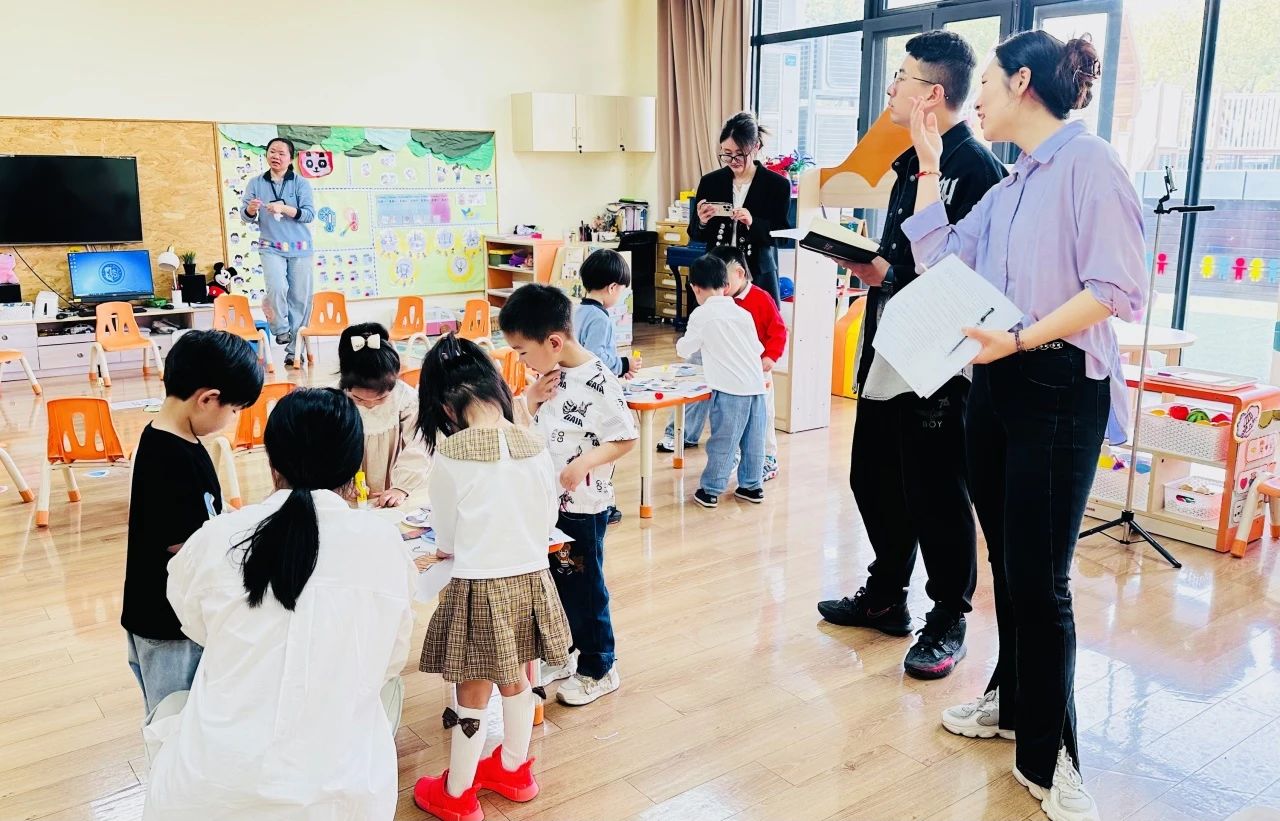
Liu Lin:
The children’s philosophy class in K-2 class made me see that in the course, the sharing of different views on the same issue and everyone’s understanding and tolerance of different views make us see that each child has their own thoughts and ideas on the same issue. During the activity, children boldly expressed their views on different issues. Although their views may be questioned by their peers, every child has the right to speak. This can create a better, safe conversation environment for children and guide them to boldly express their views! This learning has greatly benefited us.
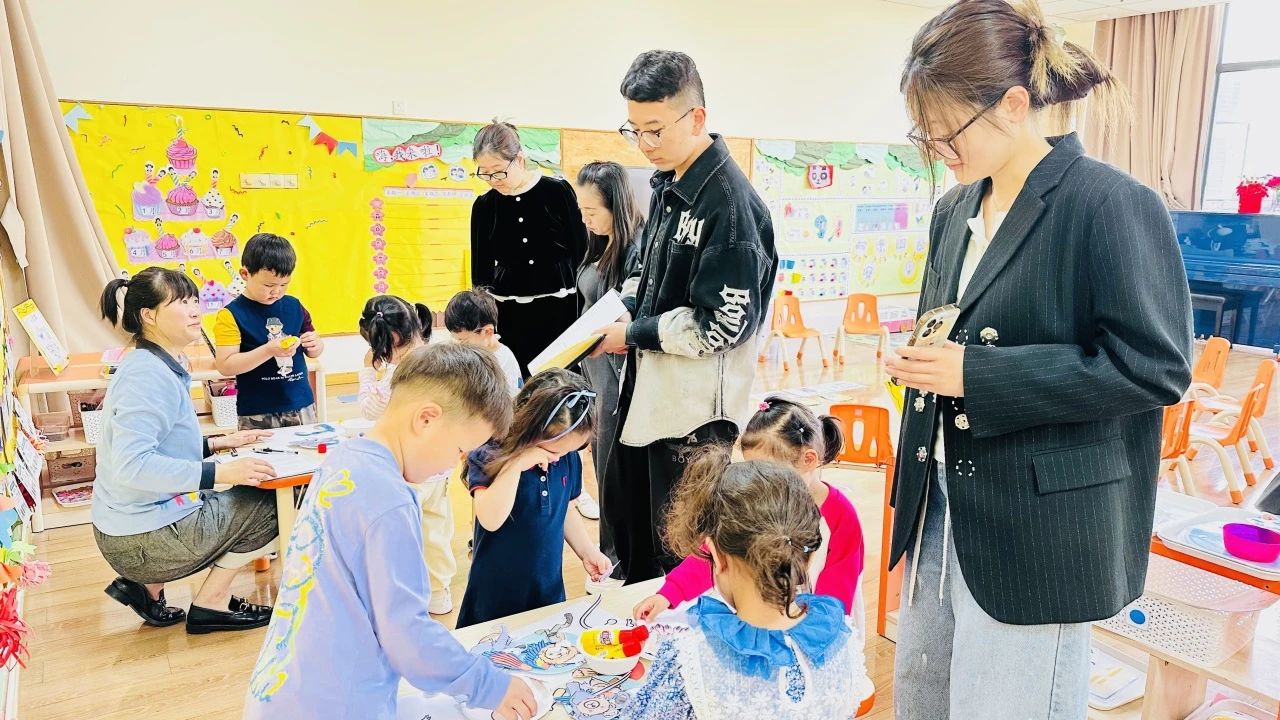
This activity combined lesson examples and open classrooms to promote practical innovation in children’s philosophical education and provides a platform for growth for our backbone and young teachers. In the future, our kindergarten will continue to deepen the teaching and research of children’s philosophy, and help every teacher’s continuous growth! help me in the future.